Rivian Bets Big on AI and Full Autonomy
Rivian used its first-ever “Autonomy and AI Day” to show investors a major shift in strategy: the company is no longer just an EV manufacturer — it’s building a self-driving platform from the ground up.
The upcoming models will feature lidar sensors, radar, custom processors, and a new autonomy computer, moving Rivian toward SAE Level-4 automation, where a passenger could sleep while the vehicle drives itself in standard conditions. This is the same level Waymo operates today.
Rivian’s new Autonomy+ package — launching in early 2026 — will cost $2,500 upfront or $49.99 per month. A software update will soon unlock “Universal Hands-Free” driving across more than 3.5 million miles of U.S. and Canadian roads, covering most marked highways.
In-House AI Chip: Rivian’s Technical Leap
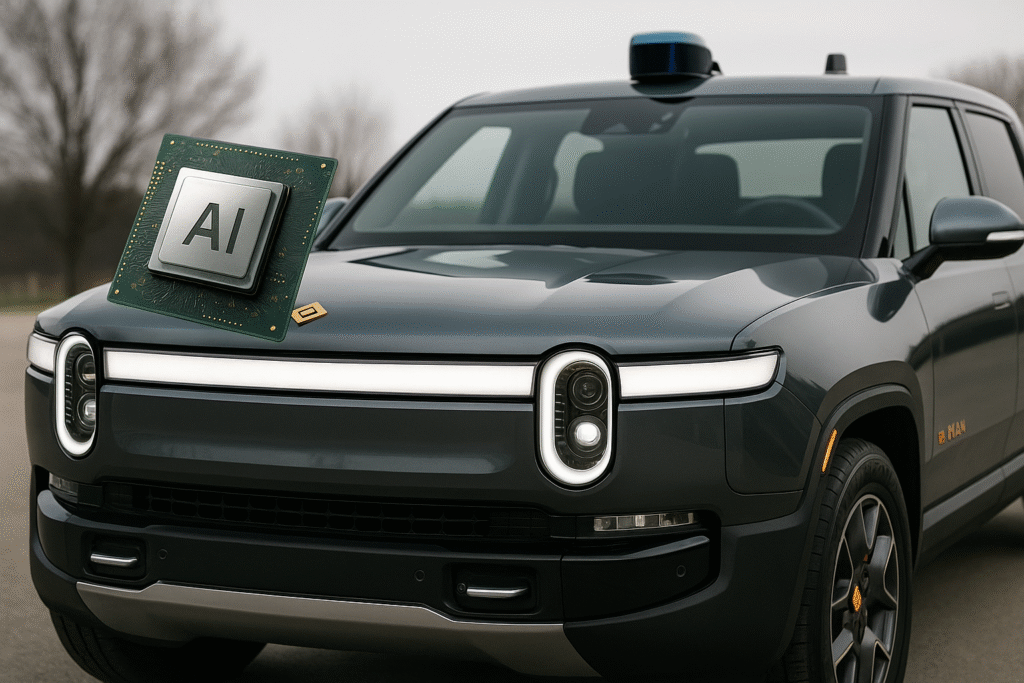
The company also revealed a custom processor built specifically for advanced AI workloads.
Vice President of Electrical Hardware Vidya Rajagopalan said the chip delivers:
- Multi-chip module architecture
- High-memory bandwidth essential for autonomy
- 205 GB/s throughput
This brings Rivian closer to the vertical integration model used by Tesla — but with Rivian choosing a different technical path by relying heavily on lidar and radar to achieve Level-4 reliability.
Robotaxi Aspirations Come Into View
CEO RJ Scaringe confirmed Rivian’s autonomy stack opens the door to future robotaxi operations, a space where Tesla has long made promises but not delivered.
While the near-term focus remains privately owned Rivian vehicles, the company sees rideshare as a long-term revenue opportunity once its Level-4 systems mature.
A High-Stakes Bet Amid EV Market Slowdown
Rivian’s pivot comes at a critical moment:
- U.S. EV sales have cooled after federal incentives were cut.
- Chinese competitors are expanding aggressively.
- Rivian shares, while up 25% this year, remain 80% below their IPO levels.
Autonomy — not raw EV volume — is becoming Rivian’s pitch for future growth.
WSA Take
Rivian is doing exactly what troubled EV players must do in 2026: shift the narrative from vehicle deliveries to long-term platform value.
By building its own AI chip, doubling down on lidar, and openly discussing robotaxis, Rivian is signaling to investors that it wants to compete in the same league as Tesla, Waymo, and other autonomy-first players.
Whether Rivian can execute is still an open question — but the strategy is bold, technically sound, and gives the company a differentiated identity in a slowing EV market.
Read our recent coverage on Copper Pushes Back Toward Record Highs.
Explore more market insights on the WallStreetAccess homepage.
Disclaimer
WallStAccess does not work with or receive compensation from any companies mentioned. This content is for informational and educational purposes only and should not be considered financial advice. Always conduct independent research before investing.