Chinese EV Tie-Ups Put Pressure on Tesla and Detroit
Concerns over a new competitive threat from China weighed on U.S. automakers after reports suggested a major Western carmaker explored a potential partnership with Chinese EV manufacturer Xiaomi.
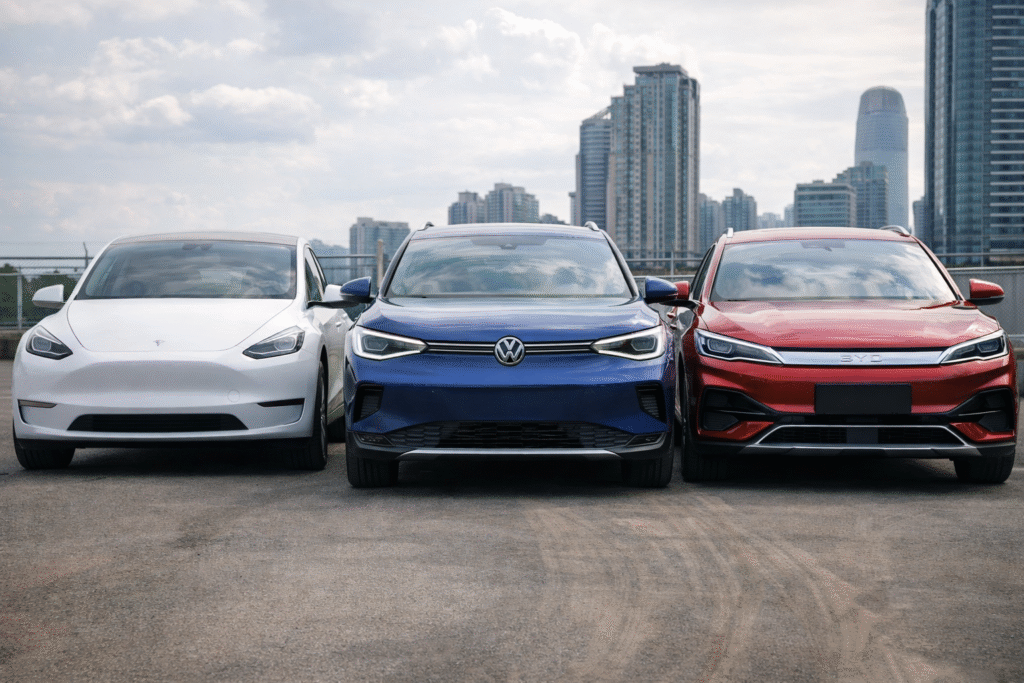
Shares of Tesla slipped early Monday as investors weighed the implications of Chinese-designed, low-cost electric vehicles entering North America through joint ventures or localized manufacturing.
A report over the weekend said Ford had held discussions with Xiaomi about forming a U.S.-based EV manufacturing partnership. Both companies later denied the claim. Still, the episode underscored a growing reality: Chinese EV makers are increasingly viewed as a serious strategic threat.
Why Investors Are Paying Attention
Even without a confirmed deal, the market reaction reflects deeper concerns:
- Chinese EV makers combine lower production costs with strong software
- Vehicles like Xiaomi’s SU7 sedan are outselling Western rivals in China
- Demand for newer models is exceeding production capacity
- U.S. automakers lack competitive entry-level EV offerings
Xiaomi’s SU7 has reportedly outsold the Tesla Model 3 in China, while its newer YU7 model has drawn more than 100,000 preorders since January.
Detroit’s EV Dilemma
U.S. automakers are facing a difficult transition:
- EV development is capital-intensive
- Autonomous driving and software costs are rising
- Trade tensions complicate supply chains
- Affordable EV options remain limited
Ford no longer sells a true entry-level vehicle after discontinuing several models, with smaller EVs not expected until 2027. That gap leaves room for external partnerships — even controversial ones.
Ford’s CEO has previously acknowledged the quality of Chinese EVs, noting the rapid pace at which competitors are improving design, efficiency, and software integration.
Regulatory Barriers — For Now
Bringing Chinese EVs into the U.S. market faces major obstacles:
- Steep tariffs on imported Chinese vehicles
- Restrictions on Chinese technology components
- Political resistance to foreign-controlled manufacturing
That said, building vehicles inside North America — whether in the U.S., Mexico, or Canada — could eventually soften those barriers. Canada has already opened the door to limited Chinese EV imports, potentially offering a foothold on the continent.
A Long-Term Strategic Risk
Auto industry analysts warn that joint ventures may offer short-term relief but carry long-term consequences.
Chinese firms already dominate in:
- Manufacturing scale
- Battery supply chains
- Cost efficiency
- EV software integration
Past partnerships gave Chinese automakers access to Western technology and expertise. Today, the balance of power has shifted.
Some analysts question whether future Western automakers risk becoming brand managers rather than full vehicle designers and manufacturers.
WSA Take
This isn’t just about one rumored deal.
It’s about whether U.S. automakers can compete on cost, speed, and software without leaning on Chinese partners — and what happens if they can’t.
For Tesla and Detroit, the next phase of the EV war may not be fought on range or branding, but on who controls the technology stack and the factory floor.
Disclaimer
WallStAccess is a financial media platform providing market commentary and analysis for informational and educational purposes only. This content does not constitute investment advice, a recommendation, or an offer to buy or sell any securities. Readers should conduct their own research or consult a licensed financial professional before making investment decisions.