Oil eased, but the market is still trading on fragile headlines
Crude pulled back after a report suggested Washington and Tehran may be moving toward a short-term extension of the current ceasefire.
According to Axios, negotiators reached a 60-day memorandum of understanding that would extend the truce and open the door to talks over Iran’s nuclear program. The catch is an important one: President Trump still has to approve the deal.
That was enough to cool the oil spike that followed the latest military flare-up, but not enough to fully calm the market. Traders have seen too many starts, stops, and contradictory signals in this conflict to treat one report as a final breakthrough.
Prices came off the highs, but the backdrop is still tense
Even after the pullback, oil remained firm.
Brent traded around $95 a barrel late in the morning, while WTI hovered just below $90. That tells you the market is no longer pricing the worst-case supply scenario at the same intensity as before, but it is also not pricing a clean return to normal.
That makes sense. Only hours before the report, the US and Iran exchanged military strikes, with Iran reportedly launching ballistic missiles toward Kuwait and the US carrying out fresh strikes against an Iranian military site seen as threatening troops and shipping near Hormuz.
In other words, this is not a peace market. It is a market trying to decide whether active confrontation is giving way to managed tension.
The ceasefire story matters because the oil market has already priced out some disaster risk
Part of the reason oil did not explode higher on the latest exchange is that crude has already fallen sharply from the more panicked levels seen earlier this month.
Prices are down more than 10% since May 18, when Trump said he had called off a larger wave of military action to leave room for negotiations. Since then, the market has slowly shifted away from the idea of an immediate regional supply disaster and toward a more measured, though still unstable, diplomatic process.
That is what Thursday’s price action really reflected. The report did not introduce optimism from nowhere. It added to an existing move in which traders have been steadily stripping out some of the most extreme war premium.
Hormuz is still the real issue
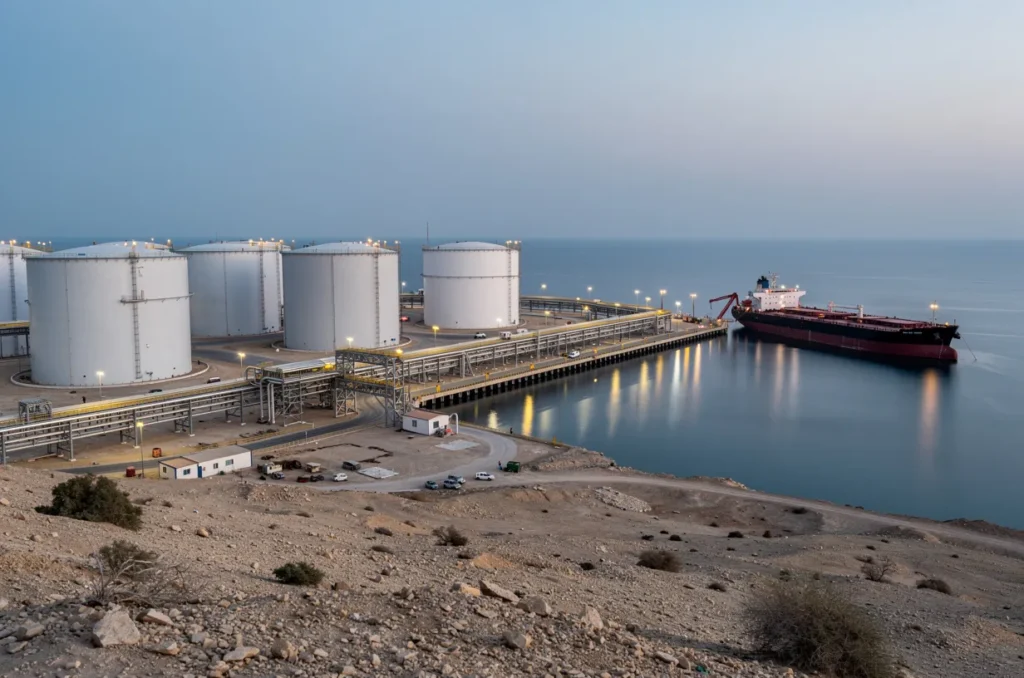
The deeper problem remains the same: the Strait of Hormuz.
This conflict has never just been about strikes and statements. It has always been about who controls the world’s most important energy chokepoint, and under what conditions tankers can safely move through it.
That is why so much of the market’s focus remains on shipping flows, not just political language. Iran’s state television reportedly claimed that a draft understanding would reopen Hormuz to prewar levels of commercial traffic, though under a framework managed by Iran and Oman. The White House rejected that version outright.
That disagreement matters because it gets to the heart of the issue. A deal that reopens traffic is one thing. A deal that leaves Iran with de facto operating control over the corridor is another.
The market is starting to accept that even a deal may not restore the old status quo
That is one of the most important takeaways in the piece.
Even if a ceasefire extension is approved, and even if shipping normalizes somewhat, many in the region appear to believe Iran will still hold effective influence over Hormuz for the foreseeable future. That changes how traders, insurers, shippers, and governments think about supply risk.
This is why the oil pullback has been meaningful, but not euphoric.
Markets may be pricing out the most extreme disruption scenarios. They are not yet pricing in a return to the old world.
Central banks still have to take the inflation risk seriously
Another important point is that falling oil does not automatically erase the broader inflation problem.
Citi’s read, as described in the article, was that markets are becoming more comfortable that a total supply shock may be avoided. At the same time, policymakers are still on alert because the earlier surge in crude has already started feeding into broader inflation pressure.
That is the danger with energy shocks. Even if the commodity itself starts to cool, the first-round and second-round effects do not disappear overnight. Transport, manufacturing, consumer expectations, and pricing behavior can all stay distorted for longer than the barrel price alone suggests.
That is why central banks are still watching closely, even with oil off the highs.
Wall Street wants closure, but it may be getting ahead of itself
There is also a clear tension running through the current market mood.
Investors want this conflict to end. More specifically, they want a deal headline strong enough to justify further downside in oil and a better inflation outlook. That desire may be part of why crude has fallen as quickly as it has from recent highs.
The risk is obvious: if markets price a clean diplomatic outcome too early and the deal stalls, the oil market could quickly reverse.
That is why this remains a headline-driven trade. Confidence is improving, but conviction is still thin.
WSA Take
Oil pulled back because the market got what it wanted most: a credible report suggesting the US and Iran may be close to extending the ceasefire. That helped reinforce the idea that the worst-case supply disruption may still be avoided.
Still, this is not a settled situation. The latest exchange of fire shows how fragile the process remains, and the argument over who controls Hormuz is far from resolved. For now, the market is trading reduced catastrophe risk, not durable peace.
Explore More Stories in Commodities
Disclaimer
WallStAccess is a financial media platform providing market commentary and analysis for informational and educational purposes only. This content does not constitute investment advice, a recommendation, or an offer to buy or sell any securities. Readers should conduct their own research or consult a licensed financial professional before making investment decisions.