Washington isn’t just funding a tungsten mine
The U.S. government is taking a much more aggressive approach to critical minerals.
A new $450 million investment in Elmet Group will reach across nearly the entire tungsten supply chain, from mine development and refining to advanced manufacturing used in missiles, submarines and other defense systems.
The structure caught our attention as much as the dollar amount.
The government will invest $200 million initially, receive preferred equity representing up to 19.9% of Elmet’s common stock, and gain board representation. More than $165 million will go toward Elmet manufacturing facilities in Maine, Michigan and Ohio, while another $150 million will support tungsten mining and processing projects.
This looks less like a conventional government grant and more like industrial policy with an ownership stake attached.
Tungsten has become too strategic to leave exposed
Tungsten’s value comes from properties few materials can match. It tolerates extreme temperatures, pressure and wear, making it difficult to substitute in many defense applications.
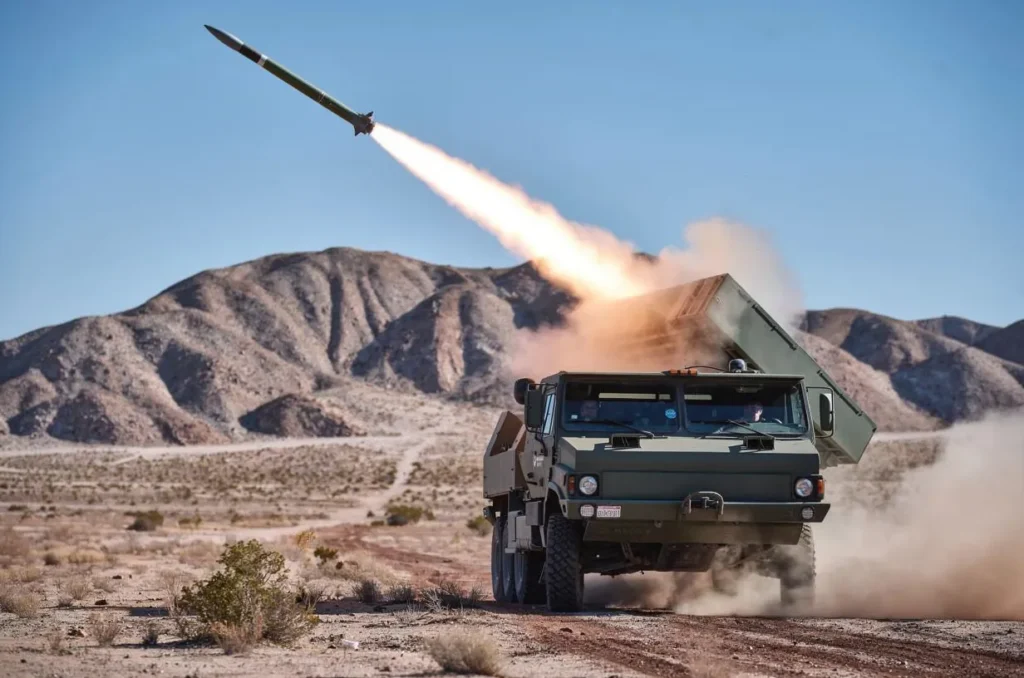
Elmet already supplies material used across Patriot and Javelin missile systems, Trident II missiles, and Virginia- and Columbia-class submarines.
The problem is supply.
China dominates global tungsten production and processing, leaving the U.S. and its allies exposed at exactly the moment defense spending is accelerating.
Washington’s response is increasingly clear: instead of waiting for private markets to solve the problem on their own, it is beginning to help finance the physical infrastructure required to build an independent supply chain.
That includes the mine, the conversion facilities and the manufacturers that ultimately turn tungsten into usable defense products.
The Springer project puts two public companies inside the story
One of the more interesting pieces of the package is the Springer Tungsten Complex in Nevada.
Elmet plans to invest $150 million into a majority-owned joint venture with Blue Moon Metals (TSXV: MOON) and Australia’s EQ Resources (ASX: EQR) to restart the mine and mill while rebuilding ammonium paratungstate, or APT, conversion capacity.
Springer is expected to restart production by the end of 2027, with the APT facility targeted for mid-2028.
That timeline matters because the U.S. does not simply need tungsten ore. It needs the ability to process that material into forms domestic manufacturers can actually use.
Blue Moon and EQ therefore sit inside a much more valuable part of the story than a typical early-stage critical-mineral project. The government-backed capital is aimed at creating an operating supply chain, not simply proving that tungsten exists underground.
For WSA, that is where the opportunity becomes more interesting.
The $2 billion contract needs to be read carefully
Elmet Technologies has also secured an indefinite-delivery, indefinite-quantity contract with the Defense Logistics Agency carrying a ceiling of up to $2 billion through 2031, with a possible extension through 2033.
That headline is enormous, but it is not $2 billion of guaranteed revenue.
The funded commitment is $150 million. Additional orders can be placed over time as supply becomes available.
In some ways, that structure strengthens the broader thesis. Elmet is not being asked to deliver material it cannot yet source. Government capital is first being used to expand mines, secure allied supply and add processing capacity, creating the physical production needed to support future purchases.
The contract and the investment package are designed to work together.
This may be the model for the next phase of critical minerals
The U.S. has talked about critical-mineral independence for years.
This is what it starts to look like when policy becomes capital.
Washington is taking equity, financing manufacturing, supporting mine restarts, expanding refining capacity and creating long-term procurement frameworks at the same time.
Tungsten may be one of the clearest examples, but the model could easily extend to other materials where China controls too much of the supply chain.
That shifts our attention toward companies with assets that can fit into a complete Western supply chain, especially projects that already have infrastructure, processing plans and clear defense relevance.
The winners may not be the companies with the biggest deposits.
They may be the ones Washington can actually plug into the system.
Explore More Stories in Commodities
Disclaimer
Wall Street Access is an independent financial publisher. Wall Street Access is not a financial advisor. No company mentioned has compensated Wall Street Access for the preparation, publication or distribution of this article. This content is provided for informational and educational purposes only and is not investment advice or a recommendation to buy, sell or hold any security. Investing involves risk, including the possible loss of principal.
Prices, market capitalizations, financial figures and other market data are based on information available as of the date and time of publication and may change without notice. Information is drawn from public sources believed to be reliable but is not guaranteed to be complete or accurate. Opinions and expectations expressed are our own and may change as new information becomes available.
Readers should conduct their own due diligence and contact a licensed financial professional before making any investment decision. Past performance does not guarantee future results. Any material ownership interest or conflict of interest, where applicable, will be disclosed separately.