What Changed In The Clean Power Offtake Market
The market for long-term corporate power purchase agreements is getting tighter and pricier. Surging demand from data center owners is colliding with a smaller pipeline of tax-eligible clean power projects, pushing up the cost of locking in long-duration supply through corporate PPAs across the U.S.
In North America, average solar PPA prices in Q4 2025 rose 9% from the prior year to $61.7/MWh, while average wind PPA prices rose 9% to $73.7/MWh.
Texas is a clear example of how quickly the pricing is shifting. In the ERCOT network, where data center construction is accelerating, 2025 fair values increased 16% for wind PPAs and 8% for solar PPAs. The move was tied to stronger demand forecasts alongside fewer tax-eligible projects, plus inflationary effects linked to uncertain supply chains.
Policy Shock Tightens Supply
On the supply side, federal policy has become a near-term constraint for clean development. In July 2025, Congress approved the One Big Beautiful Bill, which accelerated the expiry of tax credits for solar and wind projects. The change helped trigger project cancellations and contributed to rising PPA pricing as fewer projects moved forward.
One snapshot of the shift: 1,891 power projects were cancelled in 2025, representing 266 GW of capacity, and 93% of those cancelled projects were clean energy.
Key supply-side pressures investors are tracking include:
- Earlier expiry of solar and wind tax credits after the 2025 law change
- Large-scale project cancellations that narrowed the pool of new offtake opportunities
- Grid connection delays that can push out commercial operation timelines
- Supply-chain uncertainty that can raise costs and complicate execution
AI Data Centers Are Rewriting Demand
Demand is being pulled forward by the buildout of AI-focused data centers, where owners are prioritizing speed of connection and energy security. Data centers could account for 9% of U.S. electricity demand by 2030, up from 4% in 2025.
Developers say hyperscalers are increasingly signing multi-gigawatt portfolios rather than single-asset deals. At Engie North America, about 80% of U.S. PPAs are with tech companies.
What’s changing inside contract structures:
- More “portfolio” procurement versus single-project PPAs
- Greater emphasis on dispatchable capacity, including pairings with energy storage
- Interest in matching every hour of consumption with zero-carbon production
- Demand-side flexibility that can adjust usage based on grid conditions
At the same time, smaller corporate buyers have pulled back. Rising PPA prices, tighter sustainability budgets, and a tougher macro backdrop—tariffs, inflation, and broader uncertainty—have caused some companies to reprioritize spending.
“All Of The Above” Power: Solar, Wind, Storage, Plus Firm Supply
Large buyers increasingly want power around the clock, which is pushing deal structures toward a mix of technologies. One recent example: in February, Google signed PPAs with Xcel Energy covering 1,400 MW of new wind capacity, 200 MW of solar, and 300 MW of long-duration energy storage tied to Google operations, including a new data center in Pine Island, Minnesota.
Data center developers are also leaning into on-site generation to reduce interconnection risk. Developers are planning 56 GW of on-site power generation for data centers—about 30% of all planned data center capacity. New rules from grid operator PJM also offer a faster connection path for developers building on-site generation.
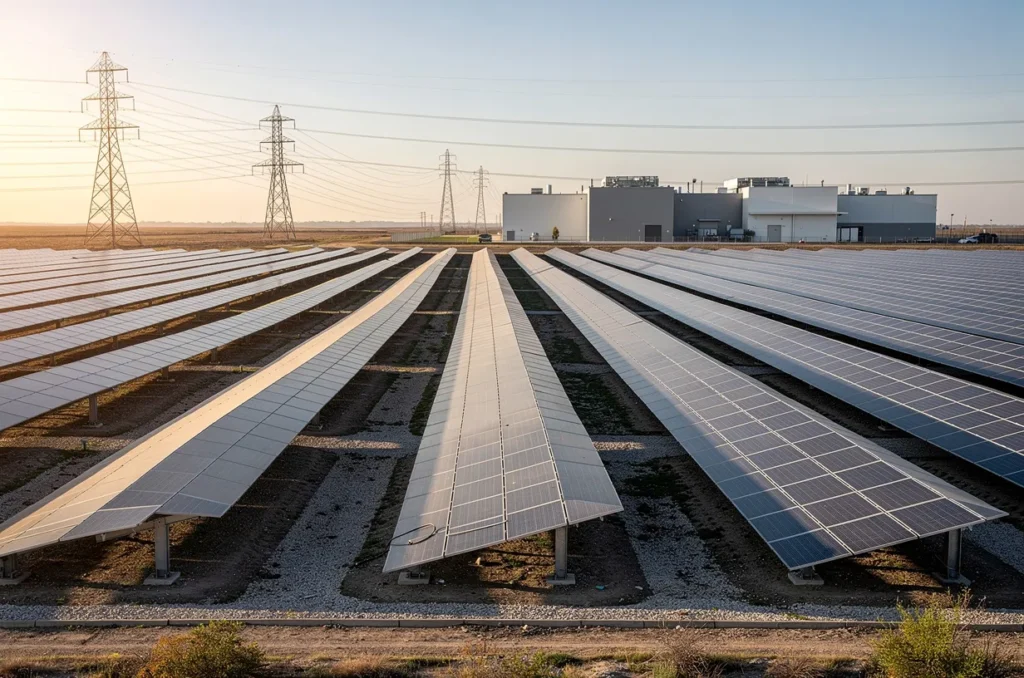
Notable corporate activity on clean PPAs also continues. Zelestra has signed seven solar PPAs with Meta totaling 1.2 GW. The 81 MW Jasper County Solar project in Indiana was completed in December 2025, and the other six projects are due between 2026 and 2028.
New Import Rules Add A Fresh Execution Risk
Federal rules restricting imports of components from Foreign Entities of Concern add another layer of complexity, particularly for solar and storage supply chains. Starting in 2026, the proportion of project components imported from FEOCs must not exceed 50%, falling to 15% by 2030. Developers have flagged that compliance could affect timelines and costs, especially for battery storage, alongside heavier documentation and traceability requirements.
Investors will be watching how quickly developers adjust procurement and whether project schedules slip as these thresholds tighten.
WSA Take
Corporate PPAs are being repriced by a simple squeeze: demand is rising fast with AI data center buildouts, while the pipeline of clean projects has been disrupted by policy changes and tougher execution conditions. The next phase looks less like “cheap renewables” and more like “firm, structured power,” with storage, flexibility, and multi-technology bundles gaining value. For U.S. investors, the key read-through is that developers and equipment supply chains tied to buildable, interconnection-ready projects may have more leverage than they did in the last cycle. The biggest swing factors now are permitting and grid access, plus component compliance under the new FEOC thresholds.
WallStAccess is a financial media platform providing market commentary and analysis for informational and educational purposes only. This content does not constitute investment advice, a recommendation, or an offer to buy or sell any securities. Readers should conduct their own research or consult a licensed financial professional before making investment decisions.