Amazon Bets on Budget Groceries
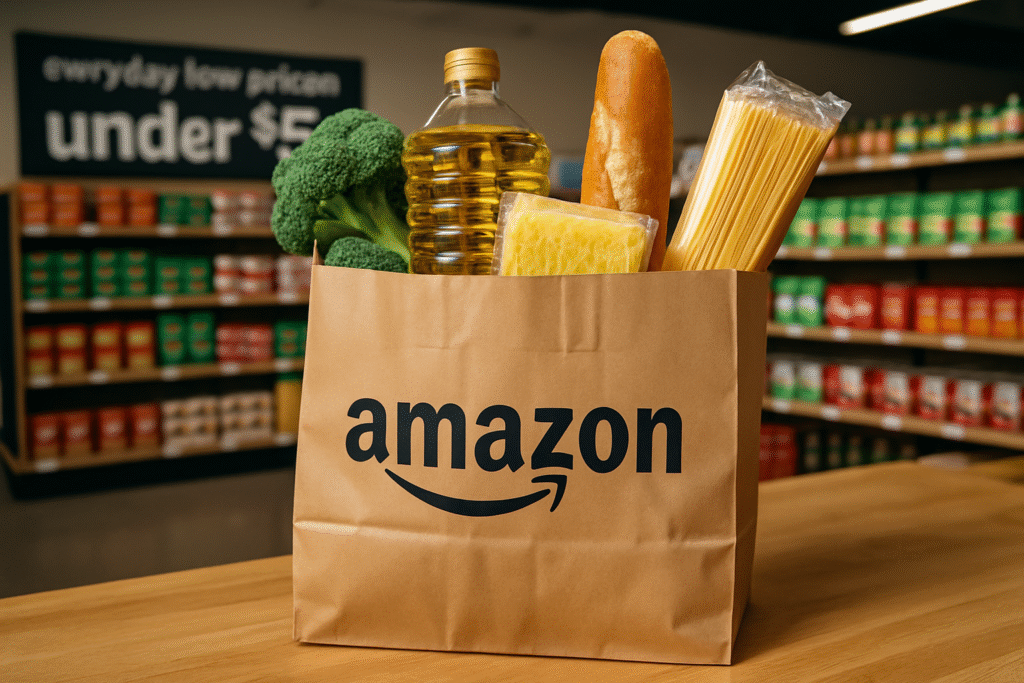
Amazon is doubling down on price-sensitive consumers with the launch of Amazon Grocery, a private-label brand offering more than 1,000 items — most priced under $5.
The line spans everything from meat and seafood to dairy, fresh produce, snacks, and baking staples. According to Amazon, the new brand unifies its Happy Belly and Amazon Fresh labels under one banner.
“During a time when consumers are particularly price-conscious, Amazon Grocery delivers more than 1,000 quality items across all categories that don’t compromise on taste — all at competitive prices,” said Jason Buechel, Amazon’s vice president of worldwide grocery.
Groceries in Transition
Amazon’s grocery strategy has been in constant evolution. The company:
- Streamlined its footprint by scaling back Go cashierless stores and closing all Fresh supermarkets in the U.K.
- Expanded fresh food delivery to more U.S. regions, offering same-day service on items like eggs, meat, and dairy.
- Continues to lean on “everyday essentials” sales such as canned goods, paper towels, and snacks, which executives have flagged as strong growth drivers.
The $5-and-under positioning appears to echo last year’s Amazon Saver brand, another low-cost grocery experiment focused squarely on value.
Why It Matters for Investors
Amazon’s retail empire is massive, but groceries remain one of the stickiest categories for consumer spending. If the company can establish loyalty at the budget tier, it could funnel more shoppers into Prime subscriptions, same-day delivery programs, and higher-margin verticals.
The move also positions Amazon against discount-heavy rivals like Walmart and Aldi, who have been aggressively targeting value-conscious consumers in the inflation era.
WSA Take
Amazon isn’t just chasing grocery market share — it’s chasing consumer loyalty during an economic squeeze. By locking shoppers into a $5-and-under value ecosystem, Amazon is betting that cost-conscious buyers will stick around for bigger-ticket purchases, too.
This launch reinforces the broader trend of tech giants pressing deeper into essential spending categories, where recurring purchases provide long-term stability.
If you missed our recent piece on CoreWeave’s billion-dollar Meta deal, it’s a reminder that from food aisles to data centers, scale and pricing power are where the next battles will be fought. For more insights, visit the Wall Street Access homepage.
Disclaimer
Wall Street Access does not work with or receive compensation from any public companies mentioned. Content is for educational and entertainment purposes only.