
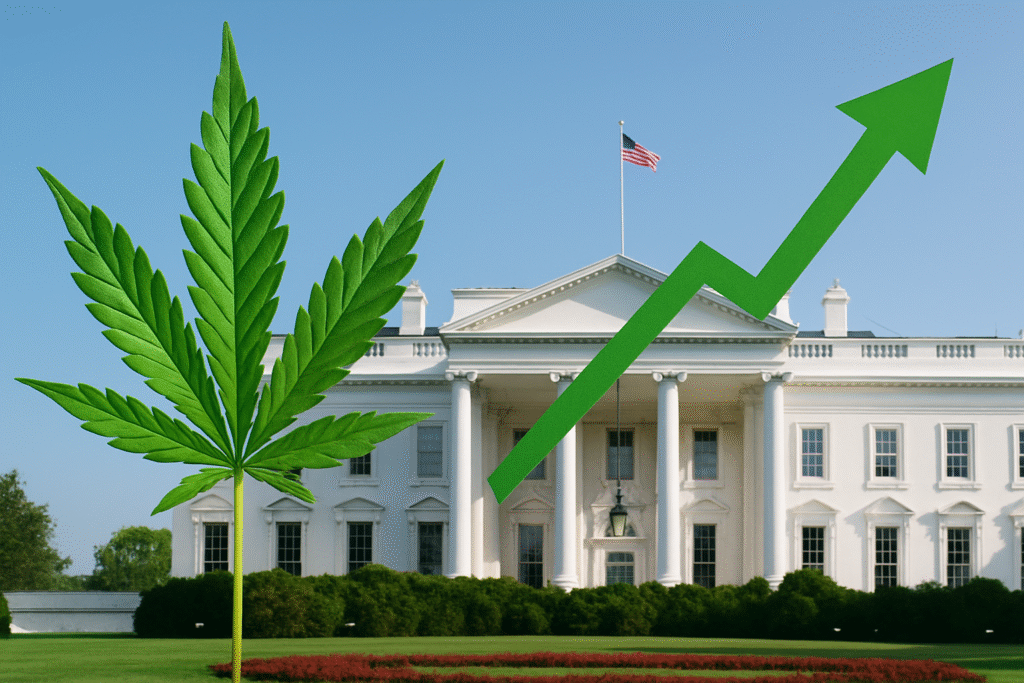
A Potential Breakthrough Moment for U.S. Cannabis Policy
Cannabis stocks ripped higher Friday after reports that the White House is actively reviewing plans to reclassify marijuana as a less dangerous drug — potentially the most significant federal shift in decades.
Discussions have reportedly included senior health officials and several industry leaders. While no final decision has been made, the direction of the conversation is clear: federal cannabis policy is under active reconsideration, and momentum toward reform is building.
Reclassification from Schedule I → Schedule III would be a game changer. Schedule I currently places cannabis alongside heroin and LSD, claiming no medical value. Moving it to Schedule III — the same category as Tylenol with codeine or ketamine — would formally acknowledge medical use and dramatically ease business restrictions.
Why Schedule III Would Reshape the Entire Cannabis Industry
A move to Schedule III wouldn’t legalize cannabis federally, but it would unlock several critical changes:
1. Relief from IRS 280E
Cannabis operators currently pay some of the highest effective tax rates in the country due to IRS rule 280E, which prohibits normal business deductions for Schedule I and II substances.
A shift to Schedule III could slash tax burdens, immediately improving profitability across the sector.
2. Access to Banking and Lending
While full SAFE Banking reform remains elusive, rescheduling would likely make financial institutions more comfortable working with cannabis businesses.
That means cheaper credit, expanded lending options, and more institutional capital.
3. Medical Research Expansion
Schedule III status would make it easier for universities, pharmaceutical companies, and labs to conduct clinical studies, accelerating adoption in the broader healthcare ecosystem.
4. Industry M&A and Investment Revival
Lower restrictions would reduce regulatory friction, making M&A deals and cross-state expansion more viable. Investors would finally have clarity after years of gridlock.
Markets reacted immediately:
- Tilray +31%
- Canopy Growth +23%
Patchwork Laws + Rising Public Pressure
Today, more than 40 states allow medical cannabis, and nearly half allow adult-use sales. But the federal-state disconnect continues to freeze out major financial institutions and complicate supply chains.
Meanwhile, federal rulemaking on rescheduling has been stalled for months, leaving businesses in limbo. Former advocates in prior administrations — including health officials and policymakers — have previously supported studying real-world outcomes rather than maintaining outdated classifications.
The current administration appears to be reviving the process, though any final rule would still require formal review through the DEA and could face legal challenges.
WSA Take
Cannabis investors have been waiting years for a real policy catalyst — and this is the closest the sector has come. While rescheduling isn’t federal legalization, Schedule III is still a major unlock for profitability, banking access, and investor confidence.
If the review formally advances, this could mark the beginning of a multi-year re-rating for the U.S. cannabis industry — but timelines remain uncertain, and regulatory friction isn’t going away overnight.
Still, after years of stagnation, this is the first truly bullish regulatory signal in a long time.
Read our recent coverage on Oracle’s $300B OpenAI Bet Backfiring.
Explore more market insights on the WallStreetAccess homepage.
Disclaimer
WallStAccess does not work with or receive compensation from any companies mentioned. This content is for informational and educational purposes only and should not be considered financial advice. Always conduct independent research before investing.