What Happened
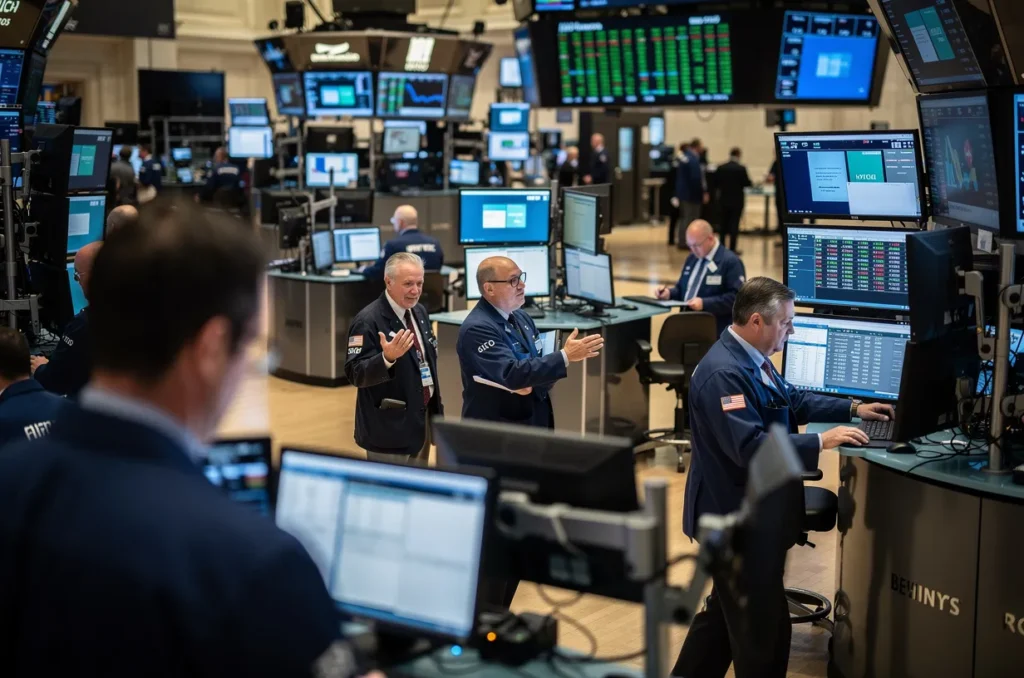
U.S. stocks surged on Wednesday as investors rushed back into risk assets after the U.S. and Iran agreed to a two-week ceasefire that could lead to a broader reopening of the Strait of Hormuz.
The S&P 500 rose 2.1%, the Nasdaq Composite gained 2.6%, and the Dow Jones Industrial Average climbed 2.3%, or more than 1,000 points. The move marked a sharp reversal from the fear-driven trading that had dominated markets as oil spiked and conflict in the Middle East escalated.
Ceasefire Talk Changed The Entire Market Tone
The risk-on move followed President Trump’s announcement of a two-week suspension in hostilities in exchange for Tehran lifting its blockade of the Strait of Hormuz.
Trump said he agreed to suspend attacks on Iran for two weeks, calling the arrangement a “double sided ceasefire.” Shortly after, Iranian Foreign Minister Abbas Araghchi confirmed acceptance of the terms, saying that if attacks on Iran stopped, its own operations would also cease.
He added that, for the next two weeks, safe passage through Hormuz would be possible through coordination with Iran’s Armed Forces.
That was enough to completely reprice the market’s immediate assumptions around energy supply and geopolitical risk.
Oil Collapsed As Supply Fears Eased
The most dramatic move was in oil.
- Brent crude fell more than 16% to just above $91
- WTI crude dropped almost 18% to around $93
Some ships were reported to have already moved through the 21-mile-wide waterway, reinforcing the view that the route was starting to reopen.
That mattered because the oil spike had become one of the market’s biggest inflation fears. Once crude broke lower, investors quickly started to reprice the idea that inflation pressure could cool faster than expected.
Lower Oil Reignited Rate-Cut Hopes
The collapse in energy prices also revived bets that the Federal Reserve could return to cutting rates later this year.
The logic is straightforward: if the worst-case Hormuz scenario eases, then the risk of a fresh inflation surge tied to oil and fuel costs also comes down. That makes it easier for investors to imagine a less restrictive rate path ahead.
Markets were also waiting for minutes from the Fed’s March meeting, which could offer more detail on how policymakers were thinking about the economic fallout from the Iran war.
Chips And Travel Led The Charge
The rally was broad, but leadership came from exactly the groups that had been most exposed to the recent risk-off tone.
Semiconductor stocks were among the strongest movers, with names such as:
- Lam Research
- Applied Materials
- Micron
- Intel
- ASML
- KLA
also moving higher. The Philadelphia Semiconductor Index and the iShares Semiconductor ETF hit their first intraday record highs since February, showing the strength of the rebound across the chip complex.
Travel-related names also rallied, including:
- Airbnb
- Booking Holdings
- Marriott
That made sense in a market suddenly pricing less geopolitical disruption, lower energy costs, and a more stable near-term macro backdrop.
Megacaps Added More Fuel
The big platform and AI names also participated heavily in the upside move.
Alphabet, Amazon, Meta, and Broadcom were up around 3%, while Nvidia, Apple, Microsoft, and Tesla also traded higher.
The rally in Tesla came as data from Vanda Research showed retail investors had been buying the dip. According to the note, Tesla drew roughly $256 million in retail inflows over the last five days, suggesting individual traders were still showing conviction in the name even after a difficult start to the year.
Delta Added A Corporate Bright Spot
On the company side, Delta Air Lines (DAL) also helped sentiment after reporting first-quarter earnings that beat expectations.
The airline said continued growth in its premium business was helping offset some of the market’s bigger worries, including fuel costs and disruption tied to the ongoing government shutdown affecting TSA workers.
That gave the broader rally one more support point outside of pure geopolitics.
A Key Technical Level Gave Way
The strength of the move also mattered technically. The Dow, S&P 500, and Nasdaq all pushed back above their 200-day moving averages, a closely watched level for traders.
The Russell 2000, which had held above that line, climbed to within 3% of its January record high. The Dow Jones Transportation Average jumped 4% and hit its first intraday record high since February.
That kind of breadth is usually a sign that the rally is not being carried by just a handful of large-cap names.
WSA Take
This was not just a bounce. It was a full repricing of the market’s most immediate geopolitical fear. Once the U.S.-Iran ceasefire reduced the odds of a prolonged Hormuz blockade, oil cracked lower, inflation fears cooled, and equities snapped back hard.
For investors, the biggest signal was how broad the rally became. Tech, travel, transports, and megacaps all participated, while energy lagged as crude collapsed. If the ceasefire holds and shipping through Hormuz keeps normalizing, markets may keep leaning back into risk. But if the deal starts to wobble, the same trade could reverse just as fast.
Explore More Stories in Markets
Disclaimer
WallStAccess is a financial media platform providing market commentary and analysis for informational and educational purposes only. This content does not constitute investment advice, a recommendation, or an offer to buy or sell any securities. Readers should conduct their own research or consult a licensed financial professional before making investment decisions.