Markets React to Escalation
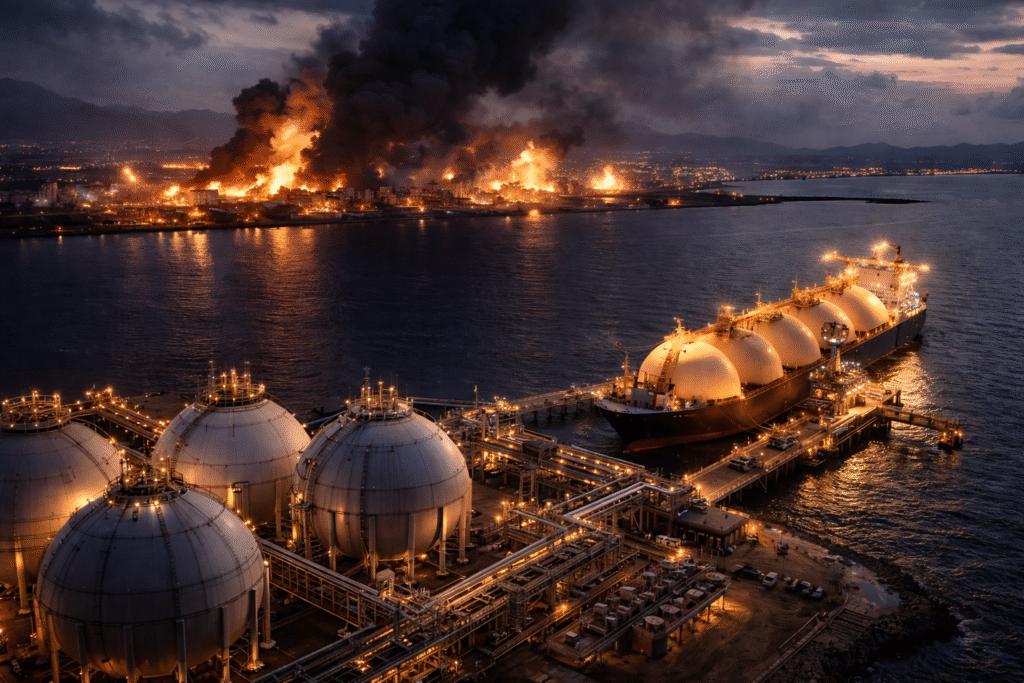
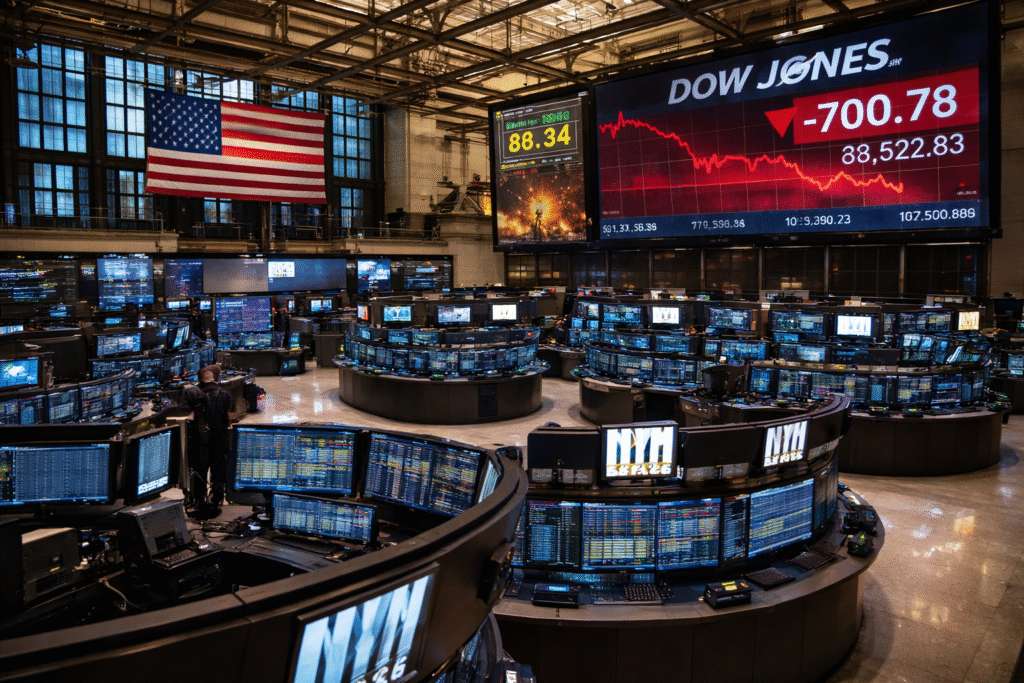
U.S. equities slid Tuesday after fresh air strikes in the Middle East heightened fears of a prolonged regional conflict.
The Dow Jones Industrial Average dropped more than 700 points, while the S&P 500 and Nasdaq each fell roughly 1.4%–1.5%. The selloff followed a volatile Monday session that initially saw dip-buyers step in.
Now, investors are reassessing the risk of a drawn-out conflict — and what it could mean for global energy supply.
Oil Becomes the Flashpoint
Crude prices climbed between 6% and 8% as traders priced in potential disruption to key supply routes.
Energy futures broadly surged:
- Crude oil sharply higher
- Heating oil and gasoline futures rising
- Natural gas also advancing
The spike in oil amplified inflation concerns, particularly as markets had begun to anticipate stabilization in price pressures.
Meanwhile, gold — after a four-day rally — reversed lower, sliding several percentage points as the U.S. dollar strengthened.
Dollar Strength Adds Pressure
The U.S. dollar index surged to near multi-month highs, adding further strain to commodities and risk assets.
The stronger dollar weighed on precious metals and emerging market exposure, reinforcing the risk-off tone.
When the dollar strengthens alongside oil, markets often brace for tighter financial conditions.
Fed Flags Inflation Risk
New York Fed President John Williams acknowledged that higher energy prices would likely impact the near-term inflation outlook.
Energy-driven inflation spikes historically filter through to consumer costs, even if the broader economy is less oil-dependent than in past decades.
The conflict also introduces a new layer of economic uncertainty — particularly if disruptions persist.
Rotation Beneath the Surface
Beyond geopolitics, earnings season continues.
Some retailers posted results in line with expectations, offering selective bright spots amid broader market weakness.
Still, the dominant driver remains energy markets and global risk sentiment.
WSA Take
Markets are entering a familiar pattern:
Geopolitical tension → Oil spike → Inflation anxiety → Equity pressure.
The key variable now is duration.
Short conflicts tend to create volatility without lasting economic damage. Prolonged disruptions, however, can reshape inflation expectations, pressure central banks, and tighten financial conditions.
For now, energy is setting the tone.
And until oil stabilizes, equities are likely to trade defensively.
Explore More Stories in Markets
Disclaimer
WallStAccess is a financial media platform providing market commentary and analysis for informational and educational purposes only. This content does not constitute investment advice, a recommendation, or an offer to buy or sell any securities. Readers should conduct their own research or consult a licensed financial professional before making investment decisions.