Markets Attempt to Stabilize After AI Shock
U.S. stocks opened higher Tuesday, attempting to claw back losses from a sharp AI-fueled sell-off earlier in the week.
The Dow Jones Industrial Average gained roughly 0.9%, or more than 400 points. The S&P 500 added around 0.6%, while the Nasdaq Composite rose nearly 0.9%.
The rebound comes after renewed fears that accelerating AI advancements could disrupt sectors across corporate America — a narrative that triggered broad selling pressure Monday.
Tuesday’s early gains suggest investors are reassessing whether the sell-off moved too far, too fast.
AMD Lifts Tech Sentiment
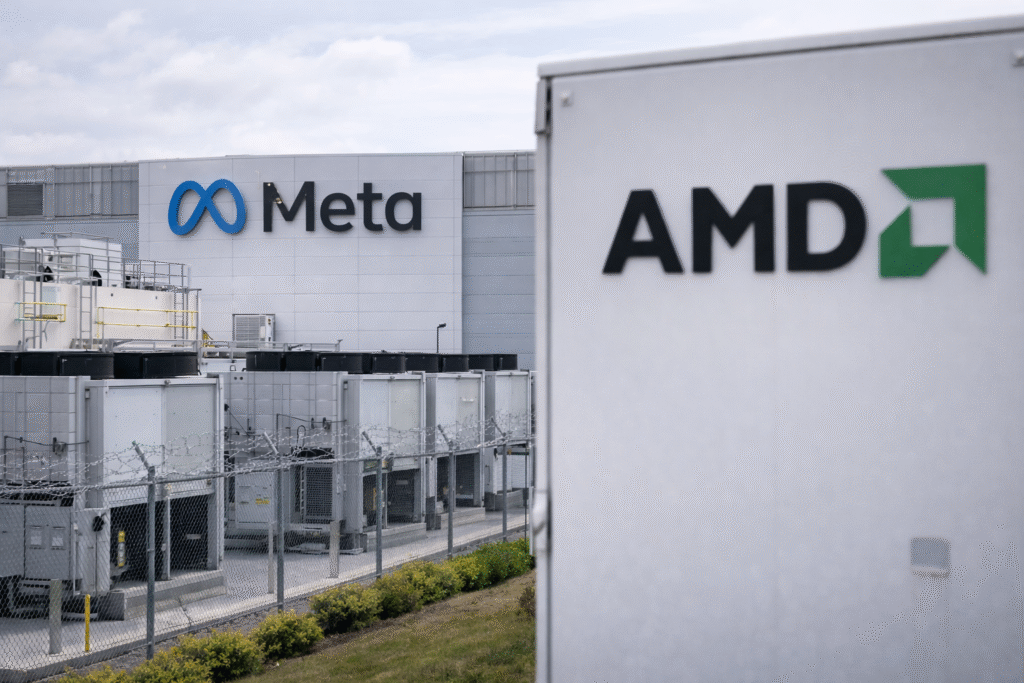
Helping the recovery was a sharp move in AMD, whose shares jumped as much as 10% after announcing a multiyear agreement to supply Meta with a large volume of GPUs for its AI build-out.
The deal reinforces that while AI disruption may pressure some sectors, the infrastructure players remain in demand.
Semiconductors and data-center suppliers are still viewed as direct beneficiaries of hyperscaler spending — even as software and consulting names face valuation questions.
AI Event Puts Pressure on Software
Investors also had their eyes on Anthropic’s virtual event, where the AI startup unveiled new tools and updates to its Claude chatbot platform for enterprise users.
The company’s recent product rollouts have rattled certain corners of the market, with investors questioning how rapidly AI could displace tasks in areas like consulting, software services, and finance.
That tension continues to drive volatility, particularly in stocks perceived as exposed to AI-driven disruption.
Interestingly, shares of Salesforce, FactSet, and DocuSign climbed after Anthropic announced collaborative plug-ins designed to support financial analysis and document workflows — a reminder that AI integration can also lift incumbents rather than replace them.
Trade Tensions Still Hover
Beyond AI, markets are digesting the formal rollout of a new 10% global tariff, which took effect Tuesday.
The move has introduced fresh uncertainty around existing trade agreements, with key allies voicing concern that the new duties alter previously negotiated terms.
Reports suggest policymakers may be preparing additional measures, potentially including higher tariff rates and new national security reviews tied to sector-specific imports.
Investors will be watching upcoming policy remarks closely for clarity on where trade negotiations head next.
WSA Take
The market is balancing two powerful forces:
- AI acceleration, which creates winners in chips and infrastructure while pressuring certain software and services names.
- Trade uncertainty, which adds macro volatility just as corporate earnings expectations are being reassessed.
Tuesday’s rebound shows that capital hasn’t left the AI trade — it’s rotating within it.
The key question now: does AI remain a growth engine for the broader market, or does disruption anxiety continue to trigger sharp sector swings?
For now, investors appear willing to step back in — but volatility remains the theme.
Explore More Stories in Markets
Disclaimer
WallStAccess is a financial media platform providing market commentary and analysis for informational and educational purposes only. This content does not constitute investment advice, a recommendation, or an offer to buy or sell any securities. Readers should conduct their own research or consult a licensed financial professional before making investment decisions.