
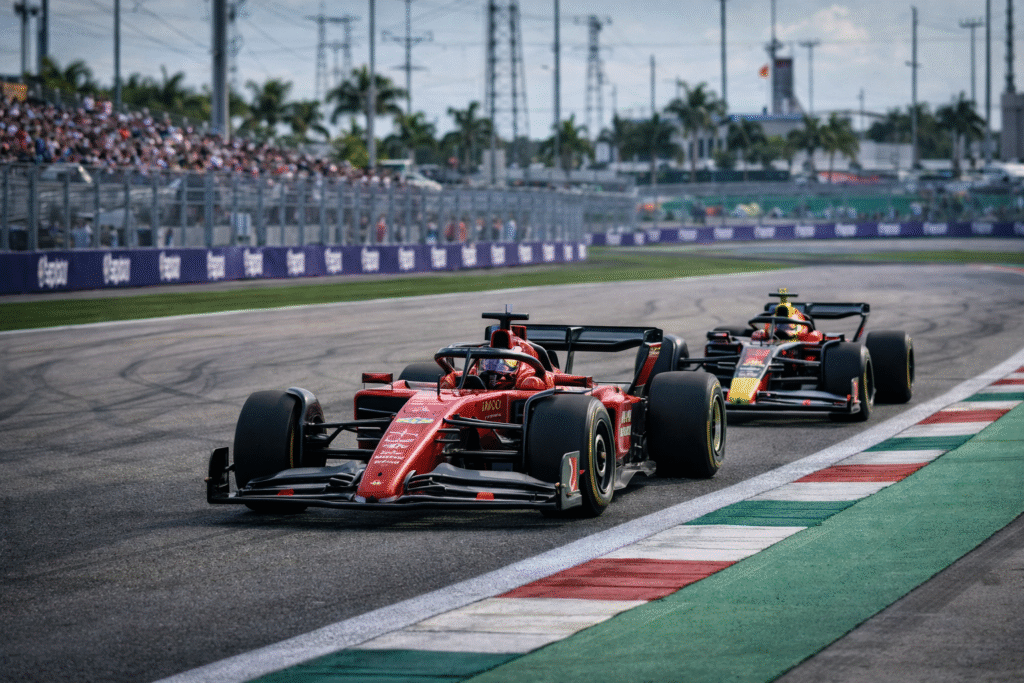
A New U.S. Era for Formula 1
Formula 1’s 2026 season begins this weekend in Australia, but the bigger story for investors may be happening off the track.
For the first time, Apple TV is the exclusive U.S. broadcaster for Formula 1, taking over from ESPN and putting one of the fastest-growing sports properties in America behind a streaming paywall. Apple says U.S. subscribers can now watch every practice, qualifying session, sprint, and race through Apple TV.
That is a major bet for both sides.
For Apple, it is another push deeper into live sports and premium ecosystem content. For Formula 1, it is a calculated risk: trade broader legacy-TV reach for a more controlled, integrated digital experience. That bet matters because the U.S. has become one of F1’s most important growth markets.
Why This Matters
Formula 1 was already building real momentum in America before Apple stepped in.
F1’s official 2025 season review said the series set an all-time U.S. TV record on ESPN, with 16 races posting event viewership highs. Industry tracking put the 2025 season average at roughly 1.32 million viewers on ESPN networks.
That makes Apple’s move interesting.
Apple is not buying a distressed asset. It is buying a sport that was already working in the U.S. — and trying to make it work even better inside a broader ecosystem that includes Apple TV, Apple Maps, Apple News, and other Apple touchpoints now being integrated with F1 content and race-weekend engagement.
The Risk for Formula 1
The upside is obvious: Apple can create a deeper, more immersive fan experience than a traditional broadcaster.
The risk is also obvious: casual discovery gets harder when the sport is no longer something a viewer stumbles across on ESPN. Apple TV’s U.S. subscription price is $12.99 per month, which raises the barrier for newer or less committed fans.
That matters because F1 is still growing in the U.S., not defending a mature market. If exclusivity cuts off casual reach too aggressively, it could slow momentum right when Audi joins the grid and Cadillac prepares to enter the sport, giving F1 even more storytelling fuel for American audiences.
Apple Isn’t Just Buying Rights — It’s Building a Funnel
The most interesting part of this deal may be that Apple is not acting like a normal broadcaster.
Netflix announced last week that Drive to Survive Season 8 will also appear on Apple TV in the U.S., and Netflix said Apple TV will be the exclusive U.S. live home for the 2026 F1 season while Netflix will also carry the Canadian Grand Prix live in the U.S. as part of the collaboration.
That tells you Apple and F1 are thinking bigger than race-day rights.
They are trying to build a loop:
- Netflix pulls in casual fans through storytelling
- Apple converts them into live viewers
- Apple’s ecosystem keeps them engaged across devices and services
That is a very different playbook from linear TV.
WSA Take
This is one of the more interesting media bets of 2026.
Apple doesn’t need Formula 1 to move the needle financially. But Formula 1 could become a valuable test case for how premium sports content lives inside a tech ecosystem rather than a traditional TV bundle.
For Formula 1, the upside is deeper fan engagement and a more modern U.S. distribution model.
For Apple, the upside is brand relevance, subscriber retention, and another live content pillar.
The question is simple:
Can a fast-growing sport grow even faster when it gives up mass reach for controlled digital distribution?
This weekend, that test begins.
Disclaimer
WallStAccess is a financial media platform providing market commentary and analysis for informational and educational purposes only. This content does not constitute investment advice, a recommendation, or an offer to buy or sell any securities. Readers should conduct their own research or consult a licensed financial professional before making investment decisions.