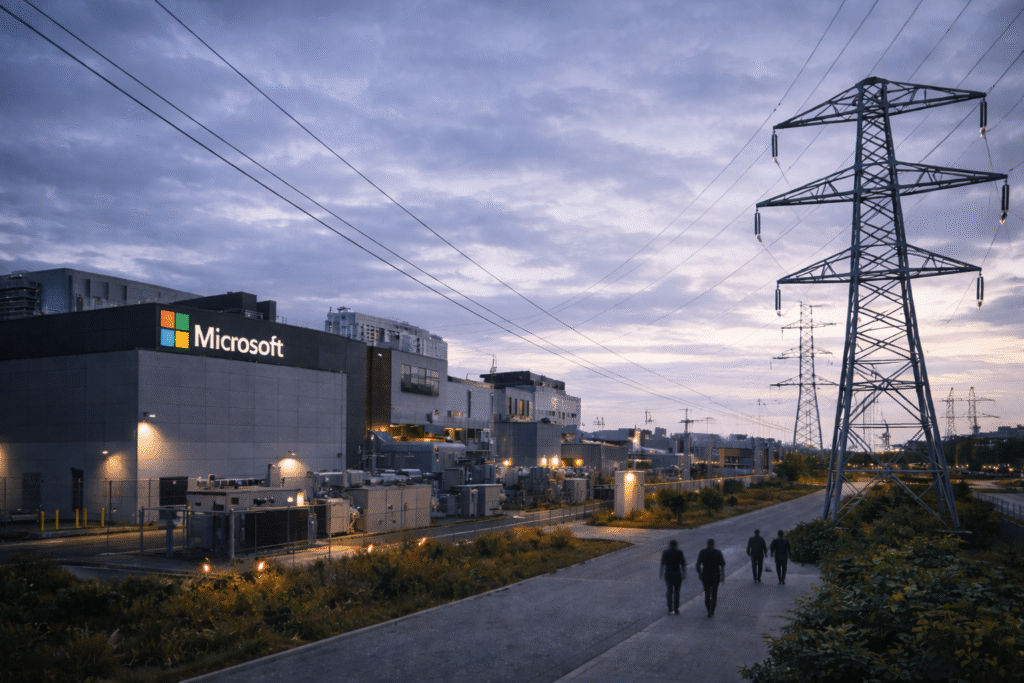
Microsoft Looks to Superconductors to Power the AI Build-Out
Microsoft is exploring the use of superconducting power lines inside its data centers, a move that could materially improve energy efficiency and help accelerate the company’s rapidly expanding U.S. infrastructure footprint.
The company said Tuesday that recent tests of high-temperature superconductor cables showed they can transmit the same amount of electricity as conventional copper or aluminum cables while occupying significantly less space — a key advantage as power availability becomes a bottleneck for data center growth.
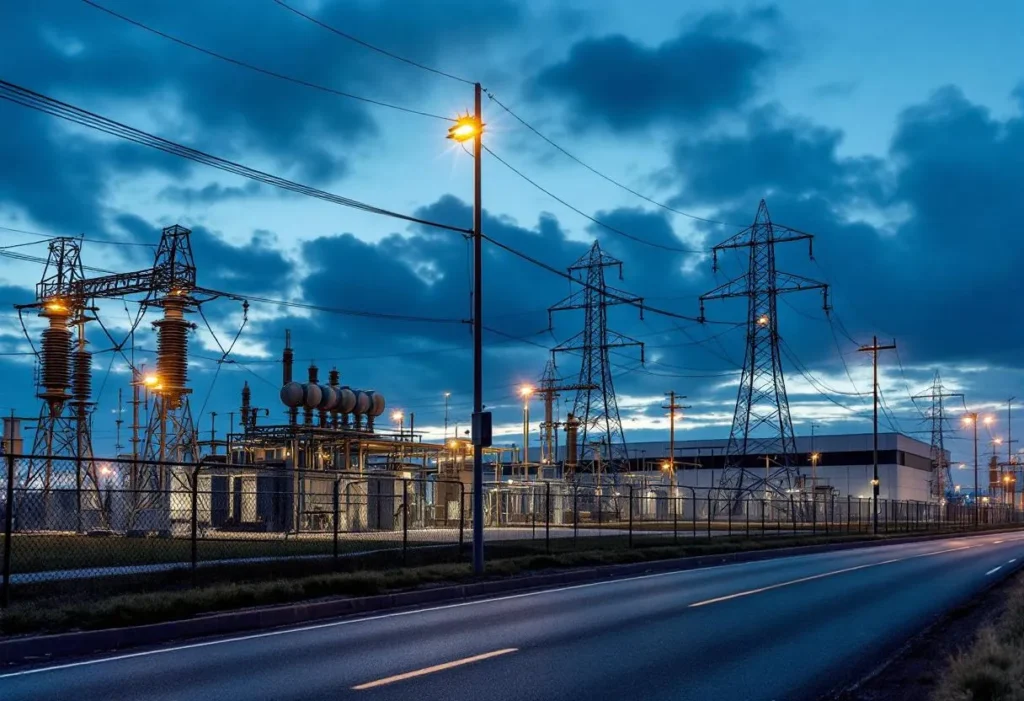
Big Tech’s push to scale artificial intelligence infrastructure has collided with an aging U.S. power grid and constrained electricity supplies, slowing the pace at which massive server campuses can be brought online.
Why Power Has Become the Bottleneck
Modern data centers are no longer limited by real estate or capital alone — power availability and transmission capacity have become critical constraints.
According to U.S. government research, data centers could consume up to 12% of total U.S. electricity demand by 2028, roughly triple the share from just four years ago. Individual campuses now under construction can require more than one gigawatt of power at a single site, enough to supply roughly 750,000 homes.
Microsoft said superconducting cables could help address this challenge by enabling higher electrical density inside existing facilities, reducing the need for additional substations and bulky transmission infrastructure.
“The technology helps us scale power density without expanding our physical footprint,” said Husam Alissa, who leads the Systems Technology Team at Microsoft’s CO+I CTO Office. “It can also help us reduce the size of power transmission infrastructure and lower community impact.”
How Superconducting Cables Work
High-temperature superconductors rely on ceramic-like materials that conduct electricity far more efficiently than traditional metals. When cooled, these materials dramatically reduce energy losses during transmission.
While superconducting technology has existed for decades, widespread adoption has been limited by high costs, complex manufacturing, and cooling requirements. Microsoft’s interest signals that those barriers may be starting to fall as data center power demands reach unprecedented levels.
The company said the technology could shorten the time required to energize new server warehouses by avoiding lengthy grid upgrades and substation expansions.
Microsoft did not disclose how much it has invested in the technology or provide a timeline for deployment inside live data centers.
Strategic Investment in the Supply Chain
Microsoft has already begun investing in companies developing superconducting infrastructure. Among them is VEIR, a Massachusetts-based cable and cooling-system provider that raised $75 million in a Series B funding round last year.
VEIR recently completed a test of a three-megawatt superconducting cable capable of powering a server rack in a simulated data center environment. The company says its cables can be more than ten times smaller and lighter than conventional alternatives, enabling more compact facility designs and faster deployment.
Such gains could prove critical as hyperscalers race to build AI-ready infrastructure at scale.
The Bigger Picture: AI vs. the Grid
Microsoft’s exploration of superconducting cables highlights a growing tension at the heart of the AI boom: computing ambition is outpacing energy infrastructure.
As cloud providers, AI labs, and enterprises race to deploy larger models and more powerful workloads, power efficiency is becoming just as important as chip performance. Solutions that reduce grid strain, accelerate permitting, and minimize community impact may ultimately determine which companies can scale fastest.
For Microsoft, which operates one of the world’s largest cloud platforms, marginal efficiency gains at the infrastructure level can translate into massive long-term advantages.
WSA Take
This isn’t just an engineering experiment — it’s a signal.
Power, not capital, is emerging as the real choke point of the AI era. Microsoft’s interest in superconducting cables shows Big Tech is now looking beyond chips and software to solve the next constraint in the stack.
If this technology proves viable at scale, it could quietly reshape how data centers are built — faster timelines, smaller footprints, and fewer grid battles. In the AI arms race, whoever solves the energy problem first doesn’t just save money — they gain time.
Disclaimer
WallStAccess is a financial media platform providing market commentary and analysis for informational and educational purposes only. This content does not constitute investment advice, a recommendation, or an offer to buy or sell any securities. Readers should conduct their own research or consult a licensed financial professional before making investment decisions.