OpenAI Moves Deeper Into the Enterprise
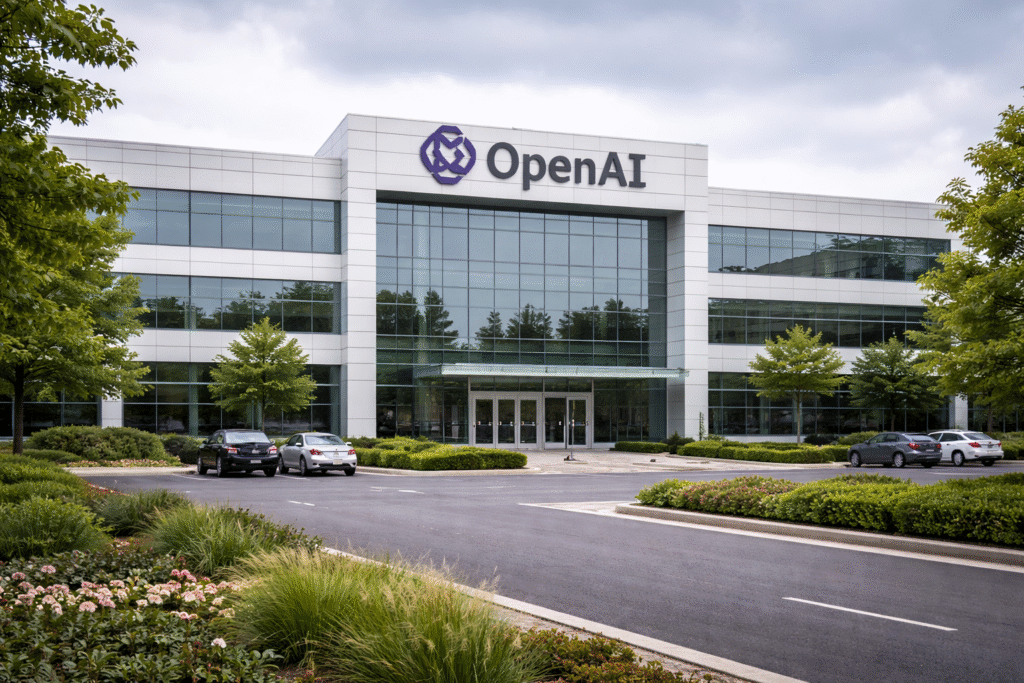
OpenAI is doubling down on enterprise adoption.
The company announced multiyear partnerships with consulting heavyweights Accenture, Boston Consulting Group (BCG), Capgemini, and McKinsey & Co. — forming what it calls “Frontier Alliances.”
The goal is simple: move AI from experimentation into production.
Consulting firms already embedded inside Fortune 500 companies will now help clients define AI strategy, integrate OpenAI’s tools, and deploy AI agents directly into operational workflows.
This isn’t about chatbots. It’s about infrastructure.
What Is Frontier?
Earlier this month, OpenAI introduced Frontier, an enterprise platform designed to act as an intelligence layer across organizations.
Frontier connects:
- Internal data systems
- Enterprise software tools
- AI agents capable of completing tasks autonomously
The consulting partners will help companies:
- Identify use cases
- Build secure deployments
- Integrate agents into finance, operations, HR, customer service, and analytics workflows
In other words: turning AI into an operational layer — not a side experiment.
Why This Matters for the AI Race
OpenAI is competing aggressively with Google and Anthropic for enterprise dominance.
Enterprise customers now account for roughly 40% of OpenAI’s business, and leadership expects that figure to approach 50% by year-end.
That’s a meaningful shift.
Consumer AI drives headlines. Enterprise AI drives recurring revenue.
Consulting giants bring:
- Existing C-suite relationships
- Industry-specific expertise
- Implementation muscle
- Global distribution channels
Deploying AI at scale inside a Fortune 100 company is not plug-and-play. It requires change management, integration, compliance, and training.
That’s where these firms come in.
The Bigger Trend: AI Agents Go Operational
The announcement signals something bigger happening across the market:
AI is moving from:
- Tools employees experiment with
To:
- Systems that independently complete tasks
Companies want AI agents that:
- Draft reports
- Analyze financial data
- Manage workflows
- Interface across departments
OpenAI’s strategy is to pair its foundation models with on-the-ground implementation expertise — acknowledging that no single AI lab can scale enterprise rollout alone.
As one executive put it: it takes a village.
WSA Take
This move is about distribution.
OpenAI already has the model capability. What it needs now is scale inside large enterprises — and consulting firms are the fastest way to get there.
If enterprise AI adoption accelerates in 2026, it won’t happen because companies discovered ChatGPT. It will happen because AI systems become embedded in real workflows, backed by firms that know how to deploy at scale.
This partnership strategy suggests OpenAI is thinking less like a startup — and more like an enterprise platform provider.
And that’s where the durable revenue tends to live.
Disclaimer
WallStAccess is a financial media platform providing market commentary and analysis for informational and educational purposes only. This content does not constitute investment advice, a recommendation, or an offer to buy or sell any securities. Readers should conduct their own research or consult a licensed financial professional before making investment decisions.