Oracle’s AI Bet Turns Into a Market Liability
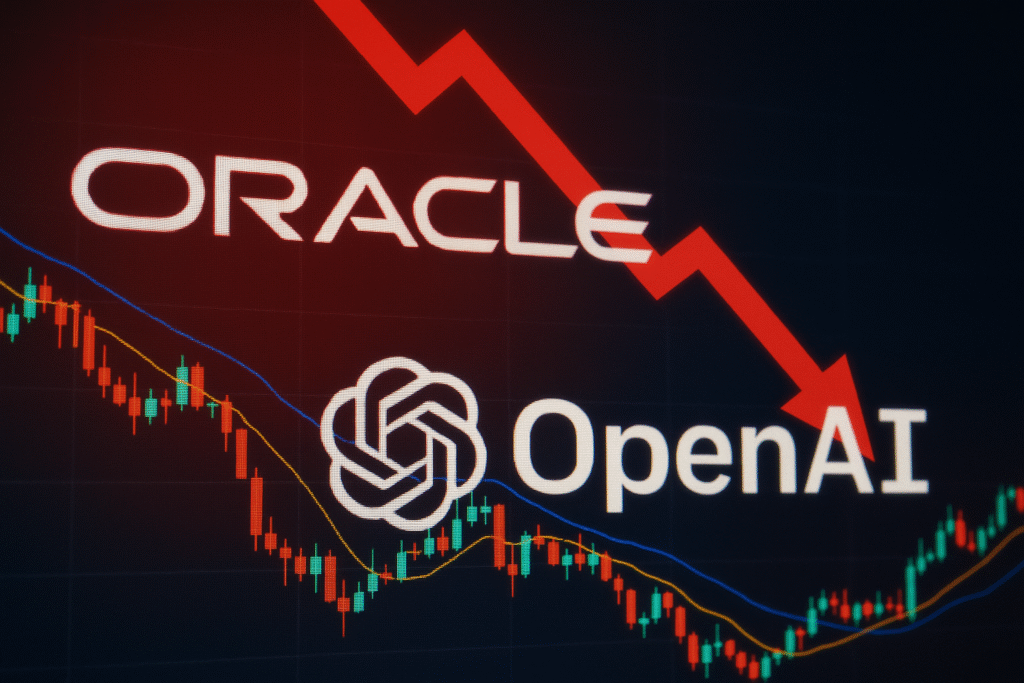
Oracle spent all of 2024 positioning itself as one of the core infrastructure players behind the AI boom. But the same OpenAI megadeal that pushed the stock to record highs in September is now dragging the company into its steepest drawdown in years.
Shares have collapsed over 40% since the fall — including $67 billion erased in a single day — as investors reassess the risks tied to Oracle’s flagship customer.
The catalyst: Oracle disclosed that its remaining performance obligations (RPO) had surged nearly 360% to $455B, but later filings revealed something startling — OpenAI accounted for at least $300B of that figure through the massive Stargate compute project.
That concentration is now being viewed as a liability, not a win.
OpenAI’s Own Struggles Are Becoming Oracle’s Problem
OpenAI’s infrastructure bill is ballooning. Analysts expect the startup’s commitments — spanning Nvidia, AMD, CoreWeave, Broadcom, and Oracle — to reach $1.4 trillion. Combine that with intensifying competition from Google Gemini, and markets are suddenly worried OpenAI won’t be able to pay for the scale it promised.
“Clearly there’s been a reversal in the market’s perception of OpenAI,” BNP Paribas’ Stefan Slowinski said — warning that Oracle may be the most exposed player in the ecosystem.
The fear is simple:
If OpenAI can’t monetize fast enough, Oracle holds the bag.
Oracle’s Financials Didn’t Help the Confidence Problem
Second-quarter results brought more red flags:
- $12B in quarterly capex (higher than expected)
- –$10B in free cash flow (vs. expected –$6B)
- Full-year capex forecast raised to $50B (from $35B)
The aggressive investment cycle, paired with a BBB credit rating hovering above junk, amplified concerns about leverage and cash burn.
Management tried to calm markets by noting:
- Oracle now has 700+ AI customers,
- Infrastructure could be repurposed in “hours” if OpenAI falters,
- RPO still grew $68B this quarter from Nvidia, Meta, and others,
- Total data-center buildout should remain below $100B.
But for now, investors aren’t buying the optimism.
“Right now, the market’s just saying, ‘We don’t have confidence in the returns on all this capex,’” Slowinski said.
WSA Take
Oracle’s AI story was initially sold as a once-in-a-generation infrastructure opportunity. Now it’s a concentration-risk test: the company bet on the hottest player in AI just as that ecosystem hits volatility.
The long-term bullish case is still intact if Oracle successfully diversifies demand — but until then, its stock will trade like an OpenAI proxy. Markets want proof that this capex wave can convert to durable, diversified revenue, not just a giant bet on one customer.
Read our recent coverage on Oil Holding Near Two-Month Lows.
Explore more market insights on the WallStreetAccess homepage.
Disclaimer
WallStAccess does not work with or receive compensation from any companies mentioned. This content is for informational and educational purposes only and should not be considered financial advice. Always conduct independent research before investing.