Hollywood’s Biggest Bidding War Just Intensified
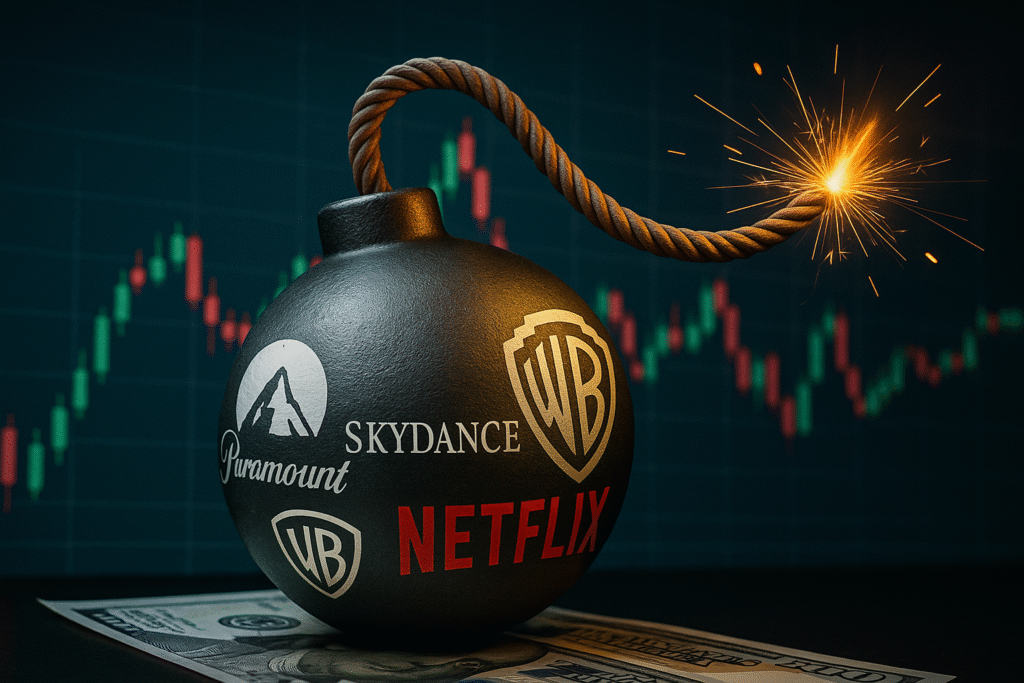
The race to acquire Warner Bros. Discovery (WBD) is transforming into one of the most dramatic takeover battles in media history.
On Monday, Paramount Skydance announced a $30-per-share, all-cash offer for WBD — valuing the deal at $108.4 billion, nearly 30 billion more than Netflix’s proposed acquisition announced just days earlier.
Markets reacted instantly:
Paramount jumped over 6%, while WBD climbed as much as 7% on the news.
The message from David Ellison’s camp is clear: Paramount wants the entire company — studios, streaming, and networks — and believes its bid is simpler, cleaner, and more executable than Netflix’s.
Netflix’s Deal Set the Stage — Paramount’s Offer Ups the Stakes
Last week, Netflix agreed to acquire WBD’s TV, film, and streaming assets for $72B in equity value, part of a broader $82.7B cash-and-stock transaction. WBD shareholders would receive:
- $23.35 in cash
- $4.50 in Netflix stock
But the deal faces intense antitrust scrutiny. A combined Netflix–WBD would control roughly one-third of U.S. streaming activity, according to JustWatch — a level of consolidation regulators are already signaling they’ll examine closely.
Paramount’s move exploits that uncertainty.
Its offer is all cash, potentially faster to close, and avoids the mix-and-match structure of Netflix’s proposal — which includes a spinoff of CNN, TNT Sports, Discovery, and other networks into a separate public company.
Why Paramount Thinks It Can Win
After three previously rejected bids — the largest being $20 per share late last year — Paramount has returned with a dramatically strengthened offer and a simplified financing structure.
1. Fully Backstopped Equity
Regulatory filings show the full $40.7B equity requirement is now guaranteed by:
- The Ellison family
- RedBird Capital
Earlier proposals had relied on a complex mix of global investors. This time, sovereign wealth funds and other partners have agreed to non-voting roles, removing lingering governance concerns.
2. Cleaner Path for Shareholders
Unlike Netflix’s partial acquisition and corporate carve-out:
Paramount is offering to buy 100% of WBD — all assets, one deal, one close.
Its pitch:
Less regulatory risk. Faster execution. Higher upfront value.
The Regulatory Wildcard
Whichever bid ultimately prevails must clear a thorough antitrust review. Both deals reshape the media landscape — but a Netflix–WBD merger faces particularly steep obstacles given its potential market share in streaming.
Analysts expect months of review, multiple jurisdictions, and intense scrutiny over industry concentration.
Paramount’s all-cash simplicity could give it an edge — but nothing is guaranteed.
WSA Take
This is the highest-stakes media battle since the Fox–Disney era, and it’s far from over.
Netflix wants the world’s deepest content vault to fortify its streaming dominance. Paramount wants to rebuild a Hollywood icon under one roof. And Warner Bros. Discovery is suddenly positioned as the most contested asset in global entertainment.
The coming months will determine not just who wins the company — but how the next decade of streaming, theatrical releases, and global content competition will look.
Paramount has thrown down its biggest card yet.
Now the industry waits for Warner Bros., regulators, and markets to respond.
Read our recent coverage on NextEra Teaming Up With Exxon.
Explore more market insights on the WallStreetAccess homepage.
Disclaimer
WallStAccess does not work with or receive compensation from any companies mentioned. This content is for informational and educational purposes only and should not be considered financial advice. Always conduct independent research before investing.