Tesla (TSLA) opened 2026 with its weakest quarterly deliveries in a year, missing Wall Street expectations as fading U.S. incentives and tougher global competition continued to pressure its core electric vehicle business. The stock fell more than 4% after the update, extending a difficult run for the shares, which are already down about 15% this year. The delivery figure also pointed to a wider gap between what Tesla built and what it sold, a sign that inventory is rising faster than demand.
Deliveries Miss As The Gap Widens
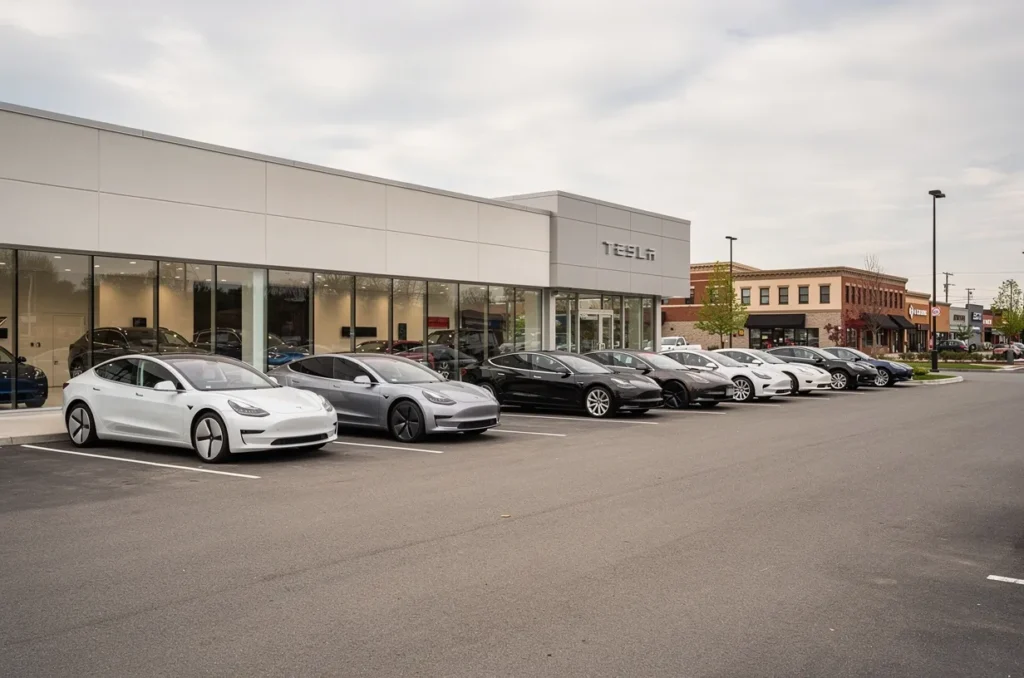
Tesla said it delivered 358,023 vehicles in the first quarter, below the 368,903 analysts had expected. Deliveries were still up 6.3% from a year earlier, but the quarter marked the company’s weakest showing in a year. Production ran well ahead of sales. Tesla made 50,363 more vehicles than it delivered during the period, the widest gap in at least four years.
- Deliveries: 358,023 vehicles
- Expected: 368,903 vehicles
- Production gap: 50,363 vehicles
- Share move: down more than 4%
That imbalance matters because it suggests Tesla may be leaning on output while demand softens in key markets. For a company valued largely on future growth, the auto business still sets the tone for near-term sentiment.
Incentives And Competition Are Pressuring Demand
A major headwind came from the end of a $7,500 federal tax credit in the U.S., which removed a key incentive for buyers. At the same time, Tesla is facing more pressure from legacy automakers and lower-cost Chinese rivals. The company also lost its EV sales crown last year to BYD, underscoring how competitive the market has become.
- Tax credit expiry: reduced a major U.S. buying incentive
- Competition: rising from both legacy and Chinese brands
- BYD: overtook Tesla in EV sales last year
Tesla’s China-made EV sales offered one bright spot. They rose for a second consecutive quarter, climbing 23.5% from a year earlier in the January-March period. The company has also shown signs of stabilization in Europe, including growth in France during the quarter.
What Investors Are Watching Next
The next catalysts are tied to policy and product access. Approval of Tesla’s Full Self-Driving system in Europe has been delayed, and a Dutch decision expected this month could open the door to a broader rollout. Tesla is also pushing beyond autos. Wall Street has increasingly looked past the quarterly delivery count as the company works on solar energy, humanoid robotics and autonomous taxis.
- Europe: FSD approval remains a key watch item
- Robotaxi: Tesla plans a rapid expansion in 2026
- Energy storage: 8.8 gigawatt-hours deployed in the quarter
- Energy storage growth: down 15.4% from a year earlier
Tesla launched a limited robotaxi service in Austin last June, but its footprint remains small compared with Waymo as Cybercab production ramps up. The company’s energy storage division is also becoming more important, even though first-quarter deployments fell from a year earlier. There is also a broader valuation question. Tesla’s market value remains tied to ambitions that extend far beyond the car business, even as auto sales continue to provide the bulk of revenue. That tension is likely to stay in focus as investors weigh delivery trends against the company’s longer-term plans.
WSA Take
Tesla’s latest delivery miss reinforces a familiar split in the story: the core auto business is under pressure, while the market continues to price in a much bigger future. The end of the U.S. tax credit clearly removed support at a sensitive moment, and competition is making it harder for Tesla to rely on volume growth alone. China remains a source of relative strength, but Europe and the U.S. still need to stabilize before the delivery trend can improve. For now, the stock is likely to keep reacting to signs that demand is holding up, not just to long-term ambition.
Disclaimer
WallStAccess is a financial media platform providing market commentary and analysis for informational and educational purposes only. This content does not constitute investment advice, a recommendation, or an offer to buy or sell any securities. Readers should conduct their own research or consult a licensed financial professional before making investment decisions.