What Happened at Ust-Luga
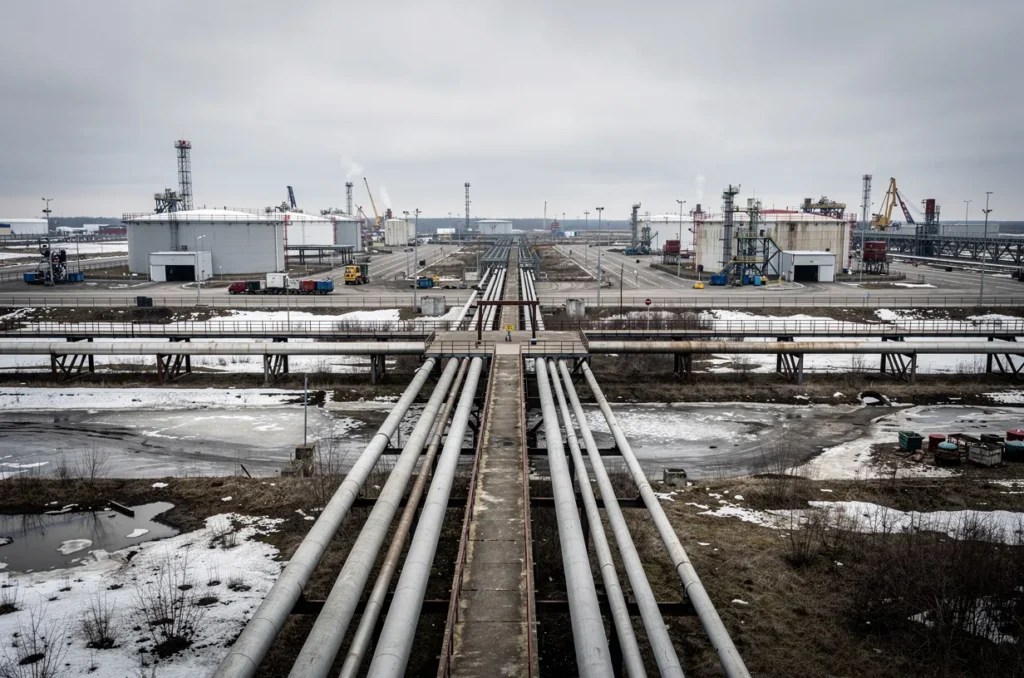
Russia’s Baltic port of Ust-Luga closed after a drone attack on Wednesday, creating an immediate logistics problem for refined products moving out of the country. The strike damaged a rail unloading rack for petroleum products at the terminal, and the facility stopped discharging rail cargoes the same day, including volumes supplied by large refineries in European Russia.
Ust-Luga is one of Russia’s key export hubs for refined products, and disruptions there can quickly ripple back into refinery operations. The near-term issue is physical: if product can’t be shipped out, storage fills up, and refineries are forced to reduce throughput.
- The damaged equipment was a rail unloading rack used for petroleum products.
- Rail cargo discharging at Ust-Luga stopped on Wednesday.
- The stoppage affects outbound flows from multiple refineries that rely on the terminal.
Why Refinery Runs Could Be Cut
The export bottleneck puts oil processing at risk at four of the biggest refineries in the European part of Russia: facilities in Kirishi, Yaroslavl, Moscow, and Ryazan. Together, they process around 55 million metric tons of crude oil per year (about 400,000 barrels per day), as cited by traders in the market.
With Ust-Luga temporarily unable to handle rail-delivered product, constraints can emerge quickly—especially for products that have fewer alternative domestic outlets. Market sources said run cuts could arrive within days, with operations potentially dropping to minimum levels and, if constraints persist, leading to unit shutdowns.
- Refineries flagged as most exposed: Kirishi, Yaroslavl, Moscow, Ryazan.
- Combined processing cited: about 55 million tons/year (roughly 400,000 bpd).
- Core constraint: shipping capacity for refined products out of the region.
Fuel Oil Is the Key Bottleneck
Among refined products, fuel oil is the biggest challenge when export routes are disrupted. While gasoline and diesel can be redirected into the domestic market, sources noted that domestic demand for fuel oil is limited. Fuel oil is a meaningful share of refinery output, accounting for roughly 18%–35% of crude runs at the affected refineries, according to market participants.
That matters because reducing throughput to manage fuel oil volumes can also reduce output of more commercially flexible products. Sources also pointed to seasonal demand increases for gasoline, raising the sensitivity of the system to any run cuts that curb production.
- Fuel oil has limited domestic demand compared with gasoline and diesel.
- Fuel oil share cited at affected plants: about 18%–35% of crude runs.
- Lower runs to curb fuel oil output can also limit gasoline production.
Emergency Measures and What Changes Next
Refiners are considering emergency steps to manage product yields and redirect volumes. Steps discussed include minimizing “dark” yields, diverting output into bitumen and bunker fuel, looking at other ports, cutting crude runs, and maximizing secondary units to improve fuel oil utilization.
Operations resumption timing at Ust-Luga remains unclear. Separately, Kirishi was also hit by a drone attack on Wednesday and may cut processing, which could partially ease the transshipment capacity shortage by reducing fuel oil production.
For U.S. investors, the near-term read-through is mainly on refined-product flows and the knock-on implications for regional supply tightness rather than any single listed security.
WSA Take
The Ust-Luga disruption is a classic logistics shock: when export capacity tightens, refinery throughput can become constrained even if crude supply is available. The market pressure point is fuel oil, since it has fewer domestic outlets and can quickly clog storage and shipping chains. Watch for confirmation on when Ust-Luga rail handling resumes and whether the named refineries announce sustained run reductions. If the disruption persists, the most visible market impact would likely show up through refined-product availability and shifting flows rather than crude production itself.
Explore More Stories in Commodities
Disclaimer
WallStAccess is a financial media platform providing market commentary and analysis for informational and educational purposes only. This content does not constitute investment advice, a recommendation, or an offer to buy or sell any securities. Readers should conduct their own research or consult a licensed financial professional before making investment decisions.