Netflix Says the TV Game Has Changed
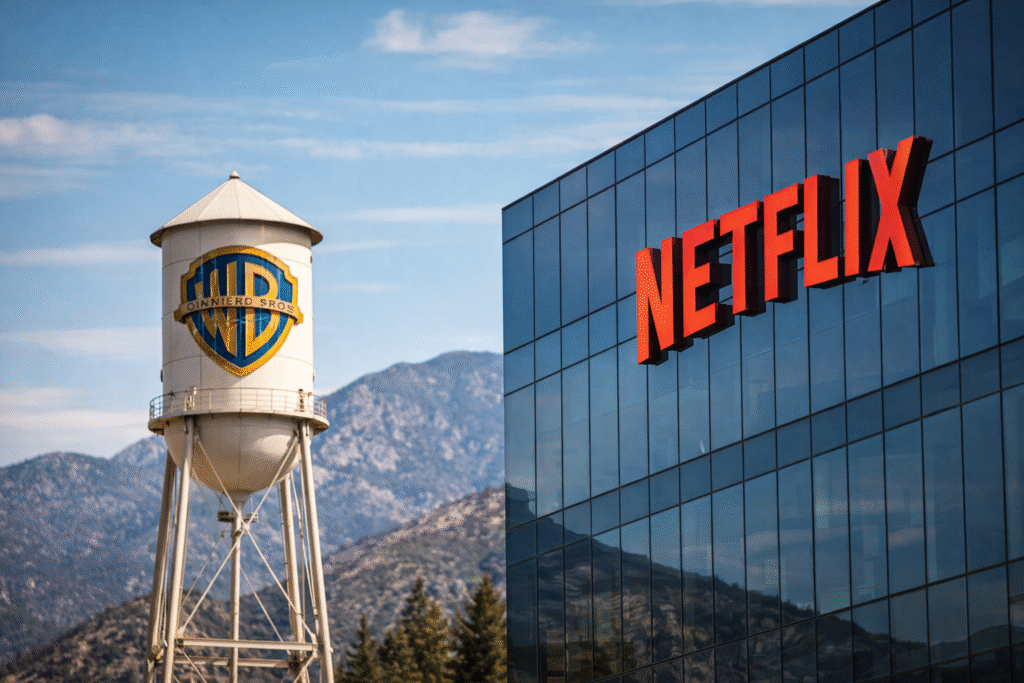
Netflix executives used their latest earnings call to reframe the company’s aggressive pursuit of Warner Bros assets as a defensive and offensive move in a rapidly changing media landscape.
Chief executive Ted Sarandos argued that traditional definitions of television no longer apply, pointing to the growing role of tech platforms in premium content distribution.
According to Sarandos, platforms like YouTube are no longer just user-generated ecosystems, while major tech players are now deeply embedded in film, sports, and prestige television.
He highlighted several competitive shifts:
- Major sporting events simulcast across linear and streaming platforms
- Amazon owning a full Hollywood studio
- Apple competing for top-tier awards
- Social platforms increasingly encroaching on premium video
In Sarandos’ words, “They are TV,” forcing Netflix to compete across talent, advertising, subscriptions, and content ownership.
Why Warner Bros Changed Netflix’s M&A Philosophy
For most of its history, Netflix avoided major studio acquisitions, favoring internal development over buying legacy assets. That stance has now clearly shifted.
Co-CEO Greg Peters said Netflix didn’t initially expect to submit a bid for Warner Bros assets during early due diligence. That changed once executives saw the scope and quality of the portfolio.
The proposed $82.7 billion all-cash offer targets film and television studios, a deep content library, and iconic franchises including Game of Thrones and Harry Potter. Netflix is now competing with a consortium involving Paramount Skydance for the assets.
Peters pointed to several strategic attractions:
- A fully built, profitable theatrical business
- Ownership of globally recognized IP
- Expanded production scale and capacity
This marks a reversal of Netflix’s long-held skepticism toward theaters, which it previously described as an aging distribution model.
HBO and Prestige TV as the Crown Jewel
On the streaming side, Peters singled out HBO as one of the most valuable elements of the deal.
HBO’s reputation for high-end, prestige television remains unmatched, offering Netflix instant brand equity that would take years — and billions — to replicate organically.
Key strategic benefits include:
- A globally recognized premium TV label
- A complementary television studio business
- Expanded creative and production pipelines
Netflix framed the combination as additive rather than redundant, arguing the assets would strengthen its long-term content engine.
Investors Push Back on Cost and Timing
Despite management’s confidence, investors reacted negatively.
Netflix posted what analysts described as a tepid revenue beat in a quarter that is typically one of its strongest. Guidance for the coming year also failed to impress, sending shares sharply lower premarket.
Concerns center on:
- The sheer size of the acquisition
- Rising financing and advisory costs
- Execution risk during integration
- Unclear near-term return on investment
Netflix disclosed it has secured a $59 billion bridge loan, later expanded by $8.2 billion, and has already incurred roughly $60 million in financing-related expenses. The company also paused share buybacks to preserve capital for the deal.
Regulatory Risk Looms Large
The transaction is expected to face intense scrutiny from lawmakers and competition regulators, given its scale and potential impact on consumer choice.
Netflix attempted to preempt those concerns by positioning the deal as:
- Pro-consumer
- Pro-worker
- Supportive of creative expansion
Sarandos emphasized that the acquired businesses would require new teams and create more opportunities for creators, not fewer.
WSA Take
Netflix is making a bold bet that owning legacy IP is the only way to compete in a world where tech platforms have become full-fledged media empires. Strategically, the logic is clear. Financially, the risk is substantial. Investors aren’t rejecting the vision — they’re questioning the price, the timing, and whether Netflix can absorb a century-old studio without losing its edge.
Read our recent coverage on Intel Winning Analyst Upgrade.
Explore more market insights on the WallStreetAccess homepage.
Disclaimer
WallStAccess does not work with or receive compensation from any companies mentioned. This content is for informational and educational purposes only and should not be considered financial advice. Always conduct independent research before investing.