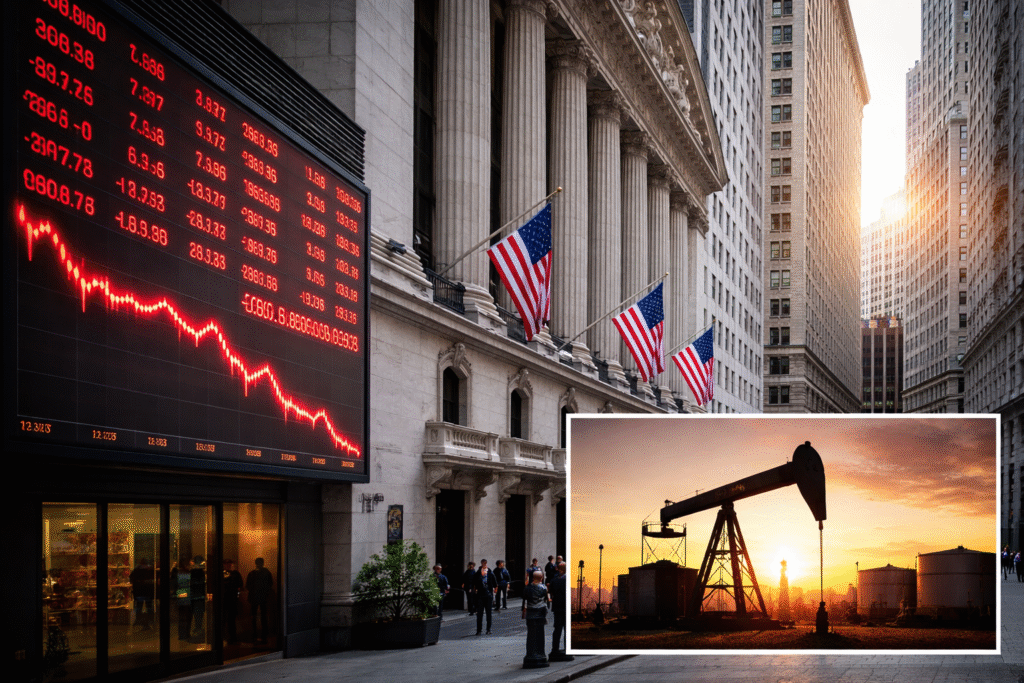
Markets Slide Again as Energy Shock Returns to Center Stage
U.S. stocks moved lower Thursday as investors faced the same problem markets have been wrestling with all week: a geopolitical conflict that is no longer just a headline risk, but a real threat to global energy flows.
The Dow Jones Industrial Average fell more than 600 points, while the Nasdaq Composite dropped 1.6% and the S&P 500 lost 1.2%.
The tone was clear early in the session. This was not a calm pullback. It was another round of risk-off positioning as oil moved higher and the conflict in the Middle East appeared to widen.
Oil Near $100 Keeps the Pressure On
Crude prices briefly pushed above $100 per barrel before easing back, but the message from the market was unchanged: energy risk is rising faster than policymakers can calm it.
Fresh attacks on infrastructure, tanker disruptions, and worsening concerns around the Strait of Hormuz all added to the sense that this is no longer a contained event.
That matters because oil at these levels does not just affect energy traders. It quickly spills into the broader macro picture:
- higher fuel costs
- renewed inflation pressure
- weaker consumer confidence
- tighter margins for transport-heavy industries
- less room for the Fed to ease policy
Even after a record strategic reserve release, the market is still pricing in the idea that physical supply risk may outweigh temporary emergency measures.
The Bond Market Is Flashing Another Warning
One of the more important developments Thursday was not just in oil — it was in long-term Treasurys.
Yields on the 10-year and 30-year Treasury moved higher again, showing that investors are demanding more compensation to hold long-dated government debt even during a geopolitical shock.
That is not a great sign for equities.
Normally, a serious geopolitical scare would bring a stronger flight into Treasurys. Instead, markets are seeing a mix of:
- rising inflation fears
- heavy Treasury supply
- weaker auction demand
- concern that leveraged bond positions could unwind further
The big level investors keep watching is 5% on the 30-year yield. That zone has repeatedly created stress for equities in recent years.
If yields move through that level in a disorderly way, the selling pressure on stocks could intensify quickly.
Fed Still Looks Stuck
On the economic side, jobless claims remained relatively stable, suggesting the labor market is not cracking in a dramatic way — at least not yet.
But the bigger issue for investors is inflation.
With oil surging and geopolitical uncertainty rising, the Federal Reserve is widely expected to stay cautious at its next meeting. Even if growth softens, policymakers may have limited flexibility if energy prices keep pushing headline inflation higher.
That leaves markets in a familiar but uncomfortable position:
- growth concerns are rising
- inflation risks are reappearing
- rates may stay higher for longer
That combination tends to be hard on stocks.
WSA Take
This market is no longer trading like a simple dip-buying environment.
Oil near $100, rising long-bond yields, and escalating geopolitical risk create a much tougher setup than the market has faced for most of this cycle.
The immediate problem is energy.
The deeper problem is what higher energy prices do to inflation expectations, bond yields, and Fed flexibility.
As long as those three forces keep moving in the wrong direction, stocks are likely to stay under pressure.
Wall Street can handle bad headlines.
What it struggles with is a macro backdrop where oil, yields, and war risk all rise at the same time.
Explore More Stories in Markets
Disclaimer
WallStAccess is a financial media platform providing market commentary and analysis for informational and educational purposes only. This content does not constitute investment advice, a recommendation, or an offer to buy or sell any securities. Readers should conduct their own research or consult a licensed financial professional before making investment decisions.