A $25 billion war bill is exposing a bigger defense problem
The Pentagon told lawmakers this week that the U.S. has already spent about $25 billion on the Iran war, giving investors the clearest public number yet on how expensive the conflict has become. Much of that spending is tied to munitions and force deployment, while the longer-tail cost of replenishing stockpiles may still be much larger. Reuters also reported that the war has already contributed to higher oil prices, broader inflation pressure, and further strain on U.S. military resources in the region.
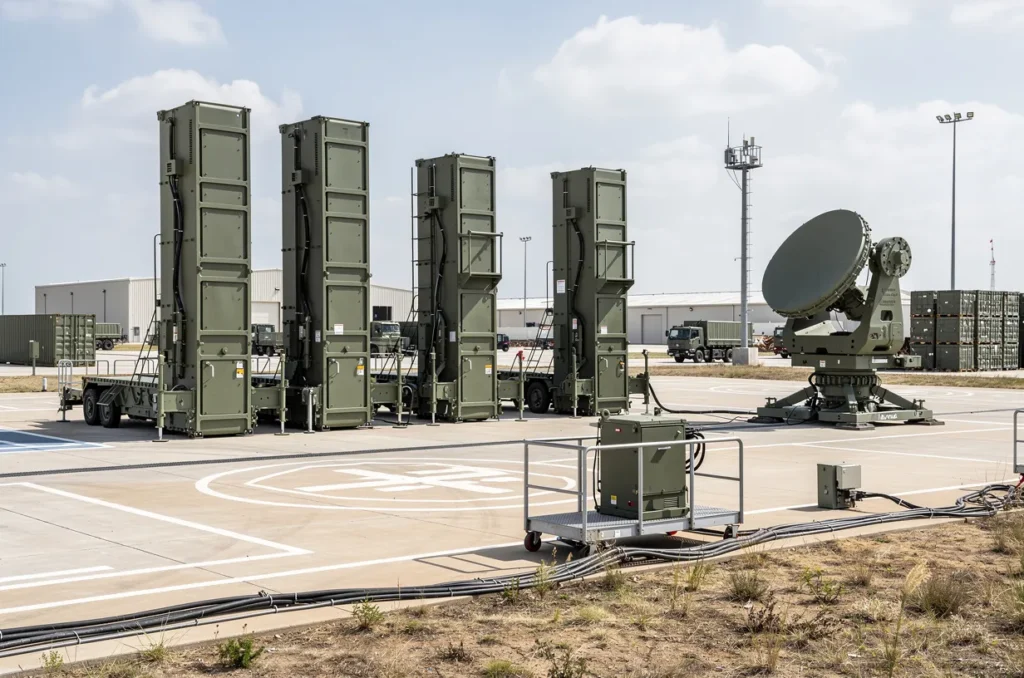
That matters because the next phase is not just about what was spent. It is about what now has to be rebuilt. And rebuilding America’s missile depth, electronics, radar systems, sensors, and advanced weapons base is not only a budget question. It is a materials question.
Modern defense systems run on rare earths whether the market notices or not
Rare earths are not some side-input buried in the supply chain. The Department of Defense’s own industrial-base review says rare earths are used across major U.S. weapons systems, including lasers, radar, sonar, night vision systems, missile guidance, jet engines, and alloys for armored vehicles. The GAO has also said rare earth permanent magnets matter because they retain magnetic strength under demanding conditions and are vital for defense weapon systems.
That is the part the market often underestimates. When the Pentagon talks about depleted munitions depth or the need to restock advanced systems, it is not just talking about more steel and more explosives. It is talking about access to specialized materials that sit deep inside high-performance military hardware.
China still holds the real choke points
This is where the strategic vulnerability becomes obvious. The IEA has said China’s share of refining is nearly 90% for rare earth elements, and its 2025 charting shows China’s hold on rare earth magnet production remains dominant. The White House said in January that the United States is too reliant on imports of rare earth permanent magnets and that current U.S. production meets only a fraction of defense needs.
That is the real chokehold. Mining matters, but the deeper problem is that processing, refining, and magnet-making remain concentrated outside the United States. You can have mineral in the ground and still not have a secure defense supply chain if the downstream stages are controlled elsewhere.
That is also why China’s tightening export controls matter so much. The IEA warned last year that China’s new export controls on rare earth materials and related products created real concentration risk, and Reuters has reported that Beijing has continued using rare earth restrictions as a strategic pressure tool.
The Pentagon already knows this is becoming urgent
This is not a hypothetical concern anymore. Reuters reported in March that the Pentagon sought proposals to boost domestic production of 13 critical minerals vital for semiconductors, weapons, and defense applications just one day before launching strikes on Iran. The White House had already issued a March 2025 order calling for immediate action to increase U.S. mineral production, explicitly arguing that transportation, infrastructure, defense capability, and next-generation technology depend on a secure mineral supply.
That is important because it shows Washington understands the problem. The question is not whether rare earth dependence is a threat. The question is whether the U.S. can move fast enough to fix it.
Domestic rare earth projects matter now for one simple reason
If the U.S. is serious about rebuilding missile stocks, strengthening air defense, scaling advanced manufacturing, and securing the defense-industrial base, then domestic rare earth mining and processing projects stop being optional. They become strategic infrastructure.
That does not mean every project will succeed, and it does not mean every company with a rare earth headline deserves investor capital. But the broad direction is clear. The U.S. needs more than speeches and procurement plans. It needs:
- more domestic mineral production
- more separation and refining
- more magnet capacity
- and less dependence on adversarial supply chains
The White House has said directly that mining a mineral domestically does not protect national security if the U.S. still depends on another country to process it. That is the right framework. The winners in this theme will not just be miners with ounces or tonnage in the ground. They will be the companies and projects that help rebuild a full Western rare earth chain.
This is where the market still feels behind the story
The broader market still tends to price rare earth names like niche commodity bets. But that framing is getting dated. In reality, rare earth supply is increasingly tied to:
- defense readiness
- munitions replenishment
- air and missile defense
- electronics resilience
- and the wider push to reduce U.S. dependence on Chinese materials
The IEA’s April 2026 rare earth report put it plainly: rare earths now matter not just for energy and electronics, but for aerospace, defense systems, semiconductors, and data centers, and their supply chains remain highly concentrated.
That is why this story is bigger than one war budget headline. The $25 billion figure may grab attention, but the more important takeaway is what comes after: replenishment, rearmament, and supply-chain security.
WSA Take
The Pentagon’s $25 billion Iran war tab is not just a defense-spending story. It is a reminder that rebuilding American hard power depends on materials the U.S. still does not fully control. Rare earths are embedded across the systems Washington is now spending billions to use, replace, and expand, while China still dominates too much of the chain that turns those materials into usable defense inputs.
That is why domestic rare earth projects matter more today than they did even a year ago. If the U.S. wants a larger defense budget to translate into real military readiness, it will need more than appropriations. It will need a far stronger homegrown rare earth supply chain to back it up.
Explore More Stories in Commodities
Disclaimer
WallStAccess is a financial media platform providing market commentary and analysis for informational and educational purposes only. This content does not constitute investment advice, a recommendation, or an offer to buy or sell any securities. Readers should conduct their own research or consult a licensed financial professional before making investment decisions.