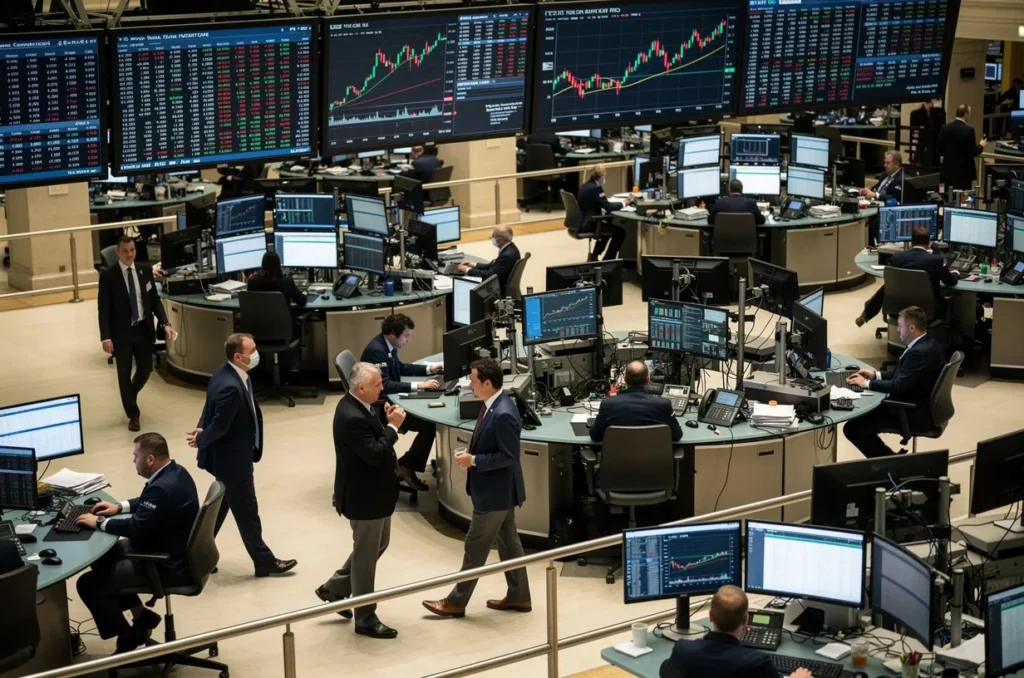
Oil put fresh pressure on a market already heading into a huge day
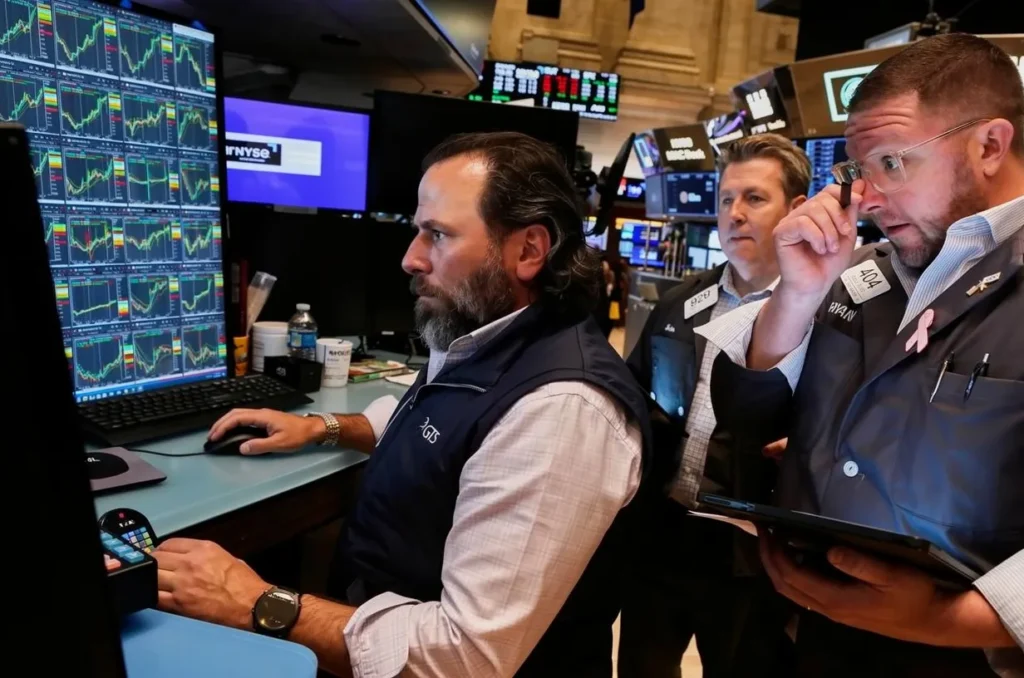
U.S. stocks slipped on Wednesday as investors walked into one of the most important sessions of the week with two major risks hanging over the tape: a fresh spike in oil and a packed slate of Big Tech earnings later in the day.
The Nasdaq Composite fell 0.4%, the S&P 500 lost 0.2%, and the Dow Jones Industrial Average dropped about 0.6%. The move followed Tuesday’s pullback from record highs and showed that investors were becoming more cautious as macro pressure and earnings risk started to collide.
Trump’s Hormuz stance sent crude sharply higher again
The biggest macro problem was energy.
Brent crude jumped above $111 a barrel, while WTI moved past $106, after President Trump said he would keep Iran under blockade at the Strait of Hormuz until a deal addressing nuclear concerns is reached.
That matters because the market had already been on edge about inflation. Once oil starts moving this aggressively again, investors immediately begin thinking about:
- higher transport and input costs
- stickier inflation
- a tougher policy backdrop
- and more pressure on consumer-facing sectors
Even if equities have stayed resilient for much of this conflict, a move like this in crude is not easy to ignore.
Four Magnificent Seven earnings reports are now carrying the market
At the same time, the market is staring at a major Magnificent Seven earnings cluster.
Alphabet, Amazon, Meta, and Microsoft are all set to report after the close, and that puts the focus directly on whether AI spending is still producing the kind of growth investors want to see. After Tuesday’s report that OpenAI missed internal sales and user targets, the pressure on big tech commentary is even higher.
Investors are looking for proof of three things:
- that AI demand is still real
- that capex is translating into revenue growth
- and that the biggest buyers in the market are still confident enough to keep spending
If those answers come back strong, markets can stabilize quickly. If not, this week’s tone gets a lot more difficult.
Seagate helped steady one corner of the AI hardware trade
One bright spot came from Seagate, which surged after giving a stronger-than-expected profit and revenue outlook.
That mattered because it helped restore a bit of confidence in the broader data storage and AI infrastructure story after Tuesday’s OpenAI-related doubts rattled the sector. The market is clearly still willing to reward companies tied to the physical buildout of AI when the numbers support it.
That is an important distinction. The market is not backing away from AI altogether. It is just becoming more selective about where the conviction still feels justified.
The Fed is expected to hold, but Powell’s tone is the real event
Markets are also focused on the conclusion of the Federal Reserve’s April meeting.
No change in interest rates is expected, but the statement and Jerome Powell’s message matter a lot more than the decision itself. With oil jumping and inflation pressure still in the background, the Fed has little reason to sound comfortable. That makes Wednesday’s announcement especially important, particularly because it could be one of Powell’s last major policy moments before leadership changes later this spring.
For investors, the real question is whether Powell sounds:
- cautious about inflation
- worried about energy spillover
- or open to a softer path later this year
That tone will matter just as much as the rate hold itself.
Warsh’s path to the Fed got a little cleaner
Another meaningful development came from Washington, where Kevin Warsh cleared a key vote in the Senate Banking Committee, moving his nomination forward.
That matters because it reduces some of the uncertainty around the coming leadership transition at the Fed. It does not settle the broader policy debate, but it does make the market’s next-chair conversation more concrete.
Given how sensitive equities, bonds, and the dollar are to any change in central bank leadership, investors are likely to keep paying close attention to how smoothly that transition appears to be unfolding.
Nvidia still tells the story of this bull market
The article also points to a bigger market truth: Nvidia remains the defining stock of the current AI-led bull market.
Since the bear-market bottom in October 2022, the Magnificent Seven has added roughly $15 trillion in market value, and Nvidia alone accounts for close to $5 trillion of that gain. That is an extraordinary figure, and it helps explain why this earnings week matters so much.
The market’s current structure still leans heavily on the idea that AI capex, chips, and infrastructure remain the core engine of leadership. If that narrative weakens, the market loses one of its most important pillars.
Consumer names are still in the mix too
Outside of tech and macro, investors are also watching Chipotle, which reports after the bell.
The company’s results matter because they offer a separate read on the consumer at a time when higher fuel costs and geopolitical stress are starting to creep back into the broader market conversation. If consumer-facing companies begin showing signs of fatigue, that would add another layer of concern to an already crowded macro setup.
WSA Take
Wednesday’s market setup is not just about one earnings day or one Fed meeting. It is about whether stocks can keep holding near highs while oil, AI expectations, and Fed uncertainty all rise at the same time.
For investors, the most important thing to watch is whether Big Tech can deliver enough to offset the pressure coming from energy and policy. If the numbers are strong, this pullback can stay manageable. If not, the market may finally have to respect the fact that rising crude and tighter expectations are not a great mix at record levels.
Explore More Stories in Markets
Disclaimer
WallStAccess is a financial media platform providing market commentary and analysis for informational and educational purposes only. This content does not constitute investment advice, a recommendation, or an offer to buy or sell any securities. Readers should conduct their own research or consult a licensed financial professional before making investment decisions.