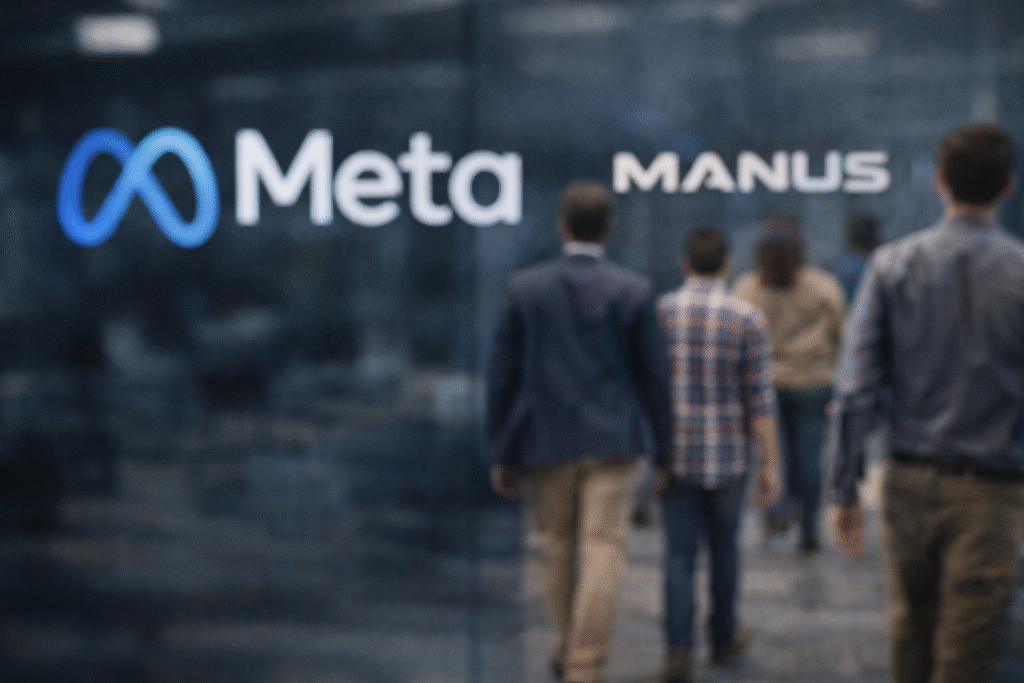
Meta’s Manus Deal Meets Early Resistance
Meta Platforms’s reported $2 billion acquisition of AI startup Manus was meant to accelerate its push into enterprise and automation software. Instead, the deal is already prompting some of Manus’ existing customers to walk away.
Several former users say the acquisition raised immediate red flags around data governance, long-term product direction, and whether Manus can remain independent inside Meta’s broader AI ecosystem.
Why Customers Are Leaving
Manus built its reputation on transparent terms and flexibility. That trust, according to former users, doesn’t automatically carry over under Meta’s ownership.
Key concerns cited by customers include:
- Data governance risk tied to Meta’s advertising-driven business model
- Uncertainty over Manus’ future inside Meta’s AI roadmap
- Fear of policy creep, where Meta-level data practices eventually apply
Seth Dobrin, CEO of AI startup Arya Labs, said Manus had been his preferred agentic AI platform — but that changed after the acquisition.
He cited discomfort with how Meta handles data and said the trust gap was significant enough to abandon the platform altogether.
Consulting firm 0260.AI echoed similar concerns, saying it has stopped recommending Manus to clients until there is more clarity on governance and independence.
Manus’ Promise vs. Meta’s Reality
Manus, founded in 2022 and now based in Singapore, develops general-purpose AI agents capable of:
- Market research
- Coding workflows
- Data analysis and automation
The company claimed millions of paying customers and a revenue run rate exceeding $125 million at the time of the deal. Meta said the acquisition would help scale these tools across both consumer and business products, including its Meta AI assistant.
Despite assurances that Manus would continue operating independently from Singapore, skepticism remains.
As one AI advisor put it bluntly:
“We don’t know where Manus fits — or if it stays separate long-term.”
Meta’s Broader AI Strategy Problem
The backlash highlights a deeper issue: Meta still lacks a clearly defined enterprise AI strategy.
While rivals like OpenAI, Google, and Anthropic dominate enterprise deployments through trusted cloud partners, Meta’s efforts remain fragmented.
Recent signals include:
- Massive AI hiring and infrastructure spend
- Retreats from prior enterprise products (Workplace, Portal, VR Workrooms)
- Growing investor concern over ballooning AI costs
Analysts expect Meta’s AI spending to exceed $100 billion in 2026, but clarity on monetization outside advertising remains limited.
Where Meta Is Gaining Ground
One bright spot is business messaging.
WhatsApp for Business has become a key revenue vector, with analysts projecting meaningful long-term upside. Meta executives have also pointed to “turnkey AI” tools designed to help small businesses generate leads and sales — a market where Meta already has deep reach.
Some industry observers believe Manus may ultimately be positioned more toward small businesses and contractors, rather than large enterprises with strict compliance needs.
WSA Take
Meta’s Manus acquisition exposes the company’s core AI challenge: scale without trust doesn’t travel well into the enterprise. While Meta can write big checks and attract talent, winning serious AI customers requires clarity, governance, and credibility — areas where rivals currently lead.
Until Meta defines where Manus fits, how data is handled, and who the product is truly for, customer churn may be the market’s way of delivering feedback faster than Wall Street ever could.
Read our recent coverage on Netflix Defending $82.7B Warner Bros Bid.
Explore more market insights on the WallStreetAccess homepage.
Disclaimer
WallStAccess does not work with or receive compensation from any companies mentioned. This content is for informational and educational purposes only and should not be considered financial advice. Always conduct independent research before investing.