
What Happened
U.S. stocks pushed higher on Friday after Iran said the Strait of Hormuz was open to commercial traffic, giving markets a major signal that one of the biggest pressure points in the recent U.S.-Iran conflict may be easing.
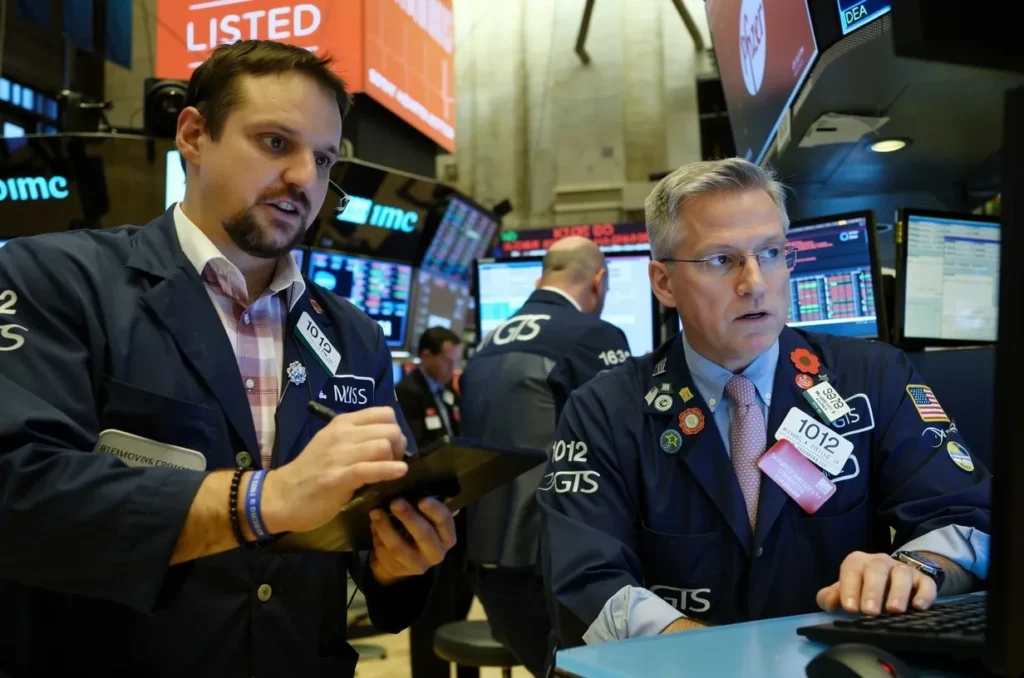
The S&P 500 rose 1.4%, the Nasdaq Composite gained 1.7%, and the Dow Jones Industrial Average jumped 2.2%, or more than 1,100 points. The move added to an already strong rally and reinforced the market’s belief that the geopolitical shock tied to the conflict may be fading fast.
The key shift was simple: if Hormuz is reopening in a meaningful way, one of the market’s biggest inflation and supply-risk fears starts to come off the table.
Oil Cracked Lower As Supply Fears Eased
The most immediate reaction came in oil.
Both major crude benchmarks fell about 10% after Iran’s foreign minister said the waterway was “completely open” to commercial traffic during the remaining period of the Israel-Lebanon 10-day ceasefire.
That matters because the Strait of Hormuz is one of the most important energy chokepoints in the world. When markets fear disruption there, oil can spike quickly. When traffic appears to normalize, the reverse can happen just as fast.
The pullback in crude told investors that the market was rapidly taking out some of the war premium that had built up in recent weeks.
The Market Is Now Trading A Peace Scenario
The stock rally was not just about lower oil. It was also about growing confidence that the conflict may be moving toward a more durable diplomatic outcome.
According to the source, President Trump said negotiations were going well and suggested a more permanent peace deal could be on the way after weekend talks. He also said it was looking very good that the U.S. would make a deal with Iran.
That gave markets a much more constructive frame than the one they had been trading during the height of the conflict. Instead of focusing only on escalation, investors were now pricing a scenario where:
- shipping routes normalize
- oil pressure eases
- inflation fears cool
- and risk appetite broadens again
That is a much friendlier setup for equities, especially after the market had already started recovering wartime losses.
This Was A Broad Risk-On Move
The rally was not confined to one corner of the market.
The Dow surged, the S&P 500 extended its record run, and the Nasdaq continued to outperform as investors leaned back into growth and technology. The move suggested the market was not just buying a one-day rebound. It was re-embracing risk more broadly.
That distinction matters. A rally led only by a few defensive names would look cautious. A rally that includes tech, cyclicals, transports, small caps, and global equities looks much more like a market regaining confidence.
Big Tech Is Back In Leadership
One of the clearest features of the session was the return of Big Tech and broader technology leadership.
The source notes that the Technology Select Sector SPDR Fund moved back to record highs, while the Nasdaq, Nasdaq 100, and several semiconductor-related vehicles also kept pushing upward.
That matters because tech leadership is still one of the clearest signs of real risk-on conviction. When investors are willing to rotate back into:
- large-cap technology
- semiconductors
- small-cap tech
- and higher-momentum growth trades
it usually means they are becoming more comfortable with both the macro backdrop and the earnings outlook underneath it.
The market appears to be doing exactly that.
Semiconductors Kept Powering The Move
The semiconductor group stayed especially strong.
That is important because semis often act as a high-beta read on both AI enthusiasm and broader confidence in economic and corporate spending trends. If investors were still deeply worried that the Middle East conflict would spill back into inflation, yields, and slower growth, it would be harder for this part of the market to keep leading so aggressively.
Instead, the sector continued to act like one of the strongest areas of the tape.
That tells you the market is not just reacting to a geopolitical headline. It is also reconnecting with the same growth and infrastructure stories that were driving leadership before the conflict intensified.
The Rally Is Global Again
Another important point in the source is that this move is not just happening in the U.S.
The rebound is broadening into international equities as well, helped in part by a weaker U.S. dollar. The source highlights that stocks outside the U.S. have also moved back to record highs, with multiple country ETFs outperforming during the recent surge.
That matters because a rally feels healthier when leadership expands beyond one geography and one style box.
A broader global move suggests investors are not simply hiding in a handful of U.S. names. They are putting risk back on across regions and sectors.
That makes the current tape look more durable than a narrow rebound driven by one or two themes.
Lower Oil Helps More Than Just Energy Traders
The drop in oil prices has broader consequences than just lower crude charts.
If Hormuz stays open and the market keeps removing the recent geopolitical premium, that can ease pressure on:
- inflation expectations
- consumer costs
- transportation and fuel-heavy industries
- and the broader rate outlook
That is one reason the rally looked so broad. Lower oil is not only a positive for sentiment. It can also improve the macro setup underneath stocks if it reduces one of the biggest recent inflation threats.
In other words, the market was not just celebrating peace headlines. It was also reacting to the possibility of a less difficult inflation path.
Corporate Earnings Still Mattered
Even in a headline-driven session, earnings stayed in the mix.
The source says Truist Financial and State Street both beat on revenue and earnings, while Fifth Third matched on earnings but missed on revenue. Netflix was also under pressure after investors focused on its weaker forward outlook despite better-than-expected first-quarter results.
That matters because it shows this is still an earnings market too. The macro backdrop may be improving, but stock selection still depends on forward guidance and execution.
For now, though, Friday’s tone was set much more by geopolitics and oil than by any one company report.
The Market Has Fully Repriced The Conflict Losses
One of the biggest takeaways from the source is that markets have now fully recovered the losses tied to the recent Iran conflict.
That is important because it shows how quickly market psychology can turn when the core risk variable changes. In this case, the core variable was not simply whether fighting stopped. It was whether Hormuz would remain blocked and keep energy markets under stress.
Once that fear started to ease, equities had room to move much higher very quickly.
That does not guarantee a straight path from here. But it does show that much of the prior selloff was tied more to crisis pricing than to lasting damage in the equity story itself.
WSA Take
Friday’s rally was a classic relief move, but it was backed by a real market catalyst. Once Iran signaled that Hormuz was open to commercial traffic, investors had a reason to take down oil, ease inflation fears, and lean back into equities.
For investors, the biggest signal was the breadth. Tech, global stocks, and major indexes all joined the move, which suggests this was more than a narrow bounce. If the diplomatic progress keeps holding and the energy route stays open, the market may keep building on the idea that the conflict shock is now turning into a normalization trade.
Explore More Stories in Markets
Disclaimer
WallStAccess is a financial media platform providing market commentary and analysis for informational and educational purposes only. This content does not constitute investment advice, a recommendation, or an offer to buy or sell any securities. Readers should conduct their own research or consult a licensed financial professional before making investment decisions.