
What Happened
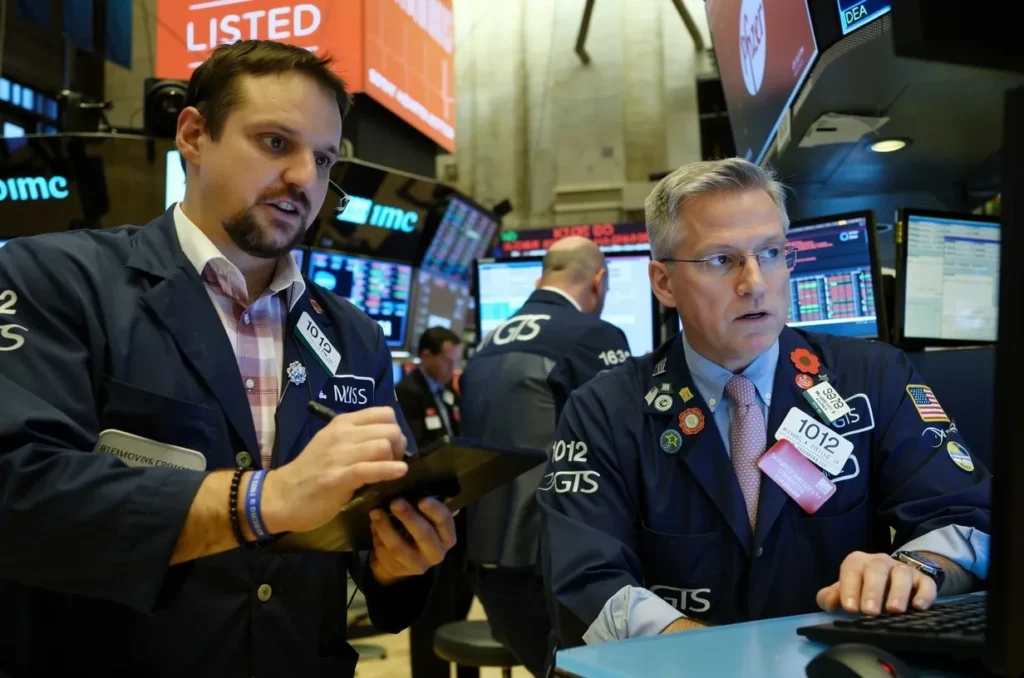
U.S. stocks moved higher on Thursday after President Trump said Israel and Lebanon had agreed to a temporary ceasefire, giving markets another reason to believe the broader Middle East conflict may be moving toward a more stable pause.
The Nasdaq Composite rose 0.4%, the S&P 500 gained about 0.4%, and the Dow Jones Industrial Average added 0.2%. The move extended the prior day’s rally, which had already pushed the S&P 500 above 7,000 for the first time.
The market reaction was straightforward: any sign that one of the key regional flashpoints may cool down makes investors more comfortable leaning back into risk.
The Lebanon Front Had Become A Real Obstacle
The Israel-Lebanon conflict had emerged as one of the biggest sticking points in the wider U.S.-Iran negotiations.
That mattered because Iran had been signaling that any meaningful path toward a durable ceasefire needed to include a halt in Israeli military action in Lebanon. The White House, by contrast, had previously tried to treat the Iran file and the Lebanon file separately.
That gap made the broader truce look fragile.
So when Trump said Israel and Lebanon had agreed to a 10-day ceasefire, the market took it as a sign that one of the biggest sources of friction inside the diplomacy may be easing, at least temporarily.
The Bigger Market Bet Is On A Longer Truce
The ceasefire headline did not matter only on its own. It also fed into a second, bigger market narrative: that the U.S. and Iran may be able to extend their current two-week ceasefire before it expires on April 22.
According to the source, both sides are reportedly in favor of an extension, and the White House said the U.S. remains actively engaged in the negotiations.
That is important because markets are no longer trading only on whether hostilities pause for a few days. They are trying to assess whether the region is moving toward a more durable cooling-off period that could take pressure off:
- oil prices
- shipping routes
- inflation fears
- broader risk sentiment
That is why even a 10-day ceasefire in Lebanon can matter for the entire tape.
Oil Still Moved Higher
Even with stocks pushing upward, oil prices also climbed.
- Brent crude rose 3.4%
- WTI crude gained 2.3%
That tells you the market is not fully convinced the geopolitical risk is gone. Investors may be warming to the diplomacy story, but energy traders are still pricing ongoing supply uncertainty and the possibility that the ceasefire framework remains fragile.
That split matters.
Equities responded to the idea of de-escalation. Oil responded to the fact that the region is still unstable, and any misstep could quickly put supply concerns back at the center of the market.
Tech Helped Lead The Rebound Again
The Nasdaq led the major indexes higher, helped by a rebound in tech stocks.
That fits the recent pattern. When geopolitical stress appears to ease even slightly, investors often rotate back toward growth and technology, especially after a stretch where macro headlines were pressuring sentiment.
The move also suggests the market is still more willing to reward sectors tied to longer-duration earnings when the immediate inflation and energy shock looks less severe.
Earnings Added Another Layer
Markets also had a fresh batch of corporate results to process.
According to the source:
- TSMC beat on both earnings per share and revenue
- PepsiCo also topped expectations on both lines
- Charles Schwab beat on earnings but missed on revenue
- Netflix was set to report after the close
That gave investors another reason to stay constructive, particularly with some of the larger, more closely watched names still delivering decent prints against a noisy macro backdrop.
The earnings picture did not drive the entire move, but it helped reinforce a market that was already leaning more optimistic.
Economic Data Was Mixed
On the macro side, the data was mixed.
Initial jobless claims fell to 207,000 in the week ended April 11, which pointed to continued labor market resilience. At the same time, industrial production fell 0.5% in March, missing expectations for modest growth.
That combination is notable because it keeps the economy looking uneven rather than clearly strong or clearly weak.
For now, though, the ceasefire headlines mattered more than the economic data. The market’s main focus remained the geopolitical path and whether diplomacy can keep improving from here.
This Is Still A Headline-Driven Market
The broader lesson from Thursday’s session is that stocks remain highly sensitive to geopolitical developments.
This was not a rally driven by one clean economic trend or one single earnings surprise. It was a move built on the idea that the Middle East picture may be stabilizing just enough to reduce the market’s worst-case assumptions.
That means the current rebound still rests on fragile ground. If the ceasefire holds and the U.S.-Iran talks progress, markets may keep building on the move. If the diplomatic picture breaks down again, the same sectors now bouncing could reverse quickly.
WSA Take
Thursday’s move higher was really a relief trade. Investors saw the Israel-Lebanon ceasefire headline as a sign that one of the most difficult parts of the broader diplomatic puzzle may be cooling off, at least for now.
For investors, the key point is that this remains a market driven heavily by Middle East headlines, not just fundamentals. As long as the ceasefire story keeps improving, stocks can keep recovering. But with oil still rising and the broader regional setup still fragile, this is a rally that likely needs ongoing diplomatic progress to hold.
Explore More Stories in Markets
Disclaimer
WallStAccess is a financial media platform providing market commentary and analysis for informational and educational purposes only. This content does not constitute investment advice, a recommendation, or an offer to buy or sell any securities. Readers should conduct their own research or consult a licensed financial professional before making investment decisions.