What Happened
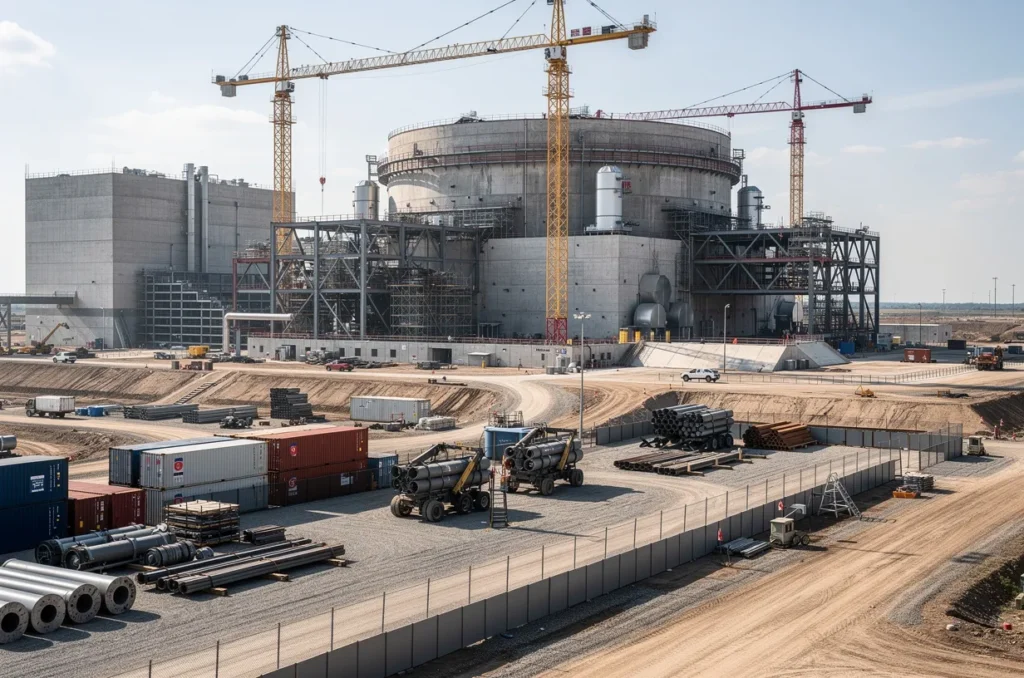
The U.S. Department of Energy’s Office of Nuclear Energy says it wants to use the Defense Production Act of 1950 to speed up domestic uranium fuel production and help build more reactors by 2033.
The initiative, called “Nuclear Dominance — 3 by 33,” is aimed at cutting U.S. dependence on foreign nuclear fuel supply and strengthening the country’s long-term energy position. The effort will use the department’s Nuclear Fuel Cycle Consortium, which includes more than 90 companies across the industry.
The first step will reportedly include several undisclosed “60-day sprints” meant to move specific parts of the fuel chain faster.
The Main Problem Is The Supply Gap
The U.S. nuclear fleet is large, but the domestic fuel base is still small compared with what reactors actually need.
According to the source, the 94 operating U.S. reactors require roughly 50 million to 55 million pounds of U3O8 equivalent each year. Domestic mine output, even after doubling in the fourth quarter last year, reached only about 1.04 million pounds of U3O8.
That gap is the core issue.
The U.S. has a major reactor fleet, but it does not yet have the domestic upstream fuel production needed to support that fleet at scale without relying heavily on imports.
This Is A National Security Framing, Not Just An Energy Story
The use of the Defense Production Act matters because it tells you how Washington is framing this issue.
This is no longer being treated as just a normal industrial policy discussion. It is being treated as a strategic supply-chain problem tied to national security, grid resilience, and future energy demand.
That matters because Defense Production Act tools can help accelerate approvals and move projects faster than a standard market-based process might allow.
In practical terms, Washington is signaling that domestic nuclear fuel is becoming a strategic priority.
Russia Is Still Part Of The Pressure
Another big reason this is moving now is the continued U.S. reliance on foreign enriched uranium, especially from Russia.
The source says Russia supplied about 20% of the enriched uranium used by U.S. commercial reactors in 2024, down from nearly 27% the year before. That is still a meaningful dependency.
Even after legislation was passed to block Russian reactor fuel imports, shipments have continued under waiver authority where no alternative supply is available. Those waivers can run through 2028.
That means the U.S. has made the policy shift, but the domestic supply chain is not yet strong enough to fully replace what it is trying to phase out.
The Real Goal Is The Whole Fuel Chain
This is not just about digging more uranium out of the ground.
The source says the consortium will address the full nuclear fuel supply chain, including:
- milling
- conversion
- enrichment
- deconversion
- fabrication
- recycling
- reprocessing
That matters because mining alone does not solve the problem. If the U.S. lacks enough domestic capability in the middle and downstream parts of the chain, it can still remain exposed even if mine output improves.
That is why this program matters more than a simple production increase. It is trying to rebuild the entire system.
The Reactor Side Matters Too
The fuel push is also tied directly to reactor expansion.
The department made clear that long-term plans for:
- plant uprates
- reactor restarts
- and advanced reactor deployment
will depend on having enough nuclear fuel available.
That is an important point for investors. New reactor enthusiasm only matters if the supply chain behind it can actually support broader deployment. Otherwise, the growth story gets bottlenecked before it scales.
In other words, fuel availability is not a side issue. It is one of the main gating factors for the next phase of U.S. nuclear growth.
Trump’s Nuclear Push Is Getting More Defined
The article also shows that this effort is part of a larger Trump administration nuclear push.
Last May, Trump issued four executive orders aimed at:
- faster nuclear permitting
- expanded reactor deployment
- stronger domestic uranium and fuel cycle supply
- and greater use of federal powers to support the sector
By late August, the department had already created the consortium and started looking for agreements with U.S. companies across the fuel chain and reactor construction.
That matters because this is not being presented as a one-off announcement. It is part of a broader policy framework designed to push nuclear forward more aggressively.
Why Nuclear Is Back In Focus
The timing is not accidental.
The U.S. is trying to meet rising electricity demand from:
- industrial manufacturing
- data centers
- and broader AI infrastructure
That is helping push nuclear back into the center of the energy conversation. Nuclear remains one of the few large-scale, dispatchable power sources that can support heavy electricity demand without the intermittency issues tied to some other sources.
That is why the political coalition around nuclear is widening. It now includes not only traditional energy security advocates, but also groups focused on power demand growth and industrial competitiveness.
What Investors Should Focus On
For investors, the key takeaway is that the U.S. is moving from talking about nuclear resilience to trying to build it.
The main things to watch next are:
- whether the 60-day sprints produce real project acceleration
- which parts of the fuel cycle get support first
- whether domestic uranium producers benefit directly
- and how quickly reactor deployment plans start linking to actual fuel capacity
If the program translates into real contracts, approvals, and output growth, it could become a meaningful tailwind for U.S.-linked uranium and nuclear supply-chain names.
WSA Take
This is a significant shift because it puts the U.S. nuclear fuel supply chain into a much more strategic category. Washington is no longer just encouraging more nuclear power in theory. It is signaling that domestic uranium and fuel-cycle capacity need to be rebuilt with urgency.
For investors, that keeps the focus on the parts of the market tied to uranium, enrichment, and the broader nuclear buildout. The reactor story may get the attention, but the fuel chain is increasingly where the real bottleneck — and the opportunity — sits.
Explore More Stories in Commodities
Disclaimer
WallStAccess is a financial media platform providing market commentary and analysis for informational and educational purposes only. This content does not constitute investment advice, a recommendation, or an offer to buy or sell any securities. Readers should conduct their own research or consult a licensed financial professional before making investment decisions.