A stronger debut just added to biotech’s improving IPO tone
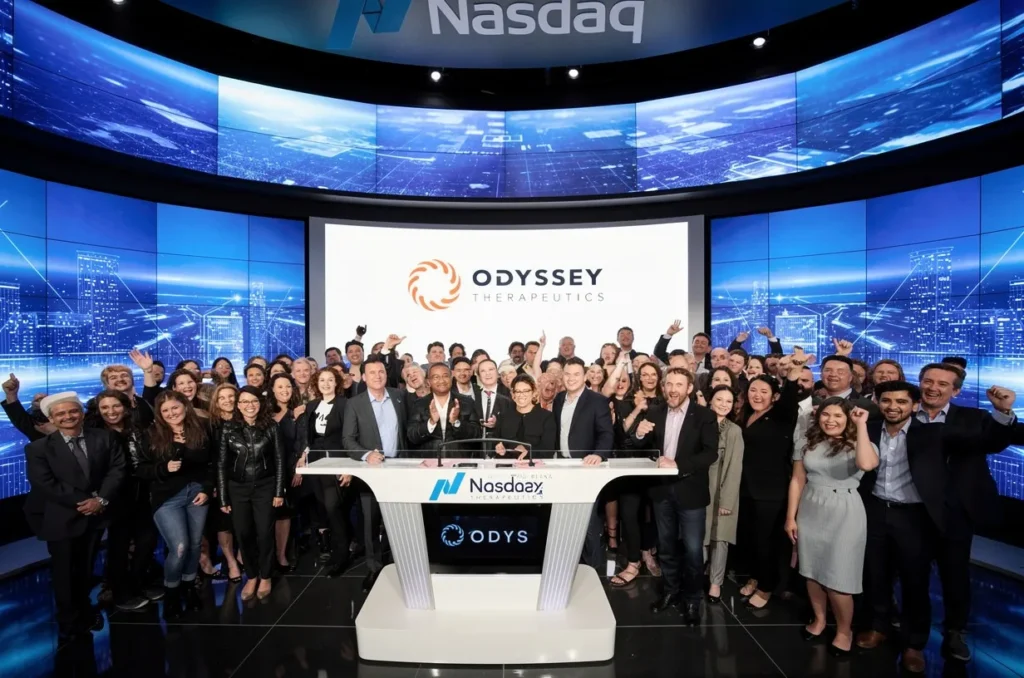
Odyssey Therapeutics opened at $20, above its $18 IPO price, in a debut that gave the Boston-based biotech an initial public valuation just under $900 million. That followed an upsized offering in which the company sold 15.5 million shares and raised $279 million.
That matters because this was not an isolated listing. It is another sign that the biotech IPO market is starting to look healthier after a long stretch where many private companies either stayed on the sidelines or struggled to attract public-market demand. Reuters noted that recent debuts from names such as Kailera Therapeutics, Alamar Biosciences, Seaport Therapeutics, and Hemab Therapeutics have all helped reinforce that momentum.
Odyssey is built around autoimmune and inflammatory disease biology
Odyssey, founded in 2021, is developing medicines for autoimmune and inflammatory diseases, a sector that continues to attract investor attention because it combines large patient populations, chronic treatment demand, and room for better-targeted therapies. Reuters said the company has raised about $726.5 million from more than 30 investors to date, which gives it a stronger capital base than many early public biotech peers.
The company’s lead asset is OD-001, which Odyssey describes as an oral small-molecule RIPK2 scaffolding inhibitor designed to block inflammatory signaling tied to diseases such as inflammatory bowel disease. Odyssey’s IPO filings say OD-001 has already shown proof-of-concept in a Phase 2a trial for ulcerative colitis, one of the two main forms of inflammatory bowel disease.
This is not just a one-program shell
OD-001 is clearly the main driver of the current story, but Odyssey is not presenting itself as a single-asset company. Its pipeline also includes OD-002, a preclinical SLC15A4 inhibitor aimed at diseases such as cutaneous lupus erythematosus, nephropathies, and other B cell-mediated disorders. Odyssey says the program is designed as a potential first-in-class approach to block disease-relevant signaling while preserving certain host-defense functions.
That matters because public biotech investors typically look for two things in younger companies:
- a lead program with real clinical traction
- and enough follow-on pipeline depth to support a broader platform story
Odyssey appears to have both, even though OD-001 is still the part of the company that will matter most in the near term.
Why this sector still attracts serious capital
Autoimmune and inflammatory disease biotech remains attractive because it sits in a part of medicine where the need is clear, the biology is active, and successful drugs can become durable commercial franchises. Diseases like ulcerative colitis are chronic, complex, and often require long-term therapy, which is why investors keep paying close attention to companies that can bring differentiated oral therapies into the clinic. Odyssey’s own filings emphasize that its approach is built around targeting disease pathology with an initial focus on the innate immune system, which gives the company a clearer scientific identity than a generic “AI drug discovery” or broad platform pitch.
That is also why the IPO matters. Investors are not just buying a ticker. They are buying into a part of biotech where positive mid-stage data can significantly change the valuation path.
The bigger market takeaway is that biotech risk appetite is improving
The Odyssey deal matters beyond the company itself because it adds another data point showing that public investors are opening back up to clinical-stage biotech. Reuters explicitly tied the deal to a wider reopening in biotech IPO activity this year.
That does not mean every biotech listing will work. But it does suggest the market is becoming more willing to fund companies with:
- focused pipelines
- credible science
- and a lead asset already in meaningful clinical development
That is a much better setup for the sector than the shut window many companies faced over the last few years.
WSA Take
Odyssey’s debut matters because it is both a company story and a market story. On the company side, ODTX now has a public-market platform, a well-funded balance sheet, and a lead autoimmune program already in mid-stage development. On the market side, this deal adds to the evidence that the biotech IPO window is reopening for names with real clinical assets and a coherent pipeline.
For investors, the key point is simple: Odyssey is early, but not empty. It is entering the public market with capital, a defined sector focus, and a lead program in a disease area that can matter commercially if the data keeps holding up.
Explore More Stories in Health
Disclaimer
WallStAccess is a financial media platform providing market commentary and analysis for informational and educational purposes only. This content does not constitute investment advice, a recommendation, or an offer to buy or sell any securities. Readers should conduct their own research or consult a licensed financial professional before making investment decisions.