
Wall Street recovered from the opening lows
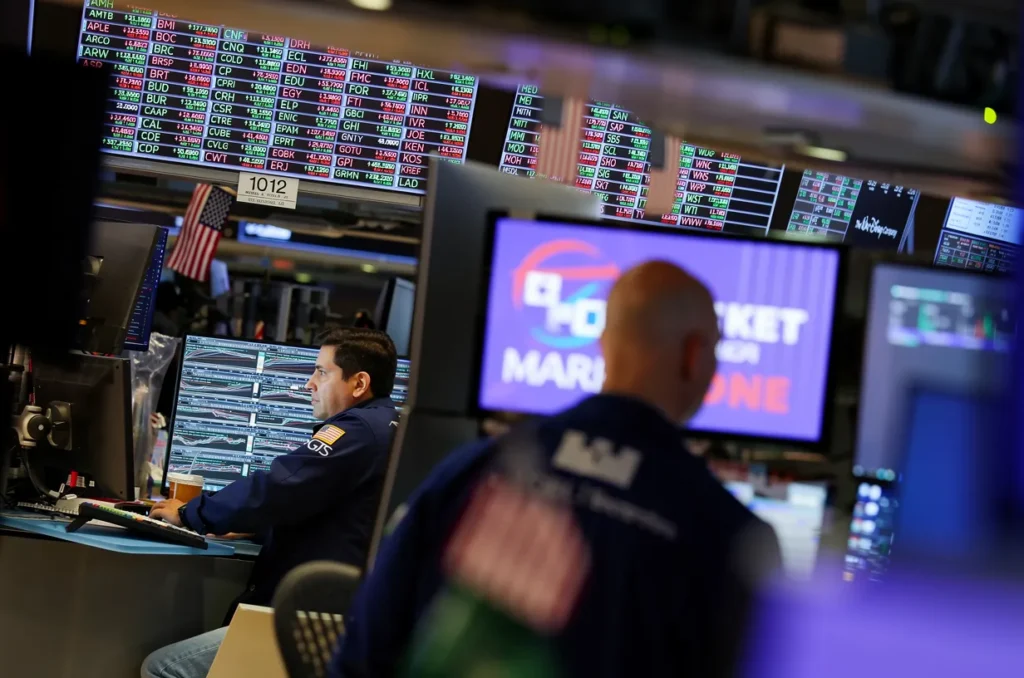
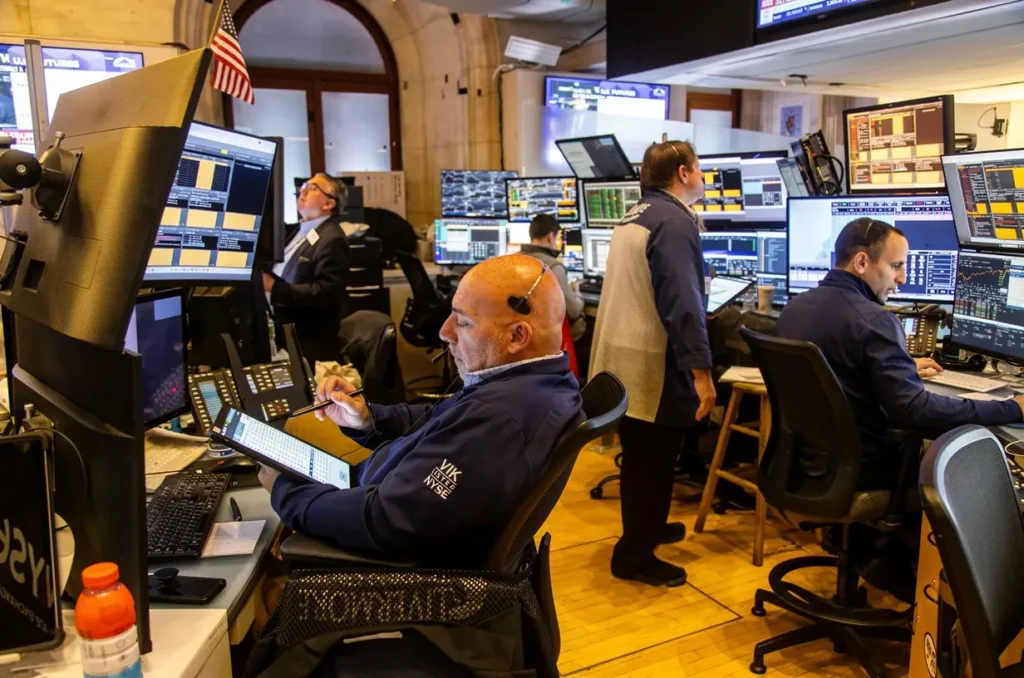
US stocks remained under pressure Tuesday, but the major indexes recovered from their steepest declines as investors reassessed a global selloff in technology and semiconductor shares.
The Nasdaq Composite was down about 1.6% at last check after falling nearly 3% earlier in the session. The S&P 500 lost roughly 1%, while the Dow Jones Industrial Average edged slightly higher, helped by its lower exposure to large technology companies.
The move extended Monday’s weakness across Big Tech, but the damage remained concentrated in semiconductor, memory and other AI-linked stocks rather than spreading evenly across the market.
South Korea’s chip rout set the tone
The selloff began in Asia, where South Korean memory-chip leaders SK Hynix and Samsung Electronics each fell more than 12%.
Their declines helped push the Kospi Composite down approximately 10%, one of its sharpest daily losses in years. The scale of the move quickly spread across global semiconductor markets because both companies are central suppliers of memory used in smartphones, computers and AI data centres.
SK Hynix has been one of the largest beneficiaries of demand for high-bandwidth memory, a critical component in advanced AI accelerators. Samsung has also invested heavily to capture more of that market.
Sharp declines in both companies forced investors to confront how much optimism had already been reflected in valuations after an exceptionally strong run.
Micron is now the next major test
The global memory selloff placed additional pressure on Micron Technology, which is scheduled to report earnings Wednesday.
Micron shares fell as much as 11% after closing at a record on Monday. The company has become one of the most closely watched indicators of AI infrastructure demand because its high-bandwidth memory products are used alongside advanced processors from companies such as Nvidia.
Investors will be focused on demand, pricing, production capacity and management’s outlook for memory supply.
Strong results could help restore confidence that the selloff was primarily driven by positioning and profit-taking. A weaker forecast would give investors more reason to question whether expectations across the memory market have moved too far ahead of fundamentals.
Nvidia and AMD extended the technology decline
The pressure was not limited to memory producers.
Nvidia fell nearly 3%, while Advanced Micro Devices and several other semiconductor companies posted heavier declines. Alphabet also moved lower, extending the weakness in major technology stocks from the previous session.
The technology sector led the market lower for a second consecutive day as investors reduced exposure to many of the stocks that had generated the strongest gains earlier in the year.
So far, the selloff appears more closely connected to elevated valuations, crowded positioning and rising interest-rate expectations than to clear evidence that AI infrastructure demand has materially weakened.
Higher-rate expectations are tightening the valuation test
The Federal Reserve’s more hawkish tone has added pressure to long-duration growth stocks.
Policymakers indicated last week that inflation remains too high and showed greater openness to keeping rates elevated or potentially tightening further. Higher interest rates reduce the present value of future earnings, making expensive technology stocks more vulnerable when market expectations are already aggressive.
That pressure is especially relevant for the AI sector, where companies are committing hundreds of billions of dollars to chips, data centres, power generation and network infrastructure.
Investors are increasingly examining how quickly that spending can translate into revenue, earnings and free cash flow.
SpaceX briefly surrendered its remaining IPO gains
SpaceX added another source of volatility.
The stock initially fell enough to erase its post-IPO gains before reversing course and moving into positive territory later in the session. The recovery followed three consecutive declines, including a 16.4% drop Monday.
SpaceX had climbed rapidly after its June 12 market debut, briefly reaching a valuation comparable with the largest US technology companies. The retreat reflects a reassessment of that valuation as investors consider the company’s substantial capital needs.
The company recently confirmed its first bond offering, with proceeds expected to repay bridge financing and cover related costs. The debt plan has renewed debate over how aggressively SpaceX and other technology companies are borrowing to finance AI and infrastructure expansion.
Oil fell as US-Iran negotiations progressed
Energy markets provided some relief.
Brent and West Texas Intermediate crude each fell about 1% as negotiations between the United States and Iran continued and tanker traffic through the Strait of Hormuz increased.
The US administration also issued a temporary 60-day waiver allowing the production, delivery and sale of Iranian oil as part of the emerging diplomatic framework.
More vessels are moving through Hormuz, but traffic remains below prewar levels and the final political agreement has not been completed. Oil traders are therefore pricing an improving supply outlook without assuming that regional risk has disappeared.
Lower energy prices could eventually ease some inflation pressure, although the Fed remains more focused on persistent underlying price growth.
Housing sentiment is improving despite high costs
Away from the technology selloff, new survey data showed Americans becoming somewhat more receptive to buying homes.
A Bank of America survey found that 53% of respondents now believe buying is preferable to renting or living with relatives, the first majority in favour of homeownership since 2023.
The shift comes as home-price growth has cooled and mortgage rates have moved modestly below the peaks reached during the previous three summers.
Affordability remains difficult. The median US listing price was $429,500 in May, down from the previous year but still roughly 34% above May 2019.
The survey suggests some buyers may be adjusting to the possibility that mortgage rates will remain elevated rather than waiting indefinitely for a return to pre-pandemic borrowing costs.
WSA Take
Tuesday’s decline was a direct test of the market’s most crowded investment theme.
Memory-chip leaders in Asia fell sharply, Micron retreated ahead of earnings, and Nvidia and AMD extended the weakness across US semiconductors. The selloff does not yet establish that AI demand is slowing. It does show that strong demand alone may no longer be enough to support every valuation.
Micron’s results now carry greater weight. Investors will be looking for confirmation that high-bandwidth memory demand remains strong enough to justify the sector’s expansion plans and recent gains.
The broader market held together better than the Nasdaq suggested. The Dow remained resilient, oil moved lower, and SpaceX recovered from its early decline. For now, the pressure is concentrated in the technology trade that had become the market’s strongest and most crowded position.
Explore More Stories in Markets
Disclaimer
WallStAccess is a financial media platform providing market commentary and analysis for informational and educational purposes only. This content does not constitute investment advice, a recommendation, or an offer to buy or sell any securities. Readers should conduct their own research or consult a licensed financial professional before making investment decisions.