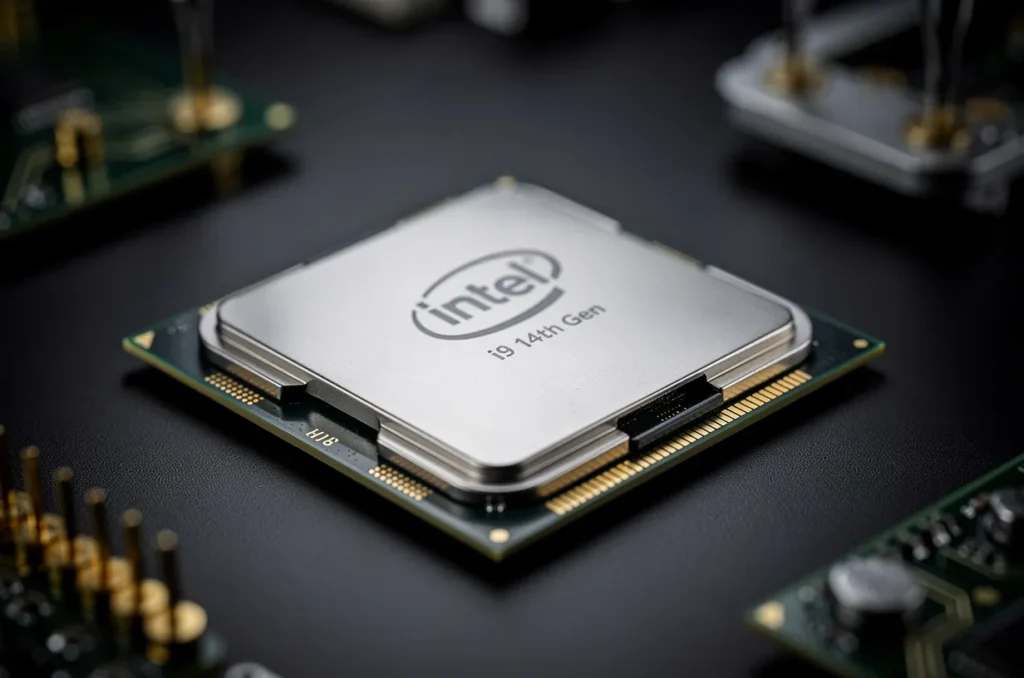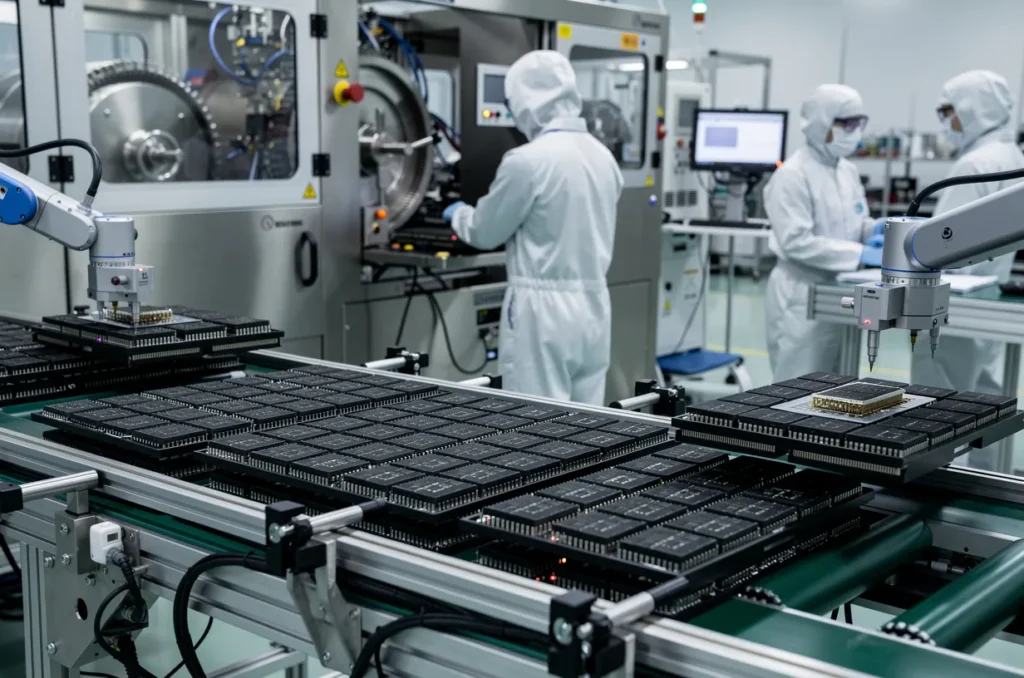
Memory stocks led another semiconductor pullback
Semiconductor stocks moved lower Friday as investors reconsidered one of the central assumptions behind the recent chip rally: that rising memory prices would remain an unqualified benefit for the industry.
Micron Technology and SanDisk fell more than 6%, while Western Digital lost more than 7%. The weakness spread across the broader semiconductor sector, pulling Nvidia, AMD, Broadcom, Intel, Marvell and Qualcomm lower.
Applied Materials and Lam Research each declined more than 3%, extending the selloff into the companies that supply manufacturing equipment to chip producers.
The retreat came only days after Micron delivered record results and a stronger-than-expected outlook. Investors are not questioning whether memory demand is strong. They are questioning whether prices are now rising fast enough to create problems elsewhere in the technology supply chain.
The memory shortage is reaching consumer products
Apple’s decision to raise prices on selected MacBook and iPad models brought the issue directly into the consumer market.
The company said it could no longer fully absorb the increase in memory and storage costs created by the AI data-center boom. Memory manufacturers have prioritized higher-margin products used in AI servers, tightening the supply available for personal computers, tablets, smartphones and other consumer devices.
Microsoft followed with another increase in Xbox console prices. Beginning in August, current-generation models will become as much as $150 more expensive, with the company citing a substantial increase in storage and memory costs.
Those announcements changed the market’s interpretation of the memory cycle. Higher prices are still supporting record revenue and margins for suppliers, but they are also beginning to raise the cost of finished products.
Pricing power can eventually become a demand problem
Memory manufacturers have benefited from a favorable combination of limited supply and rapidly expanding AI demand.
High-bandwidth memory has become essential to advanced AI systems, allowing processors to access enormous amounts of data quickly. Nvidia and other accelerator suppliers require growing quantities of these products, giving manufacturers greater pricing leverage and encouraging them to shift capacity toward data-center customers.
That shift reduces the availability of more conventional DRAM and storage components used across the consumer electronics industry.
Hardware companies can respond by absorbing the increase, reducing product specifications or raising retail prices. Apple and Microsoft have now chosen the third option for several products.
Higher prices may protect their margins, but they also introduce the risk that customers delay purchases, choose cheaper models or keep existing devices longer.
Apple’s decision carries particular weight
Apple has one of the technology industry’s strongest supply chains and purchasing relationships.
Its scale normally allows the company to negotiate favorable component pricing and secure supply before smaller competitors. A decision to raise prices therefore suggests that the increase in memory costs is too large and persistent to manage through procurement alone.
The immediate increases do not cover the iPhone, Apple’s largest product business. Continued cost pressure could still affect future phone pricing, product configurations or margins.
For semiconductor investors, Apple’s response provides evidence that the memory shortage is no longer confined to data centers. It is beginning to influence the economics of some of the world’s highest-volume consumer devices.
Xbox shows the pressure extends beyond premium hardware
Microsoft’s Xbox announcement broadened the concern.
Gaming consoles are often sold at narrow margins or below their full manufacturing cost, with companies expecting to earn money later through games, subscriptions and digital services. That leaves less capacity to absorb large component increases.
Raising console prices may protect Microsoft from higher production costs, but it could also slow hardware adoption and reduce the size of the future customer base for its gaming ecosystem.
The issue is not limited to Apple and Microsoft. Any manufacturer relying on DRAM, NAND flash or solid-state storage may eventually face the same decision.
Smartphone makers, personal-computer manufacturers, automakers and consumer-electronics companies could all see margins tighten if supply remains constrained.
Micron’s earnings confirmed the strength behind the shortage
The sector’s weakness does not reflect poor operating results from Micron.
The company recently reported record quarterly performance, stronger-than-expected margins and an outlook that exceeded Wall Street estimates. It also disclosed approximately $22 billion in long-term customer commitments for memory products.
Some of those agreements include multiyear take-or-pay structures, under which customers commit to purchasing predetermined volumes or compensate Micron if they do not.
These contracts could make the company’s revenue more predictable and reduce its exposure to the sharp boom-and-bust cycles historically associated with memory.
They also demonstrate how aggressively AI companies and cloud providers are competing to secure future supply.
The memory industry is trying to escape its old cycle
Memory has historically been one of the most volatile areas of the semiconductor market.
Manufacturers expand capacity when prices are high, eventually creating excess supply. Prices then collapse, inventories rise and producers cut spending until demand recovers.
Micron and its peers are attempting to change that pattern through long-term contracts, stricter capital discipline and greater exposure to specialized products such as high-bandwidth memory.
AI demand may support a more durable cycle because large data-center customers need substantial capacity and are willing to make longer commitments.
The risk is that high prices encourage too much new supply or weaken demand for consumer products before that capacity arrives.
Chipmakers outside memory were pulled into the decline
The selloff extended to Nvidia, AMD, Broadcom and other AI-linked semiconductor companies because memory is a critical part of the complete computing system.
Advanced processors cannot operate at full performance without sufficient high-bandwidth memory. Rising component costs can increase the total price of AI servers, making data-center projects more expensive even when demand remains strong.
The market is also sensitive to any sign that the AI buildout is creating inflation across the wider technology sector.
Nvidia and its peers may continue selling large volumes of accelerators, but customers ultimately evaluate the cost of complete systems rather than processors in isolation. More expensive memory, networking, power and cooling can affect the return expected from every new data-center project.
Qualcomm gave back part of its data-center rally
Qualcomm also moved lower after gaining in the previous session on plans to expand more aggressively into data-center products.
The company expects the new business to generate as much as $15 billion in annual revenue, giving it another growth platform outside smartphones.
That forecast initially strengthened enthusiasm around Qualcomm’s diversification. Friday’s retreat showed that investors remain cautious about rewarding new AI infrastructure ambitions when the broader chip sector is under pressure.
The data-center opportunity remains substantial, but competition is increasing as more companies develop processors, servers and custom silicon for the same market.
Equipment stocks reflect concern about the next spending cycle
Applied Materials and Lam Research also declined as investors considered how the memory shortage could influence future manufacturing investment.
High prices and tight supply normally encourage producers to expand capacity, which benefits equipment suppliers. New fabrication plants and production lines require deposition, etching, inspection and other specialized machinery.
Capacity expansion takes years, however, and producers must avoid creating another oversupply cycle.
If memory companies remain disciplined, equipment demand may grow steadily rather than surge. If they invest too aggressively, the industry could eventually repeat the same cycle that has produced sharp downturns in the past.
The OpenAI report added another source of caution
Sentiment was also pressured by a report that OpenAI may delay its anticipated public offering until next year.
OpenAI has become one of the most visible symbols of the AI investment cycle. A delayed IPO would not necessarily indicate weaker demand for AI products or computing infrastructure, but it could suggest that private-market valuations and public-market expectations are becoming harder to reconcile.
Investors have become more selective after years of rising capital expenditures and increasingly ambitious valuations.
The report added to a market already reassessing how much future AI growth has been priced into semiconductor stocks.
The industry now faces two competing signals
Micron’s results show that current demand remains strong.
Apple and Microsoft’s price increases show that the consequences of that demand are spreading into the broader economy.
For memory manufacturers, higher prices improve revenue, margins and bargaining power. For their customers, the same increase raises production costs and may weaken end demand.
Both conditions can exist at the same time.
The investment question is whether AI demand remains strong enough to support elevated memory pricing without causing a meaningful slowdown across consumer electronics and other technology markets.
WSA Take
The semiconductor retreat reflects concern about the consequences of success rather than evidence that AI demand has collapsed.
Micron’s earnings, outlook and long-term contracts confirm that memory remains scarce and strategically important. The pressure on Apple and Microsoft shows that scarcity is now affecting product pricing beyond the data center.
Memory suppliers may continue delivering strong financial results as capacity remains tight. Their customers face a more complicated position. Higher input costs must be absorbed, offset elsewhere or passed on to consumers.
The next phase of the cycle will depend on how buyers respond. If demand remains resilient despite higher prices, memory producers could sustain stronger margins for longer. If consumers begin delaying purchases, the same pricing power supporting semiconductor earnings could become the reason the wider technology market slows.
Disclaimer
WallStAccess is a financial media platform providing market commentary and analysis for informational and educational purposes only. This content does not constitute investment advice, a recommendation, or an offer to buy or sell any securities. Readers should conduct their own research or consult a licensed financial professional before making investment decisions.