The US oil reserve just crossed a four-decade low
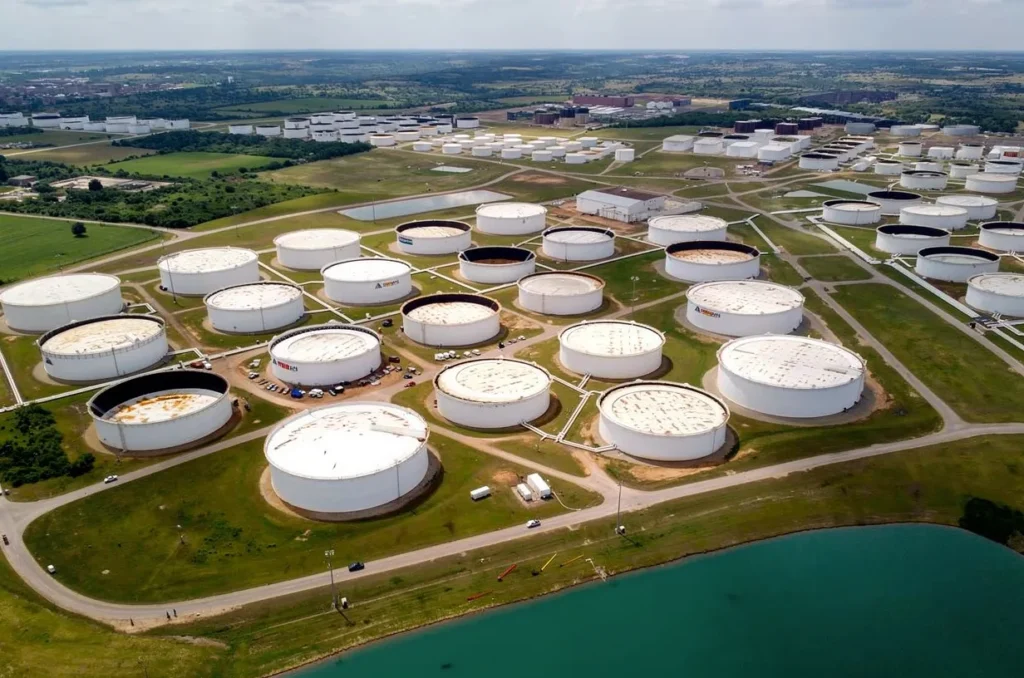
Crude oil held in the US Strategic Petroleum Reserve fell below 300 million barrels last week, reaching its lowest level since January 1983.
The reserve dropped by 6.1 million barrels to 298.7 million barrels, according to Department of Energy data released Monday.
The decline comes as global oil inventories remain under pressure from the Iran war and disrupted flows through the Strait of Hormuz.
The March release is still moving through the system
President Donald Trump ordered the release of 172 million barrels from the SPR in March after Iran restricted oil exports through Hormuz.
The reserve held roughly 415 million barrels before the US and Israel attacked Iran on February 28. Once the ordered release is complete, US government crude stocks are expected to fall to around 243 million barrels.
The SPR has an authorized capacity of 714 million barrels, but actual usable volumes depend on infrastructure conditions and drawdown capability.
There is still oil available for another release
The drop below 300 million barrels has raised questions about whether the reserve is nearing depletion.
An Energy Department spokesperson told CNBC in July that the minimum amount of oil needed to safely operate the SPR is about 70 million barrels.
David Goldwyn, who served as a State Department special envoy for international energy affairs under President Barack Obama, said the US still has enough oil available for another emergency release if needed.
“I’m not worried about the stability of the reserve or our ability to do another drawdown if we needed to,” Goldwyn told CNBC.
Aging infrastructure is the bigger problem
The larger concern is not just the headline inventory level. It is how much of the reserve can be moved quickly during a crisis.
A May report from the Government Accountability Office warned that the SPR’s drawdown, distribution and refill capabilities are limited by aging infrastructure and ongoing construction.
GAO investigators found that more than a quarter of SPR stocks were not available for drawdown as of December 2025 because of construction outages and cavern outages.
Rapidan Energy estimated in July that at least 103 million barrels currently held in the reserve may not be deployable.
Frequent drawdowns are adding stress
Large SPR releases have become more common in recent years.
President Joe Biden ordered a 180 million-barrel release in 2022 after Russia invaded Ukraine, the largest drawdown in SPR history. The GAO described that release as an “unplanned stress test” for the reserve.
Goldwyn said repeated drawdowns can accelerate wear on wells and equipment.
“When you do a drawdown, then you accelerate kind of the degradation of the wells themselves and some of the equipment,” he said. “It’s like anything else — you use it a lot, you have to maintain it.”
The SPR is smaller and less flexible than it looks
The reserve is not empty, but it is far smaller than it was before the Iran war and well below its authorized capacity.
The next phase depends on two things: whether Middle East oil flows stabilize and whether Washington keeps using the SPR as a price and supply shock absorber.
For now, the US still has emergency oil available. The harder question is how much can be deployed quickly, and how much longer the reserve can absorb repeated wartime drawdowns without a larger rebuild.
Explore More Stories in Commodities
Disclaimer
WallStAccess is a financial media platform providing market commentary and analysis for informational and educational purposes only. This content does not constitute investment advice, a recommendation, or an offer to buy or sell any securities. Readers should conduct their own research or consult a licensed financial professional before making investment decisions.