Diesel scarcity is reshaping the earnings mix
ExxonMobil and Chevron are collecting much larger profits even as their oil-and-gas production slips. Their latest results show how valuable reliable refining capacity has become when overseas facilities cannot supply enough fuel.
ExxonMobil (XOM) doubled quarterly net income to $15.4 billion, while Chevron (CVX) earned $9.9 billion, nearly three times its year-earlier profit. Both stocks touched record highs Friday.
The revealing comparison sits inside Exxon’s business. Refining generated approximately $7.2 billion in quarterly earnings, edging ahead of the roughly $7.1 billion earned from oil-and-gas production.
At Chevron, refining earnings climbed to $4.9 billion from $1.1 billion a year earlier. Production earnings also increased, but refining supplied the more dramatic improvement.
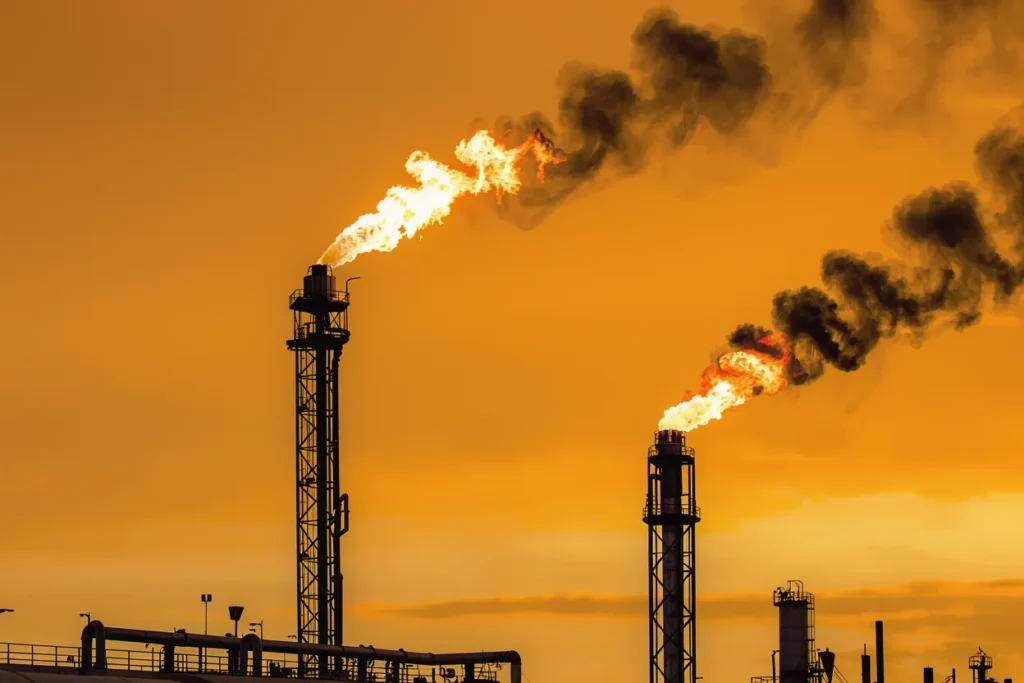
Attacks on refineries in Russia and the Middle East have pushed importers toward American fuel suppliers. Owning facilities that can keep converting crude into diesel has become an unusually lucrative advantage.
Full refineries leave less room for volume growth
Chevron’s U.S. refineries processed a record amount of crude, slightly above 1 million barrels daily, while operating at 98% capacity utilization. Exxon’s Gulf Coast refineries ran at 100%, producing record diesel volumes.
Those operating rates help explain the earnings surge. They also limit the easiest route to another increase.
A refinery already running near capacity cannot simply process substantially more crude next quarter. Further gains increasingly depend on product yields, operating reliability and the margin between feedstock costs and finished-fuel prices.
High diesel prices alone do not establish refinery profitability. Crude costs, energy expenses and the mix of products sold also matter. The opportunity comes from diesel remaining expensive relative to the cost of producing it.
Chevron increased diesel and jet-fuel yields by more than 10%, showing how refiners can adjust their output toward scarce products. Maintaining those gains still requires plants to keep running reliably under heavy demand.
Get Our Next Energy Earnings Breakdown in Your Inbox
Record earnings carry a normalization risk
Neither company needed rising production to deliver this quarter’s profit surge. Chevron’s oil-and-gas output declined slightly from a year earlier, partly because of international disruptions. Exxon’s production through the first nine months also fell.
Their integrated businesses are providing a cushion: disruption can constrain production in one region while increasing the value of refining capacity elsewhere.
However, the conditions producing exceptional refining profits can reverse. Repaired overseas facilities, weaker fuel consumption or reduced export demand could narrow margins even if American refineries continue operating efficiently.
Record share prices therefore put the durability of the windfall in focus. Investors need to distinguish earnings supported by lasting operating improvements from earnings dependent on disrupted competitors.
The next useful signals extend beyond crude prices. Diesel margins, distillate inventories and export demand will help show whether this quarter’s exceptional conditions are persisting. With refineries already close to their operating limits, the next earnings test is how much they can earn on each barrel.
Explore More Stories in Commodities
Disclaimer
Wall Street Access is an independent financial publisher. Wall Street Access is not a financial advisor. No company mentioned has compensated Wall Street Access for the preparation, publication or distribution of this article. This content is provided for informational and educational purposes only and is not investment advice or a recommendation to buy, sell or hold any security. Investing involves risk, including the possible loss of principal.
Prices, market capitalizations, financial figures and other market data are based on information available as of the date and time of publication and may change without notice. Information is drawn from public sources believed to be reliable but is not guaranteed to be complete or accurate. Opinions and expectations expressed are our own and may change as new information becomes available.
Readers should conduct their own due diligence and contact a licensed financial professional before making any investment decision. Past performance does not guarantee future results. Any material ownership interest or conflict of interest, where applicable, will be disclosed separately.