China’s production ceiling is moving the expansion elsewhere
China put a ceiling on domestic aluminium capacity. Its producers are finding room to grow beyond its borders.
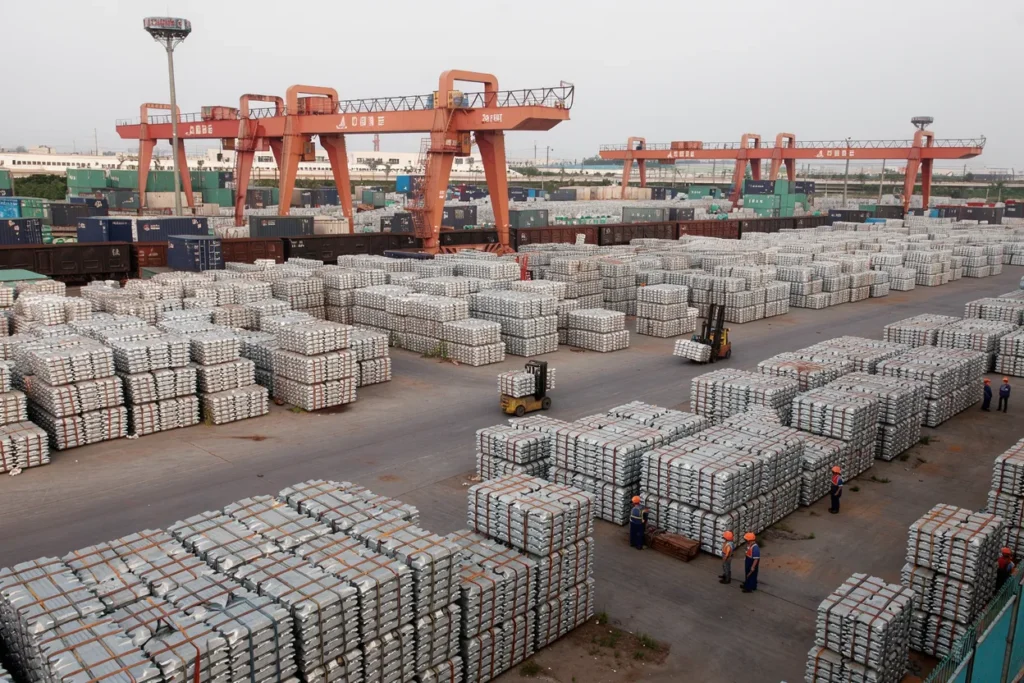
At least 15 million metric tons of annual primary aluminium capacity has been planned or announced overseas, spanning Southeast Asia, the Middle East, Central Asia and Africa. Approximately 2.85 million tons is already under construction or ramping up. China’s domestic smelting capacity remains capped at 45 million tons annually under a policy introduced in 2017.
That distinction changes the investment story. A limit on building smelters inside China provides less protection against global oversupply when Chinese companies can build them elsewhere.
Our thesis is that the expansion could shift competition toward producers with dependable power, integrated supply chains and lower operating costs. Growing demand from electrification can support consumption while new smelters compete away part of the financial benefit.
The world can need more aluminium without every aluminium producer earning more.
Indonesia offers an industrial foundation to build on
Indonesia is attracting projects from producers including Nanshan, Xinfa and Tsingshan, extending a Chinese investment model already established in its nickel industry.
The attraction goes beyond finding land for a smelter. Existing industrial developments can provide access to feedstocks, electricity and logistics.
Nanshan Aluminium International, for example, outlined a 250,000-ton annual smelting project after expanding its Indonesian alumina capacity to 4 million tons annually. Alumina is the refined material that smelters convert into aluminium metal. Developing both stages creates a more integrated operation.
Other projects have longer timelines. Xinfa’s proposed industrial park in Kazakhstan includes 2.4 million tons of annual aluminium capacity, with its first stage scheduled for 2028 and full design capacity targeted in 2029. Those were the targets outlined in June, rather than evidence that the full capacity is imminent.
The 15-million-ton pipeline therefore stretches across different construction stages and years. Actual metal production will depend on commissioning schedules and how quickly plants reach their intended operating rates.
Get Our Next Metals Market Breakdown in Your Inbox
A smaller supply wave could still change the market
The entire pipeline would not need to arrive for the supply balance to loosen.
Morgan Stanley’s July forecast projects a shift from a 1.1-million-ton deficit in 2026 to an 830,000-ton surplus in 2027, widening to 1.8 million tons in 2028. That outlook incorporates new smelting capacity and recovering Middle Eastern production. Its average price forecasts stand at $2,850 a ton for 2027 and $2,800 for 2028, compared with $3,150 in the second half of 2026. These remain forecasts contingent on supply and demand developing as expected.
The mechanism is familiar: attractive prices encourage investment, new facilities add supply, and greater competition puts pressure on margins.
Aluminium adds a particularly important constraint—electricity. Primary smelting uses electrical energy to convert alumina into metal through electrolysis. Access to competitively priced, reliable power is fundamental to project economics.
A project with secure electricity and feedstock supplies may remain viable at prices that make a more expensive development difficult to finance. Lower metal prices can therefore slow later projects while strengthening the competitive position of plants already operating efficiently.
Beijing’s influence follows the investment overseas
Moving abroad also brings regulatory hurdles.
China’s new outbound-investment regulation took effect on July 1. Further administrative measures announced on October 22 are scheduled to take effect on December 1, including revised reporting requirements for large overseas reinvestment projects and major adverse events.
Host-country partnerships also require scrutiny. Saudi Arabia’s Public Investment Fund and Red Sea Aluminium Holdings signed initial partnership terms in January for a Yanbu aluminium complex. Those terms were subject to final documentation, conditions and approvals.
For investors, the useful milestones are secured power, committed financing, construction progress and sustained production. Each moves a project closer to becoming supply that customers can actually buy.
Aluminium’s long-term demand story remains compatible with a tougher pricing environment. The next test is how quickly overseas smelters turn announced capacity into metal—and which producers can preserve their margins when they do.
Explore More Stories in Commodities
Disclaimer
Wall Street Access is an independent financial publisher. Wall Street Access is not a financial advisor. No company mentioned has compensated Wall Street Access for the preparation, publication or distribution of this article. This content is provided for informational and educational purposes only and is not investment advice or a recommendation to buy, sell or hold any security. Investing involves risk, including the possible loss of principal.
Prices, market capitalizations, financial figures and other market data are based on information available as of the date and time of publication and may change without notice. Information is drawn from public sources believed to be reliable but is not guaranteed to be complete or accurate. Opinions and expectations expressed are our own and may change as new information becomes available.
Readers should conduct their own due diligence and contact a licensed financial professional before making any investment decision. Past performance does not guarantee future results. Any material ownership interest or conflict of interest, where applicable, will be disclosed separately.