
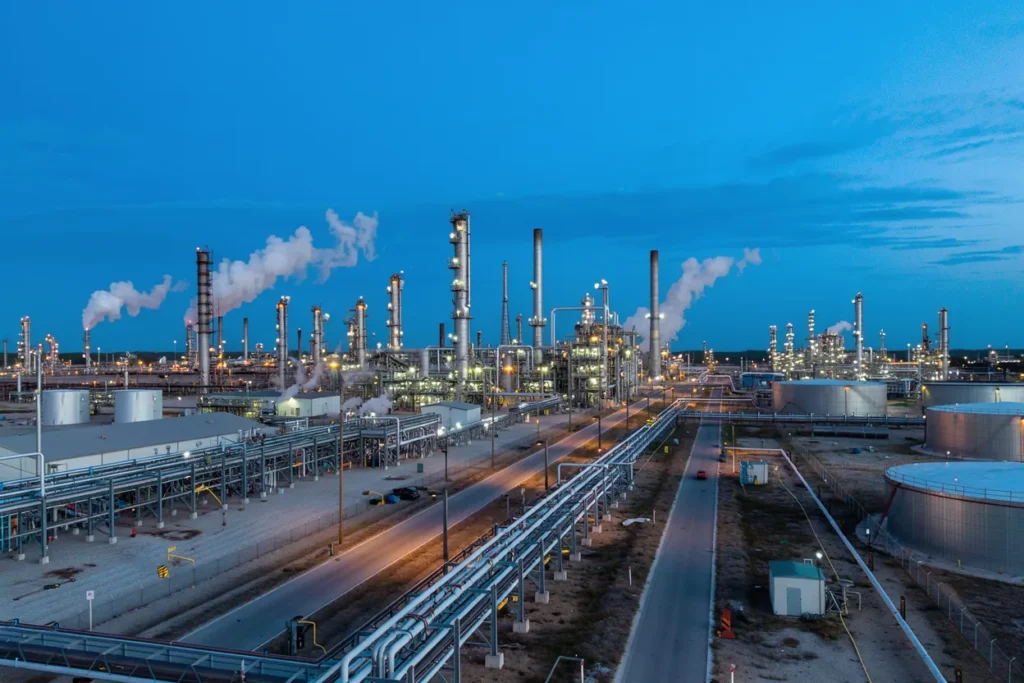
Oil is flowing through an increasingly dangerous neighborhood
Brent crude reached $116.13 a barrel Friday, up 2.6%, while U.S. West Texas Intermediate climbed about 3% to $102.56. Expectations of renewed U.S. military action against Iran added to concerns over Houthi attacks on Saudi Arabia.
Saudi Aramco has instructed employees to evacuate its Dhahran headquarters and work remotely, Reuters reported, following attacks on the kingdom’s energy infrastructure and airports.
Yet more crude is reaching international markets. October’s Middle Eastern exports at 17.3 million barrels a day, above the prewar average of 16.9 million. Shipments through the Strait of Hormuz have recovered with help from U.S.-protected convoys.
Those barrels are welcome. The military escort is a reminder of how much work it takes to keep them moving.
Buyers are paying for uncertainty about the next cargo, even as today’s cargo arrives. Another round of strikes could interrupt a recovery that already depends on expensive shipping, insurance and security arrangements.
The storage tanks tell a less reassuring story
Oil inventories give the economy time to absorb a supply disruption. Months of withdrawals have used up part of that breathing room.
Global oil stocks ended September 509 million barrels below their late-February level. Meanwhile, it forecasts global oil demand will fall by 2.6 million barrels a day in 2026, reflecting restricted fuel availability, high prices and a deteriorating economic outlook.
Demand destruction is already part of the picture. Businesses and households are adjusting, but their reduced consumption has not replenished the missing barrels.
The U.S. Energy Information Administration’s October outlook projects further global inventory withdrawals averaging 700,000 barrels a day in the fourth quarter. Its forecast also assumes that improving export routes eventually allow production to recover and stocks to rebuild.
That leaves oil caught between two forces: weaker customers and a supply system with less room for another interruption.
Subscribe to Wall Street Access for Our Research on U.S. Oil Producers
The best oil price is one a company can actually collect
Our view is that this environment strengthens the relative appeal of producers with dependable output, manageable costs and limited exposure to threatened export routes. A higher benchmark price helps most when a company can deliver its barrels without surrendering the benefit to transport costs, interruptions or hedging contracts.
Refiners require a different calculation. They buy crude and sell finished fuels, so profits depend on the margin between the two. The IEA reports that freight and crude costs have squeezed European and Asian refining margins, while discounted feedstocks have supported exceptionally strong U.S. margins.
A rising oil price can therefore produce very different earnings results across the energy sector. Paying any valuation for an energy stock simply because Brent is rising ignores those differences.
Beyond energy, expensive fuel can squeeze transport margins and household spending while complicating efforts to contain inflation.
The next useful signal is whether recovering exports begin rebuilding inventories. Until storage tanks start refilling, another interruption could force buyers to compete for barrels from a thinner cushion.
Explore More Stories in Commodities
Disclaimer
Wall Street Access is an independent financial publisher. Wall Street Access is not a financial advisor. No company mentioned has compensated Wall Street Access for the preparation, publication or distribution of this article. This content is provided for informational and educational purposes only and is not investment advice or a recommendation to buy, sell or hold any security. Investing involves risk, including the possible loss of principal.
Prices, market capitalizations, financial figures and other market data are based on information available as of the date and time of publication and may change without notice. Information is drawn from public sources believed to be reliable but is not guaranteed to be complete or accurate. Opinions and expectations expressed are our own and may change as new information becomes available.
Readers should conduct their own due diligence and contact a licensed financial professional before making any investment decision. Past performance does not guarantee future results. Any material ownership interest or conflict of interest, where applicable, will be disclosed separately.