South Korea is preparing for another major expansion in chip capacity
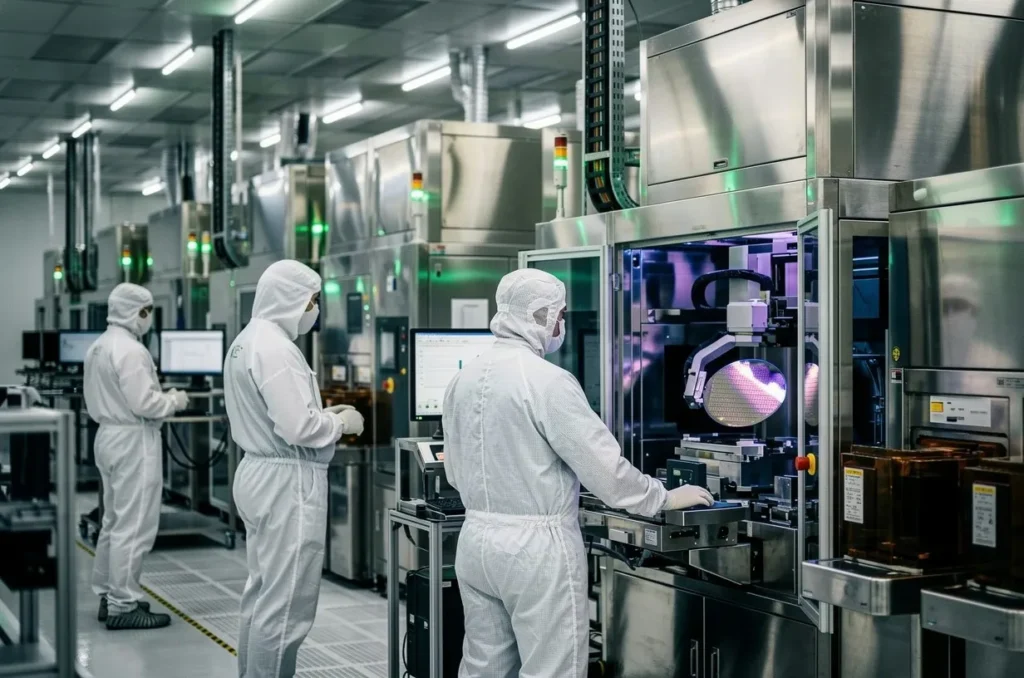
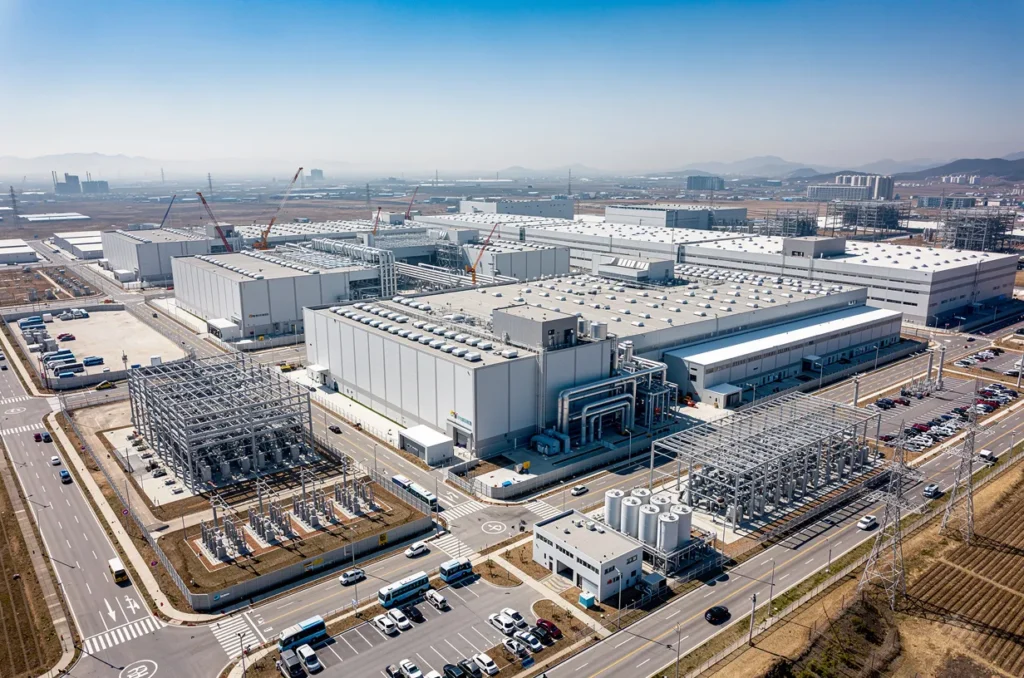
Samsung Electronics and SK Hynix have unveiled plans to invest a combined 800 trillion won, or approximately $518 billion, in four new semiconductor fabrication plants in southwestern South Korea.
Each company plans to invest roughly 400 trillion won and construct two fabs. Samsung has selected the city of Gwangju for its proposed facilities, while SK Hynix is still evaluating potential locations elsewhere in the southwest.
The announcement represents one of the largest semiconductor investment commitments ever disclosed and would establish a second major production centre outside the Seoul metropolitan region.
No completion schedule has been announced, and the spending is expected to unfold over an extended period as projects receive corporate approvals and demand develops.
AI is creating a new memory investment cycle
The expansion is being driven by strong demand for the advanced memory required by artificial intelligence systems.
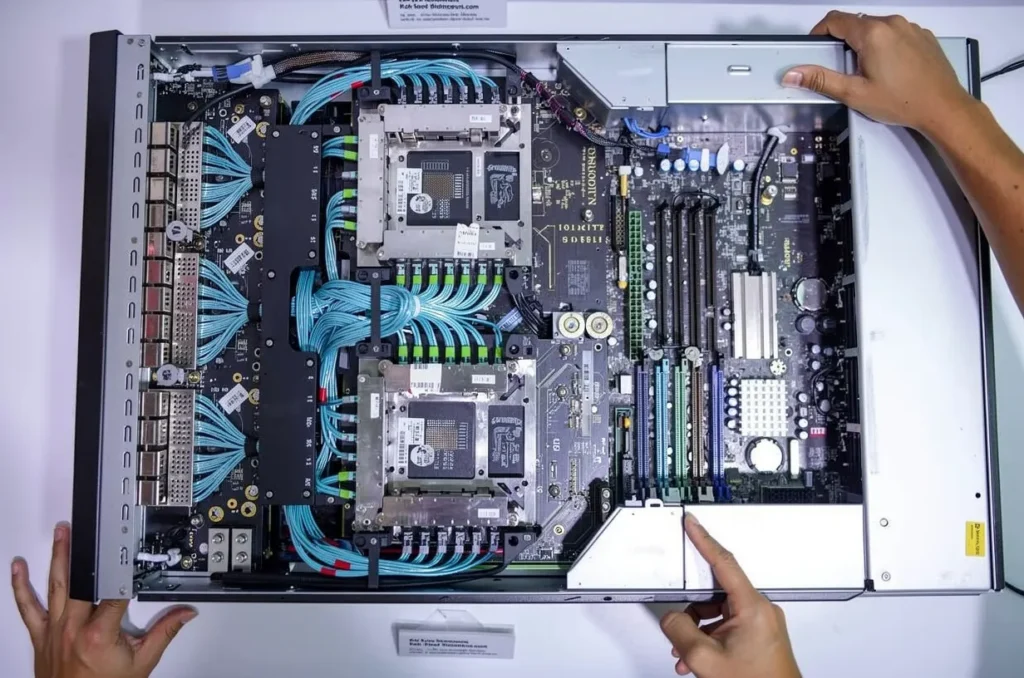
Modern AI accelerators rely on high-bandwidth memory, or HBM, to move enormous volumes of data between processors and memory at high speed. Demand has surged as cloud providers and technology companies build increasingly powerful computing clusters.
Samsung and SK Hynix together produce roughly two-thirds of the world’s memory chips, placing South Korea at the centre of the AI infrastructure supply chain.
SK Hynix has developed a particularly strong position in HBM, while Samsung is investing heavily to expand its own advanced-memory capabilities. Both companies have reported strong earnings as cloud operators compete to secure long-term supplies.
The new fabs would provide capacity for the next stage of that cycle, although the exact combination of HBM, conventional DRAM, NAND and other products has not been disclosed.
Four fabs would create a second national semiconductor hub
South Korea’s chip industry is currently concentrated in Gyeonggi Province, where Samsung and SK Hynix operate large manufacturing complexes south of Seoul.
The new investment would shift part of the industry toward Gwangju and the surrounding southwestern region, which has historically lacked the large industrial clusters found elsewhere in the country.
The government wants the southwest to become South Korea’s second major semiconductor production base while existing regions develop complementary specialties.
Under the broader plan:
- The southwest would host major new memory fabs.
- The Chungcheong region would expand advanced packaging.
- Existing southeastern industrial centres would produce chip materials and components.
- AI data centres would be distributed across several regions.
The objective is to build a more geographically diversified ecosystem rather than concentrating nearly all advanced manufacturing around Seoul.
The plan is also an economic-development strategy
The investment carries domestic political and economic significance beyond the semiconductor industry.
South Korea’s economic activity, population and technology sector are heavily concentrated in the greater Seoul region. The government has been seeking ways to direct more investment toward areas that have experienced slower growth and continued population loss.
New semiconductor plants could bring construction spending, technical employment, supplier investment and supporting infrastructure to the southwest.
The fabs would also encourage equipment manufacturers, materials suppliers, packaging businesses and research institutions to establish nearby operations.
Whether the investment produces that broader economic effect will depend on the availability of skilled workers and the ability of local communities to develop the infrastructure required by advanced manufacturing.
Power and water will be the largest practical constraints
Semiconductor fabs require vast amounts of electricity and highly purified water.
SK Hynix Chairman Chey Tae-won acknowledged that the project would need large industrial sites, sufficient power, reliable water supplies and a substantial technical workforce. He noted that establishing the company’s existing production cluster in Gyeonggi Province took roughly nine years.
Government officials argue that southwestern South Korea’s renewable-energy resources could become an advantage as chip companies face greater pressure to reduce the carbon intensity of manufacturing.
Renewable generation alone will not solve the infrastructure challenge. Fabs require uninterrupted power around the clock, major transmission capacity and water systems capable of supporting highly sensitive production processes.
Those networks must be planned and built before the proposed facilities can reach commercial operation.
The $518 billion figure should be viewed as a long-term commitment
The scale of the announcement is significant, but the entire amount will not be spent immediately.
Semiconductor fabs are developed in stages. Companies first secure land, utilities and permits before constructing clean rooms and installing manufacturing equipment. Tool purchases may then be adjusted according to customer demand, technology cycles and corporate approvals.
Neither Samsung nor SK Hynix has provided a firm completion date for the four proposed fabs.
SK Hynix has also said that spending will be staged according to market conditions and board approval. That flexibility is important in an industry known for sharp swings between shortages and excess capacity.
The plan establishes the strategic direction. The pace of construction will depend on whether AI-driven memory demand continues expanding quickly enough to justify each phase.
South Korea wants to protect its lead in memory
The investment also reflects intensifying international competition.
The United States, China, Japan, Taiwan and the European Union are all supporting domestic semiconductor manufacturing through subsidies, financing, tax incentives and infrastructure programs.
South Korea already holds a dominant position in memory, but competitors are investing heavily. China is expanding domestic chip production, while US and Japanese policymakers are supporting new fabs and supply-chain partnerships.
Samsung and SK Hynix must also continue investing as memory technology becomes more complex. Advanced HBM requires new production techniques, increasingly sophisticated packaging and close integration with processors from companies such as Nvidia and other AI-chip designers.
Maintaining market leadership will require both larger capacity and faster technical development.
Physical AI could broaden demand beyond data centres
Government officials expect the next stage of AI demand to extend beyond cloud computing.
Industrial robots, autonomous vehicles and other forms of so-called physical AI will require processors, sensors and memory capable of running advanced models in real-world environments.
Those systems could create another large source of semiconductor demand alongside traditional data centres.
South Korea’s wider industrial strategy identifies semiconductors, physical AI and AI data centres as three connected pillars. The country is attempting to supply the chips, build the machines using them and provide the computing infrastructure needed to operate increasingly complex models.
The strategy would link South Korea’s existing strengths in electronics, automobiles, batteries, robotics and industrial manufacturing.
More capacity could eventually reshape memory pricing
The new fabs are intended to address long-term demand, but they could eventually influence the balance between memory supply and pricing.
Memory producers are currently benefiting from tight capacity and strong pricing power. AI customers are entering multiyear agreements to secure advanced products, while the diversion of manufacturing capacity toward HBM has tightened supplies of conventional memory.
Additional fabs could ease those constraints once they begin operating.
The industry must manage the expansion carefully. Memory markets have historically experienced deep boom-and-bust cycles when producers built too much capacity during periods of high prices.
Samsung and SK Hynix will need to increase output quickly enough to serve AI demand without creating excess supply if growth eventually slows.
WSA Take
The $518 billion plan confirms that South Korea expects AI-driven memory demand to remain substantial for years rather than quarters.
Samsung and SK Hynix already control much of the global memory market. Four additional fabs would reinforce that position while giving South Korea a second major production hub outside the Seoul region.
The commitment is still at an early stage. Construction schedules, SK Hynix’s final location and the required power and water infrastructure have not been settled. The headline investment will also be deployed gradually and remains subject to demand and corporate approval.
The strategic direction is clear. South Korea is preparing for a world in which AI computing expands from data centres into robotics, transportation and industrial systems—and advanced memory becomes an even more important part of the global technology supply chain.
Disclaimer
WallStAccess is a financial media platform providing market commentary and analysis for informational and educational purposes only. This content does not constitute investment advice, a recommendation, or an offer to buy or sell any securities. Readers should conduct their own research or consult a licensed financial professional before making investment decisions.