Wall Street opened the week with a relief rally
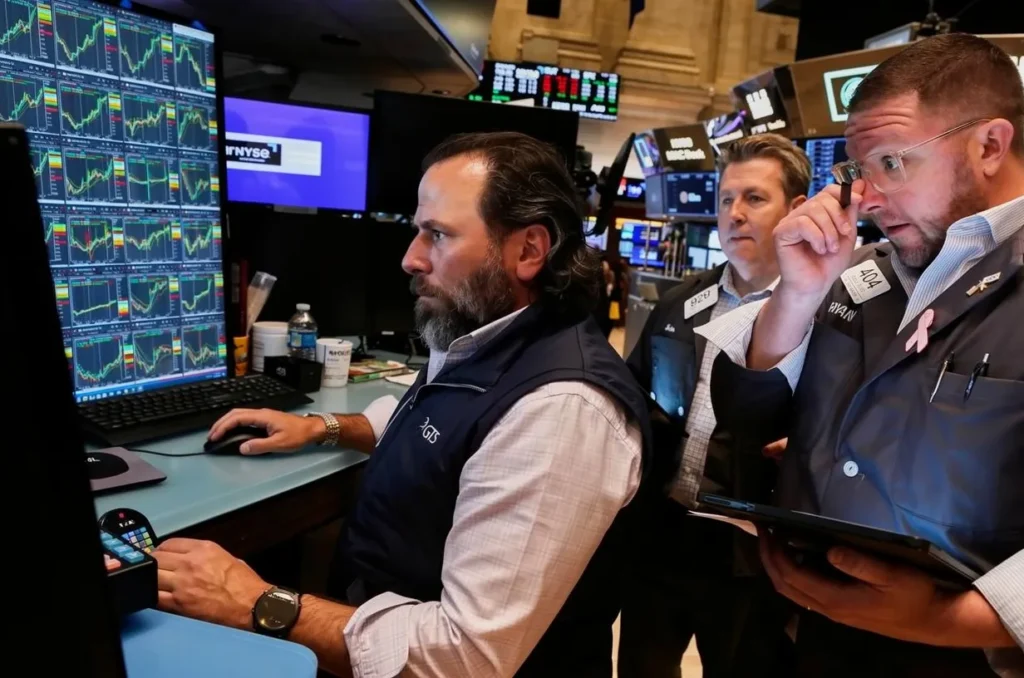
US stocks moved higher Monday as two major sources of uncertainty eased at the same time.
The Nasdaq Composite advanced approximately 0.8%, while the S&P 500 gained about 0.5%. The Dow Jones Industrial Average also rose roughly 0.5%, extending its relative strength following a volatile week for technology shares.
The advance followed sharp weekly losses for the S&P 500 and Nasdaq as investors reduced exposure to semiconductors, artificial intelligence infrastructure and other crowded technology trades.
Monday’s rebound was supported by reports that the US and Iran had halted a new round of attacks and would return to negotiations. A Supreme Court ruling preserving Lisa Cook’s position at the Federal Reserve provided an additional source of stability.
The Supreme Court reinforced the Fed’s independence
The Supreme Court rejected the US administration’s attempt to remove Cook from the Federal Reserve’s Board of Governors.
In a 5-4 decision, the court found that Cook had not received the procedural protections required before a Fed governor could be dismissed. The ruling allows her to remain in office and prevents the removal from taking effect.
The decision is significant beyond Cook’s individual position.
The court expanded presidential authority over several other independent federal agencies but maintained a separate legal standard for the Federal Reserve. Governors can be removed only for cause, a protection designed to prevent monetary policy from being directly controlled by the White House.
Markets generally treat central-bank independence as an important safeguard against politically driven interest-rate decisions. Any perception that Fed officials could be dismissed over policy disagreements would introduce new uncertainty into inflation expectations, Treasury yields and the dollar.
Monday’s ruling reduced that immediate risk.
The ruling does not end the wider fight over Fed policy
The legal decision protects Cook’s position, but political pressure surrounding the central bank remains elevated.
The US administration has repeatedly pushed for lower interest rates, while the Fed has become more cautious after recent inflation data moved higher. Policymakers have also begun discussing the possibility that another rate increase may be required if price pressures fail to ease.
That disagreement is likely to continue regardless of the court’s decision.
The important distinction is that monetary-policy disputes will remain inside the Fed’s established decision-making structure rather than being resolved through the removal of a sitting governor without sufficient process.
For investors, that preserves greater predictability at a moment when the direction of inflation and rates is already difficult to assess.
The US and Iran stepped back from another escalation
Markets also responded positively after Washington and Tehran agreed to halt the renewed attacks that erupted over the weekend.
The clashes threatened an interim peace framework signed earlier in June and raised fresh concerns about commercial shipping through the Strait of Hormuz. The waterway carries roughly one-fifth of global oil and liquefied natural gas flows under normal conditions.
Both sides agreed to stop the latest hostilities and continue negotiations, with senior officials expected to meet in Doha, Qatar.
The decision prevented an immediate return to the wider conflict that had disrupted Gulf exports, sharply increased oil prices and forced tankers to avoid or delay passage through Hormuz.
The diplomatic process remains fragile. The speed with which weekend attacks interrupted the ceasefire showed that the agreement is vulnerable to isolated incidents, disputed military actions and tension elsewhere in the region.
Oil moved higher, but the advance remained contained
Crude prices initially rose as investors reacted to the weekend strikes, then pared part of the advance after the halt in attacks was announced.
Brent crude traded around $73 a barrel, while West Texas Intermediate moved back above $70.
The limited increase reflects two opposing forces.
Renewed military action reminded traders that the regional risk premium has not disappeared. At the same time, Gulf producers have continued loading oil, tanker traffic through Hormuz has improved and both sides have an economic incentive to prevent another prolonged shutdown.
Crude shipments through the strait recently reached their highest level since the conflict began in February. That recovery has helped pull oil well below the peaks reached during the most severe phase of the disruption.
Further attacks could quickly reverse that progress. For now, markets are treating the weekend escalation as a warning rather than the beginning of another sustained supply shock.
The June jobs report is the week’s main economic test
Investors now turn to the June employment report, scheduled for release on Thursday, July 2, one day earlier than usual because US markets will be closed Friday for the Independence Day holiday.
The labour data will provide the next major input into the Federal Reserve’s policy debate.
A strong report could reinforce the view that the economy can withstand restrictive interest rates and give policymakers more room to focus on inflation. Particularly strong wage or employment growth could also strengthen the argument for another rate increase.
A weaker report would raise concerns that higher borrowing costs and geopolitical uncertainty are beginning to slow the economy more materially.
Markets are already pricing a more restrictive rate path than they were before the Iran conflict. The employment figures will help determine whether that shift continues.
Second-quarter earnings expectations are unusually high
Wall Street is also beginning to prepare for second-quarter earnings season.
Analysts expect S&P 500 earnings per share to rise approximately 22% from a year earlier, according to Goldman Sachs. That is the highest growth estimate entering an earnings season since 2021.
The first quarter established a difficult comparison. Consensus forecasts initially called for about 12% earnings growth, while companies ultimately delivered an increase of roughly 27%.
Companies regularly exceed Wall Street’s initial estimates, but expectations have already moved much higher for the second quarter. That leaves less room for ordinary results to surprise investors positively.
The market may require both strong earnings and confident forward guidance, particularly from companies carrying premium valuations tied to artificial intelligence.
Earnings have become more important after the recent tech selloff
The S&P 500’s gains over the past year have been supported primarily by corporate profit growth rather than a broad expansion in valuation multiples.
That puts greater weight on the coming reporting season.
Technology companies will need to demonstrate that record investment in data centres, chips, networking and power infrastructure is producing enough revenue to justify the spending. Semiconductor suppliers will need to show that strong AI demand remains durable rather than being driven by customers ordering ahead of future shortages.
Industrials, financials and energy companies will also receive more attention as investors look for earnings leadership beyond the largest technology stocks.
A broader earnings contribution would make the market less dependent on a small group of megacap companies.
Microsoft remains a major weak point in Big Tech
Microsoft is on track for its worst monthly performance since the dot-com era.
The shares have fallen roughly 17% in June, which would mark their largest monthly decline since December 2000. Investors have become more concerned about the scale of the company’s AI infrastructure spending and how quickly that investment will produce sufficient returns.
The decline is notable because Microsoft’s underlying revenue continues to expand. The tension is not primarily about whether its cloud and software businesses are growing. It is about whether the growth is strong enough to support the capital being committed to AI.
Some analysts remain constructive, pointing to Microsoft’s recurring revenue, cloud position and potential for long-term margin expansion.
The stock’s performance shows how much the market’s standards have changed. Strong growth alone is no longer enough when capital expenditures are enormous and expectations were already elevated.
Monday’s advance did not erase the market’s recent concerns
The rebound improved sentiment but did not resolve the issues that drove last week’s losses.
AI-related valuations remain under scrutiny. Inflation is still elevated. Another Fed hike remains possible, and the US-Iran agreement has already shown that it can be disrupted quickly.
The Supreme Court ruling and the halt in attacks removed two immediate risks. Neither development guarantees a sustained market recovery.
The next direction will depend on whether the labour market remains resilient, whether corporate earnings meet an unusually high bar and whether the ceasefire survives long enough for normal energy flows to continue recovering.
WSA Take
Monday’s gains reflected relief rather than a decisive return to risk-taking.
The Supreme Court protected an important boundary around Federal Reserve independence, while the halt in US-Iran attacks reduced the immediate threat of another major energy disruption. Together, those developments gave investors room to buy after a difficult week.
The market still faces a demanding setup. June employment data could reinforce the case for higher rates, second-quarter earnings expectations are already exceptionally strong and the AI trade remains under pressure to prove that record spending is producing adequate returns.
For now, two major risks have eased. The jobs report and earnings season will determine whether the rebound can develop into something more durable.
Explore More Stories in Markets
Disclaimer
WallStAccess is a financial media platform providing market commentary and analysis for informational and educational purposes only. This content does not constitute investment advice, a recommendation, or an offer to buy or sell any securities. Readers should conduct their own research or consult a licensed financial professional before making investment decisions.