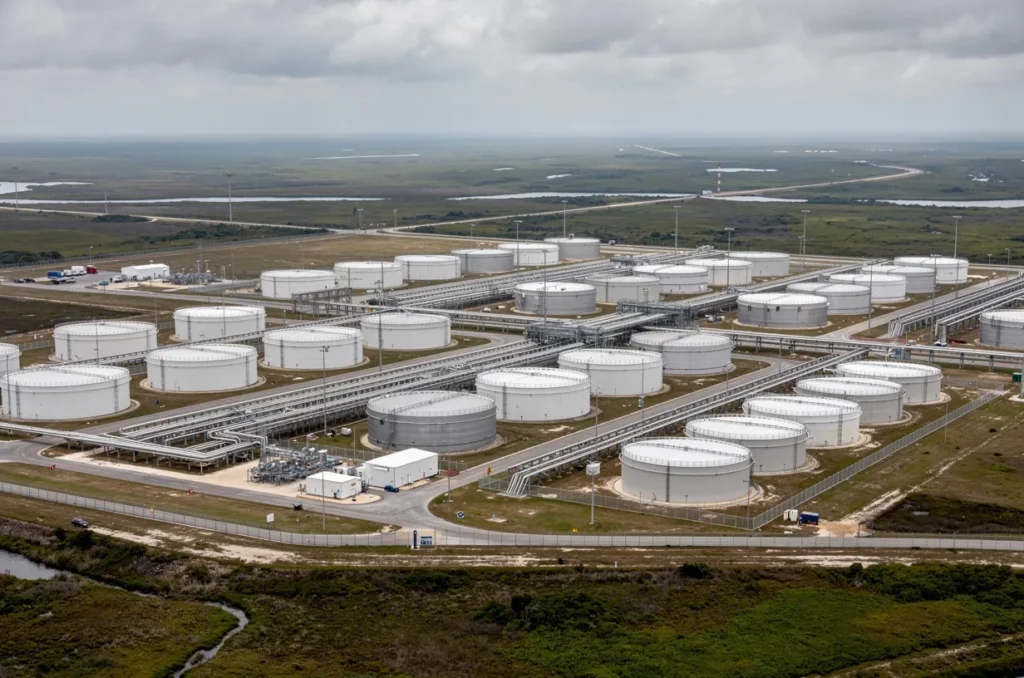
The US is leaning hard on the one oil buffer built for emergencies.
The latest EIA data showed the SPR dropped to 357.1 million barrels last week, down another 8 million barrels. Commercial crude inventories also fell sharply, leaving total US crude stocks — commercial plus government — around 709.8 million barrels.
The message is straightforward. Washington is still using emergency barrels to offset a live supply disruption, not just smooth routine market volatility.
This is a real drawdown, not a symbolic one.
The current release program is large. The Department of Energy said in March the US would release 172 million barrels from the SPR as part of a coordinated international effort to stabilize markets hit by the Iran war and the disruption around the Strait of Hormuz.
The pace has been aggressive. Reuters reported a record 9.9 million-barrel draw in mid-May. Another 8 million barrels came out in the latest week.
The reserve is now back in territory the market should notice.
Reuters reported in May 2023 that the SPR had fallen to 359.59 million barrels, the lowest since September 1983. Today’s 357.1 million sits below that mark.
That does not mean the SPR is empty. It does mean the reserve is no longer a deep cushion by historical standards, especially with the current release still unfinished.
The larger problem is not just the SPR level. It is the broader inventory trend.
US crude stocks have been falling while export demand stays strong. Reuters said exports rose to 5.9 million barrels per day, the second-highest level on record, as buyers in Asia and Europe looked for alternatives to disrupted Middle Eastern supply.
That is the more important point for markets. The government reserve is shrinking at the same time the commercial system is under pressure.
Refilling it will take time.
Energy Secretary Chris Wright said the US intends to replenish at least 1.2 barrels for every barrel released. That promise matters politically. It does not change the math. Rebuilding the SPR from current levels will take time, especially if oil markets stay tight or prices remain elevated.
Emergency releases can soften a price spike. They do not erase the cost of having less emergency capacity later.
WSA Take
The SPR is doing exactly what it was built to do. The issue is how much will be left when this episode is over.
At 357.1 million barrels, the reserve is back near levels last seen when it was still being built out in the early 1980s. With commercial inventories falling too, the US is solving today’s supply problem by spending down part of its insurance against the next one.
Explore More Stories in Commodities
Disclaimer
WallStAccess is a financial media platform providing market commentary and analysis for informational and educational purposes only. This content does not constitute investment advice, a recommendation, or an offer to buy or sell any securities. Readers should conduct their own research or consult a licensed financial professional before making investment decisions.