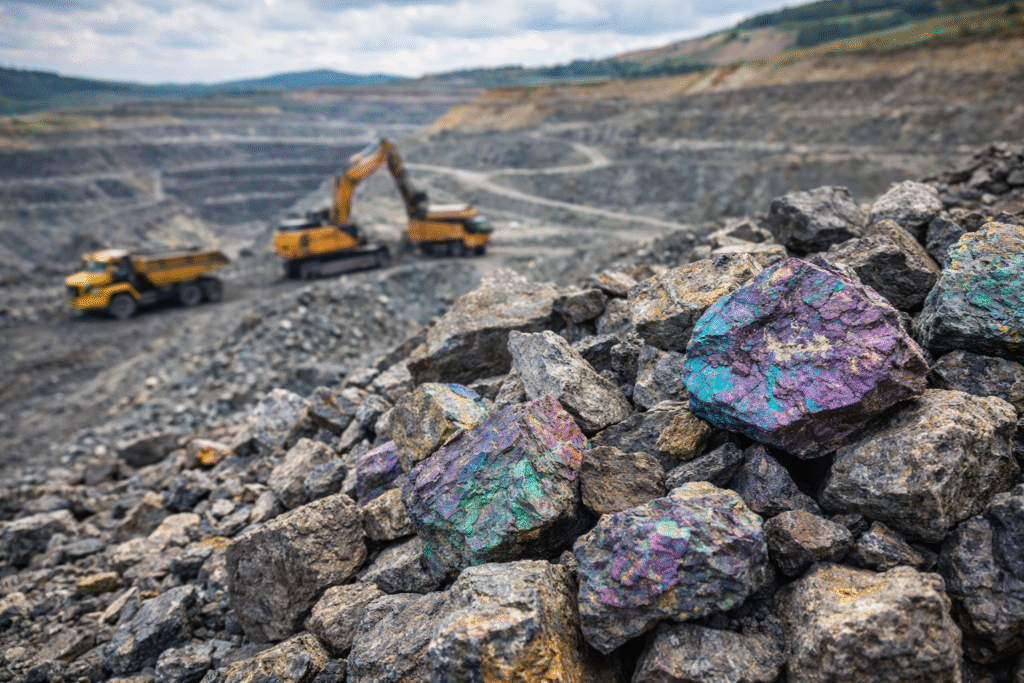

Copper Sets New Record
US demand drives the next leg higher
Copper prices pushed into uncharted territory, breaking above $13,000 per ton as a renewed rush to ship metal into the United States intensified concerns over global supply tightness.
Benchmark copper on the London Metal Exchange jumped as much as 4.4%, extending a powerful rally that has lifted prices more than 20% since mid-November. The move marks one of the strongest momentum runs for the metal in years.
Tariff Uncertainty Fuels US Import Surge
Premium pricing pulls supply into America
The rally is being driven by a widening price gap between US copper markets and global benchmarks. Ongoing uncertainty around potential US import tariffs has caused domestic prices to trade at a persistent premium, encouraging traders to redirect shipments toward the US.
That shift is now distorting global flows.
- US copper imports surged in December to the highest level since July
- Roughly half of global copper inventories are now held in the US
- The US accounts for less than 10% of global copper demand
This imbalance has raised fears that other regions could face shortages.
Speculative Money Joins Tight Fundamentals
Momentum feeds on supply stress
Market participants say speculative positioning has accelerated as traders anticipate further upside.
- A labor strike at a Chilean copper mine added near-term supply risk
- Investors who had been waiting for pullbacks are re-entering
- Futures spreads remain in backwardation, signaling immediate tightness
The cash-to-three-month spread in London continues to reflect strong demand for prompt delivery.
Structural Supply Issues Remain Unresolved
Years of underinvestment collide with rising demand
Beyond short-term trade dynamics, copper’s rally reflects deeper structural issues:
- New mine development has lagged demand growth for years
- Existing operations face rising costs, accidents, and delays
- Electrification, data centers, and EV production continue to expand demand
Copper’s role as a critical metal for energy transition infrastructure has made it a focal point for governments and investors alike.
Recent supply disruptions in Indonesia, Africa, and South America have further reduced the market’s margin for error.
Broader Metals Rally Adds Fuel
Copper joins a powerful complex-wide move
Copper’s surge is part of a broader metals rally:
- Gold, silver, and platinum have reached record levels
- Aluminum and tin have pushed to multi-year highs
- Industrial and precious metals are both seeing strong inflows
The combination of geopolitical risk, supply constraints, and physical stockpiling has created a favorable backdrop for commodities.
What Comes Next
Tariffs remain the key wildcard
While analysts note that global refined copper markets showed a surplus last year, distorted trade flows tied to tariff risk have reshaped inventories and pricing signals.
If US tariff policy remains uncertain, traders warn that:
- Stockpiling could continue
- Global availability could tighten further
- Price volatility is likely to remain elevated
WSA Take
Copper’s breakout above $13,000 isn’t just a speculative spike — it’s a reflection of stressed supply chains, distorted trade flows, and years of underinvestment colliding with real demand. As long as US import premiums persist and inventories remain unevenly distributed, bulls are likely to stay firmly in control.
Read our recent coverage on US Stocks Rally as Tech Rebounds and Oil Majors Jump.
Explore more market insights on the WallStreetAccess homepage.
Disclaimer
WallStAccess does not work with or receive compensation from any companies mentioned. This content is for informational and educational purposes only and should not be considered financial advice. Always conduct independent research before investing.