EU and India Move First as Trade Lines Harden
India and the European Union announced a landmark free trade agreement, concluding negotiations that have stretched nearly two decades. The deal is designed to deepen economic ties between New Delhi and Brussels while offsetting the growing impact of US tariff threats on global commerce.
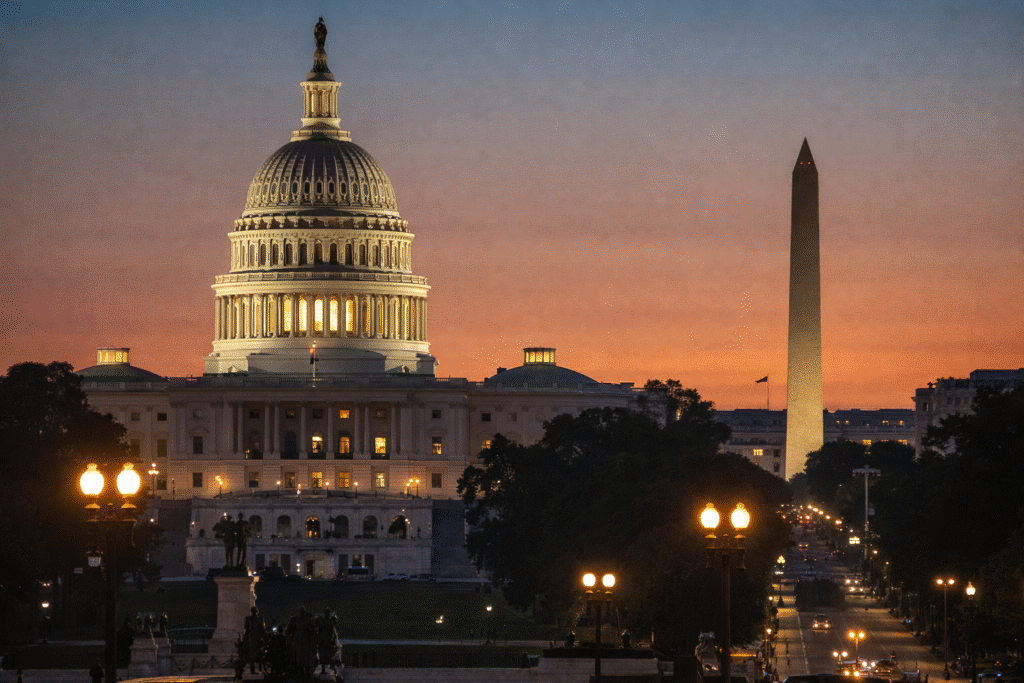
The agreement comes as US trade talks with India remain unresolved and as transatlantic relations were recently strained by tensions surrounding Greenland.
European officials described the pact as transformational, creating a free trade zone encompassing roughly two billion people.
What the EU–India Deal Covers
According to official releases:
- The EU will eliminate or reduce tariffs on 99.5% of Indian imports over seven years
- India will cut tariffs on 96.6% of EU goods, spanning autos, industrial products, food, and consumer goods
- EU exports to India are expected to double by 2032
Indian officials said the deal would strengthen domestic manufacturing, expand services exports, and improve investor confidence in Asia’s third-largest economy.
US Tariff Pressure Intensifies on Allies
The trade breakthrough coincided with renewed tariff pressure from Washington:
- South Korean tariffs were raised back to 25% from 15%, affecting autos, lumber, pharmaceuticals, and other goods
- Canada was threatened with 100% tariffs over its trade agreement with China
- Officials claimed the Canada–China deal could conflict with the USMCA framework
Markets in South Korea reacted sharply, with auto stocks initially sliding and the won weakening before stabilizing.
Canada and Europe Push Back
Canadian officials reiterated their commitment to the USMCA while emphasizing the need to diversify trade relationships. Ottawa has stated it will not pursue a free trade agreement with non-market economies, but remains firm on expanding exports beyond the US.
In Europe, policymakers warned that tariff escalation risks triggering a dangerous downward spiral. EU leaders have discussed potential countermeasures, including the possible use of the bloc’s Anti-Coercion Instrument if trade pressure intensifies further.
US–India Talks Still in Play
Despite the EU deal, Indian officials said US–India trade negotiations remain at an advanced stage, though progress has been uneven following earlier tariff actions tied to energy purchases and geopolitical disputes.
Indian leaders emphasized support for a multilateral trading system, positioning the EU agreement as a stabilizing force amid global trade volatility.
WSA Take
This isn’t just about tariffs — it’s about global trade architecture shifting in real time.
As US policy leans harder on pressure tactics, major economies are moving decisively to lock in alternative trade corridors. The EU–India agreement is a clear signal that allies are no longer waiting for certainty from Washington.
Trade fragmentation is accelerating — and markets are starting to price in a multipolar economic world.
Read our recent coverage on UnitedHealth Slides Despite Beating 2026 Profit Forecast.
Explore more market insights on the WallStreetAccess homepage.
Disclaimer
WallStAccess does not work with or receive compensation from any companies mentioned. This content is for informational and educational purposes only and should not be considered financial advice. Always conduct independent research before investing.