Gold Rally Faces Its First Real Test
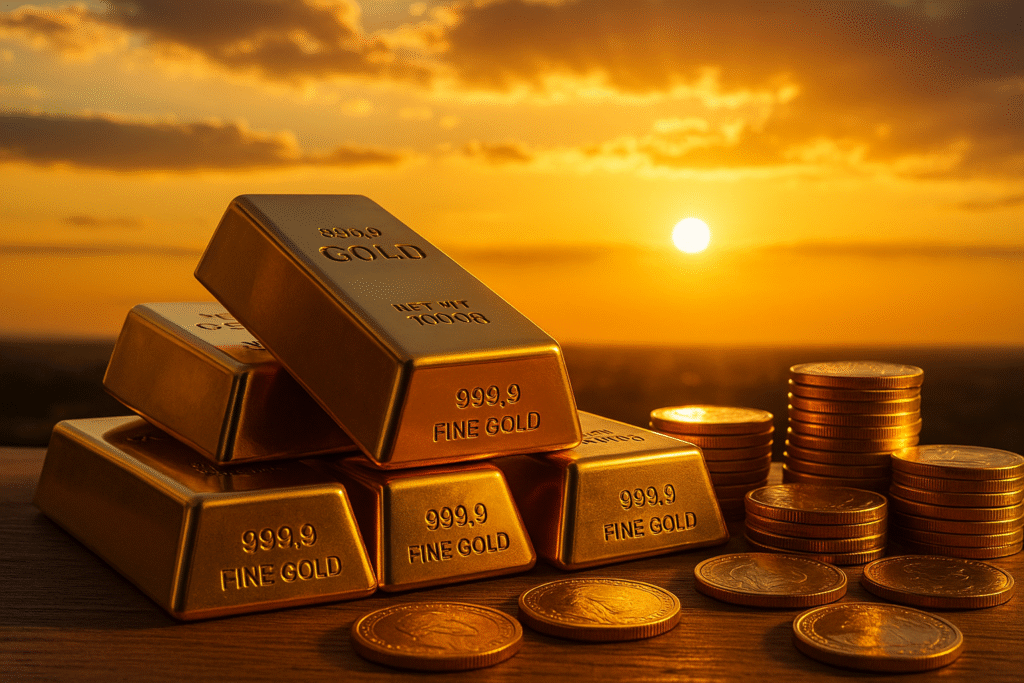
Gold prices hovered near $4,000 per ounce on Friday, stabilizing after October’s sharp pullback but leaving investors divided on what comes next. Despite the correction, the metal remains on pace for its strongest year in more than four decades, buoyed by heavy central bank buying, inflows into ETFs, and rising bar and coin demand.
Even so, gold has fallen nearly 9% from last month’s record high above $4,350, prompting analysts to question whether the rally is running out of steam. The metal’s trajectory has been shaped by monetary policy shifts, geopolitical uncertainty, and investors seeking safety amid volatile equity markets.
Analysts Warn Prices May Have Peaked
Economists at Macquarie Group said this week that gold’s near-term peak is likely in, pointing to rebounding global growth, waning rate-cut cycles, and higher real interest rates as headwinds. The firm expects prices to gradually soften over the next year as the Federal Reserve delays further easing and geopolitical tensions show signs of cooling.
Macquarie noted that any renewed flare-up in U.S.-China tensions or concerns about the U.S. deficit could temporarily push prices higher, but said the long-term rally appears to be slowing.
The firm added that unlike prior cycle peaks, gold’s pullback may be “orderly,” with prices staying well above last year’s average through the next U.S. presidential term.
Others See Further Upside Ahead
Not all analysts share the bearish outlook. UBS maintained a 12-month target of $4,200 per ounce, with an upside case of $4,700 if political or market volatility intensifies heading into 2026.
Meanwhile, Goldman Sachs reiterated its $4,900 forecast for late 2026, citing “structural buying” from central banks and institutional investors using gold as a long-term portfolio diversifier. The firm believes the recent selloff was driven largely by short-term speculative unwinding rather than a change in fundamentals.
A World Gold Council report also echoed optimism, calling October’s decline a “healthy breather” within a larger structural uptrend supported by persistent global demand.
WSA Take
Gold’s monster year underscores how investors are positioning for uncertainty, but the path forward looks increasingly split. Some see a topping pattern as growth rebounds and yields stabilize, while others believe structural demand could still propel prices to new highs.
With gold still trading near $4,000 and central banks continuing to accumulate reserves, the next few months may determine whether this bull run cements itself — or cools into consolidation.
Read our recent coverage on OpenAI’s $20 Billion Revenue Run Rate.
Explore more analysis on the Wall Street Access homepage.
Disclaimer:
Wall Street Access does not work with or receive compensation from any public companies mentioned. Content is for informational and educational purposes only.