Gold is no longer in a clean momentum phase
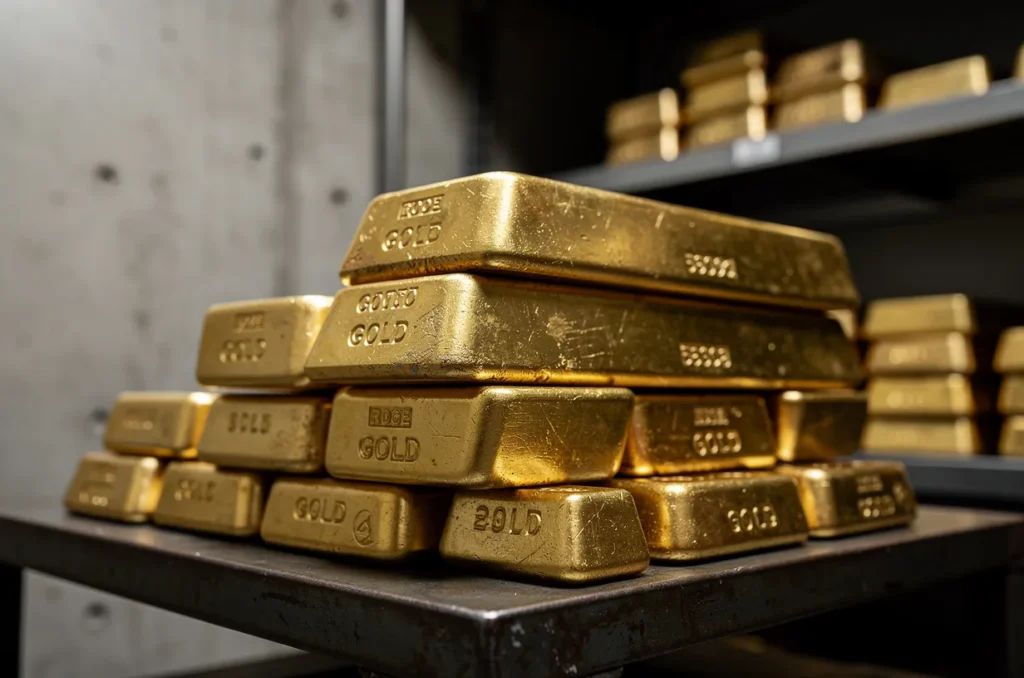
Gold is still one of the most important macro trades on the board, but the setup has become more complicated.
Spot gold traded around $4,511 on Tuesday as traders reacted to renewed US-Iran tensions, higher oil, and growing expectations that the Federal Reserve may need to stay tighter for longer. Reuters also reported that UBS cut its year-end 2026 gold forecast by $400 to $5,500, citing higher yields and a stronger dollar.
That matters because the market is no longer dealing with a simple safe-haven bid. Gold still has strong structural support, but it is now running into a more difficult rates backdrop.
The $6,000 case is not fantasy
Even with the recent pressure, the bullish case for gold has not disappeared.
Reuters reported in February that JPMorgan sees gold reaching $6,300 an ounce by the end of 2026, driven by continued demand from central banks and investors. More recently, Reuters also noted that JPMorgan still sees a path toward $6,000 by year-end 2026 even after trimming its 2026 average price forecast.
That is the key distinction. Banks are becoming a bit more cautious on the near-term path, but many are not walking away from the broader bull case.
Central banks are still doing a lot of the heavy lifting
One of the strongest pillars under gold remains official-sector buying.
The World Gold Council said central banks bought an estimated 244 tonnes of gold in the first quarter of 2026, above both the prior quarter and the five-year average. That kind of demand matters because it is not hot-money speculation. It is strategic reserve allocation.
China remains part of that story as well. Reuters reported in April that the People’s Bank of China extended its gold-buying streak to 17 straight months, even though the market had just gone through a sharp pullback.
That tells you something important: even after a violent move lower, central banks are still treating gold as a core reserve asset.
Rates are the real problem right now
If gold has a near-term headwind, it is not lack of demand. It is the cost of money.
Gold tends to struggle when real yields and rate-hike expectations rise because it does not generate income. Reuters reported today that expectations for a December Fed hike have increased as war-related inflation pressure builds, while higher Treasury yields and a firmer dollar have weighed on bullion.
That is why gold has not simply exploded higher on geopolitics alone. Every time oil rises and inflation fears return, the market also has to think about a more hawkish Fed. That offsets part of the safe-haven appeal.
This is why the path to $6,000 looks messier now
A few months ago, the cleaner bull argument was easier to make. Central bank demand was strong, geopolitical risk was elevated, and the market still had room to imagine easier monetary policy.
Now the setup is less straightforward.
Gold has to climb while dealing with:
- a stronger dollar
- firmer Treasury yields
- revived rate-hike odds
- and inflation that is becoming more tied to energy shocks than purely to monetary easing
That does not kill the bullish case. It does mean the move may require a different catalyst mix than many expected earlier in the year.
The bullish case still rests on three big drivers
Even with the macro headwinds, the long-term gold thesis remains intact if three things continue to hold.
First, central bank demand remains strong. That is still true.
Second, geopolitical stress remains high enough to keep reserve diversification and safe-haven buying alive. That is also still true. Gold’s recent volatility has been tied directly to the Iran conflict, oil-market disruption, and broader uncertainty across currencies and rates.
Third, the market still wants protection against deeper fiscal and monetary instability. That has not gone away either. If bond markets stay volatile and rate expectations become harder to anchor, gold remains one of the clearest alternatives for investors who want exposure outside traditional paper assets.
The bearish case is simpler
Gold does not need a collapse in demand to stall. It just needs rates to stay high for longer than the market expects.
That is the main risk now. If the Fed stays hawkish, if the dollar remains firm, and if oil-driven inflation leads investors to favor cash and yield-bearing assets instead of precious metals, gold may struggle to make a clean run at $6,000 on the current timeline. Reuters’ reporting on UBS reflects exactly that concern.
In that environment, gold can still remain structurally bullish while trading in a much choppier range than many bulls would like.
So are we on track for $6,000?
Yes, but with a caveat.
A move to $6,000 in 2026 still looks plausible, and there is enough serious institutional research behind that number that it should not be dismissed as hype. JPMorgan’s $6,300 end-2026 target gives the bullish case real credibility.
Still, the market is no longer in an environment where gold can simply levitate on fear and liquidity. The next leg higher likely requires one of two things:
- renewed demand acceleration in the second half
- a rates backdrop that stops getting worse
Without one of those, gold may still grind higher, but the march to $6,000 will be slower and more volatile than the straight-line bullish narratives suggest.
WSA Take
Gold is still one of the strongest structural macro stories in the market, but it is no longer a one-way trade. Central banks are still buying. Geopolitical risk is still real. Major banks still see a path to $6,000-plus in 2026. Those are not small supports.
The problem is timing. Higher yields and rising rate-hike odds are making investors much more selective about what they are willing to pay for protection. That makes gold’s next move less about fear alone and more about whether demand can overpower the rate headwind.
Right now, $6,000 still looks achievable. It just looks harder earned than it did a few months ago.
Explore More Stories in Commodities
Disclaimer
WallStAccess is a financial media platform providing market commentary and analysis for informational and educational purposes only. This content does not constitute investment advice, a recommendation, or an offer to buy or sell any securities. Readers should conduct their own research or consult a licensed financial professional before making investment decisions.