Tanker traffic is finally beginning to recover
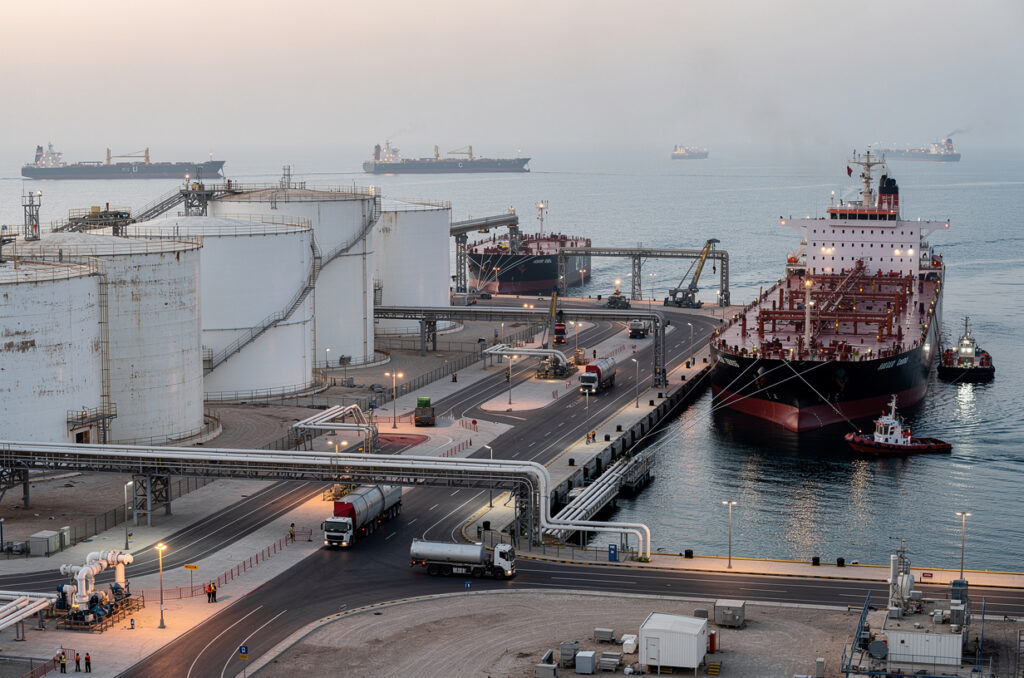
Commercial oil traffic through the Strait of Hormuz increased sharply Thursday as the United States and Iran began implementing their agreement to reopen the critical sea lane.
At least 20 oil tankers completed crossings during the day, according to trade intelligence firm Kpler, marking the highest level of tanker activity since June 2. Including cargo ships, container vessels, and other classes, a total of 25 commercial ships moved through the strait.
The increase is the clearest evidence so far that the agreement is beginning to translate into physical oil flows rather than simply improving market sentiment.
Traffic is improving, but still far from normal
Before the war, more than 100 commercial vessels crossed Hormuz each day, including dozens of oil and natural gas tankers.
Thursday’s activity represents meaningful progress from the near-total shutdown seen during the conflict, but the route remains well below normal operating capacity. Shipowners, insurers, and crews are still evaluating the security environment, while hundreds of vessels and cargoes must be worked back into regular schedules.
The reopening is underway. Full normalization remains a much longer process.
Large Gulf exporters are moving barrels again
Thursday’s crossings included three Saudi Arabian supertankers and one from the United Arab Emirates.
These vessels, known as very large crude carriers, can transport as much as 2 million barrels of oil each. Their return to the route is significant because the largest Gulf producers need these high-capacity tankers to restore exports efficiently after months of disruption.
Traffic was also relatively balanced. Kpler recorded 13 west-to-east crossings and 12 east-to-west crossings, suggesting ships are beginning to move in both directions rather than simply clearing stranded cargoes from one side of the Gulf.
Iranian crude exports are becoming more visible
Iranian tankers are also beginning to reappear on tracking systems.
Several Iranian supertankers switched their transponders back on after operating in so-called dark mode during the war. Kpler observed five loaded Iranian vessels departing the region Friday, another sign that the country’s crude trade is gradually returning toward normal patterns.
The renewed visibility matters. Transponders allow shipping firms, insurers, and commodity traders to monitor vessel locations and cargo movements, improving confidence in the market’s understanding of regional supply.
Iran’s designated route is dominating the reopening
Most ships crossing Hormuz are using the route established by Iran rather than the internationally recognized shipping lane.
Kpler said 18 vessels followed the Iranian-designated corridor Thursday, while only one used the route defined by the International Maritime Organization. The paths of six additional ships could not be confirmed.
That pattern suggests Tehran continues to exercise considerable operational influence over the waterway, even after the US Navy ended its blockade of Iranian ports.
For commercial operators, the immediate priority appears to be safe passage rather than resolving the larger legal and political questions surrounding control of the strait.
The 60-day toll-free period leaves a major question unanswered
Under the agreement, Iran is allowing ships to cross Hormuz without paying tolls for 60 days.
After that period, Iran is expected to begin discussions with Oman and the Gulf states over the long-term administration of the route. The arrangement leaves open the possibility that maritime fees could eventually be introduced.
That uncertainty may affect how quickly shipowners return to the strait at full scale. A short-term reopening provides immediate relief, but the shipping industry still needs clarity on the rules, costs, and enforcement framework that will apply once the initial period expires.
More tanker traffic should help ease supply pressure
The return of large crude carriers should gradually release oil that has been trapped inside the Persian Gulf and allow producers to restart output that was shut in when regional storage facilities filled.
Higher traffic through Hormuz could also help rebuild depleted commercial inventories and reduce the extreme supply risk that drove oil prices higher during the conflict.
Still, the recovery will depend on whether the agreement continues to hold and whether shipowners become comfortable treating Hormuz as a reliable commercial route again.
WSA Take
Thursday’s jump in tanker traffic is the first strong physical sign that the Hormuz agreement is working.
Oil is moving again, major Gulf exporters are returning to the route, and Iranian crude shipments are becoming more visible. Those developments should help reduce immediate supply pressure.
The market is not fully back to normal. Daily traffic remains far below prewar levels, Iran’s designated corridor is handling most crossings, and the rules after the 60-day toll-free period remain uncertain. For now, the reopening is real — but still preliminary.
Explore More Stories in Commodities
Disclaimer
WallStAccess is a financial media platform providing market commentary and analysis for informational and educational purposes only. This content does not constitute investment advice, a recommendation, or an offer to buy or sell any securities. Readers should conduct their own research or consult a licensed financial professional before making investment decisions.