
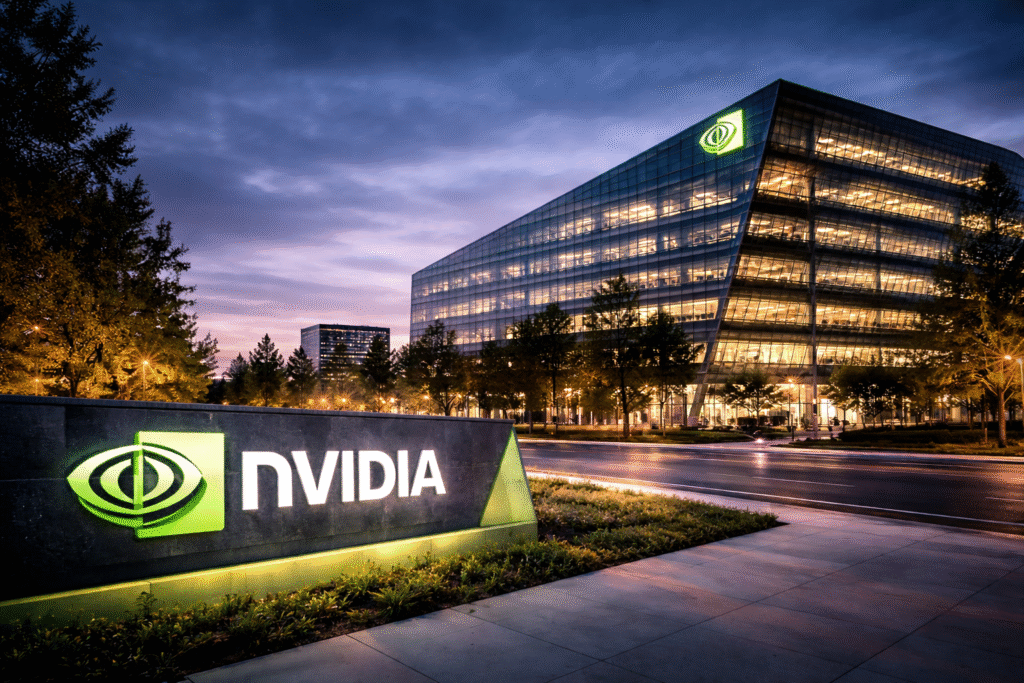
A Historic Run Meets Reality
Momentum slows after an extraordinary surge
Nvidia entered 2026 as the world’s most valuable company — but with noticeably shakier footing than just a few months ago.
Since peaking in late October, Nvidia shares have fallen roughly 8%, underperforming the broader market. The pullback comes after one of the most explosive rallies in modern market history, with the stock up more than 1,200% over the past three years.
At its peak, Nvidia’s market value exceeded $5 trillion, up from roughly $400 billion at the end of 2022. Even after the recent decline, Nvidia remains one of the largest contributors to the market’s gains, accounting for roughly 16% of the S&P 500’s advance since the current bull run began.
AI Spending Sustainability Under Scrutiny
Investors ask how long the buildout can last
The central question facing Nvidia in 2026 is no longer whether AI demand exists — but how durable the spending cycle will be.
Wall Street is increasingly focused on:
- Whether cloud and AI infrastructure spending can continue at its current pace
- How much of current demand is front-loaded
- Whether Nvidia’s investments in customers artificially support near-term sales
Despite these concerns, Nvidia is still projected to deliver over 50% revenue growth and nearly 60% profit growth in its next fiscal year — numbers that remain unmatched among megacap peers.
Competition Is No Longer Theoretical
Rivals and customers push alternatives
Nvidia still dominates AI accelerators with an estimated 90% market share, but pressure is clearly building.
Key developments include:
- AMD winning major data center orders from OpenAI and Oracle
- Cloud giants — including Alphabet, Amazon, Meta, and Microsoft — accelerating their own custom chip programs
- Rising adoption of lower-cost, specialized AI chips (ASICs)
Custom silicon efforts are particularly important because Nvidia’s largest customers account for over 40% of its revenue — and they are actively trying to reduce dependency.
That said, demand remains so large that even as customers diversify, Nvidia chips continue to be bought aggressively.
Nvidia Adapts Its Strategy
Licensing, Rubin, and specialization
Nvidia isn’t standing still.
The company is:
- Preparing to roll out its Rubin next-generation chips later this year
- Licensing technology and talent from chip startup Groq to access low-latency architectures
- Expanding offerings beyond traditional GPUs to stay competitive with ASIC-style solutions
Management has emphasized that model complexity and compute intensity continue to grow exponentially — reinforcing long-term demand for high-performance silicon.
Margins and Valuation in Focus
Profitability becomes the next test
With cheaper alternatives entering the market, margins are now a key battleground.
- Nvidia’s gross margin dipped in fiscal 2026 due to Blackwell ramp-up costs
- Management expects margins to recover toward ~75% in fiscal 2027
- Any sustained margin erosion would likely concern investors
On valuation, Nvidia looks less stretched than many expect:
- Trades at ~25x forward earnings
- Cheaper than most “Magnificent Seven” peers
- Less expensive than roughly a quarter of the S&P 500
This valuation backdrop has helped maintain strong analyst support.
Wall Street Remains Largely Bullish
Skepticism hasn’t turned into capitulation
Despite rising concerns, analyst sentiment remains overwhelmingly positive:
- The vast majority of analysts maintain buy ratings
- Average price targets still imply meaningful upside
- Capex plans from Big Tech exceed $400 billion in 2026, with AI infrastructure a major beneficiary
Even as narratives around AI spending evolve, Nvidia remains deeply embedded in the ecosystem.
WSA Take
Nvidia’s rally is no longer running on pure momentum — it’s entering a more mature phase where competition, margins, and capital discipline matter. Still, with massive AI infrastructure budgets, accelerating model complexity, and a valuation that already reflects skepticism, Nvidia’s risks appear increasingly visible — but not yet thesis-breaking.
Read our recent coverage on Copper Breaking $13,000/ton.
Explore more market insights on the WallStreetAccess homepage.
Disclaimer
WallStAccess does not work with or receive compensation from any companies mentioned. This content is for informational and educational purposes only and should not be considered financial advice. Always conduct independent research before investing.