What Happened
Oil prices jumped sharply on Monday after a chaotic weekend in the Middle East ended with the U.S. Navy seizing an Iranian-flagged cargo ship and Iran insisting that the Strait of Hormuz remains closed.
Brent crude climbed more than 5% to trade above $95 per barrel before paring some gains. WTI crude rose even more sharply, up about 6% as traders rushed to price in renewed disruption risk.
The move reversed a large part of Friday’s oil selloff, when markets had briefly believed the conflict might be cooling after signals that Hormuz had reopened to commercial traffic.
The Market Repriced The Entire Weekend
The sharp turn higher in oil was really a reaction to how quickly the weekend narrative flipped.
On Friday, markets had moved in the opposite direction after Iran’s foreign minister said the Strait of Hormuz was “completely open” to commercial traffic. That triggered a sharp drop in crude and a surge in equities as traders began pricing a possible end to one of the biggest supply shocks in the market.
By Sunday, that optimism had been hit hard.
According to the source, Iran’s Revolutionary Guard Corps said the strait remained closed and fully under Iranian control because of the U.S. Navy blockade. Several ships reportedly attempted the crossing and then turned back, and U.S. forces ultimately fired at and seized an Iranian vessel.
That sequence brought the market back to the same conclusion it has returned to repeatedly throughout this conflict: Hormuz remains the single most important pressure point in global oil.
Traffic Through Hormuz Has Nearly Stopped
The most important real-world signal in the article is not just the military rhetoric. It is the collapse in actual ship movement.
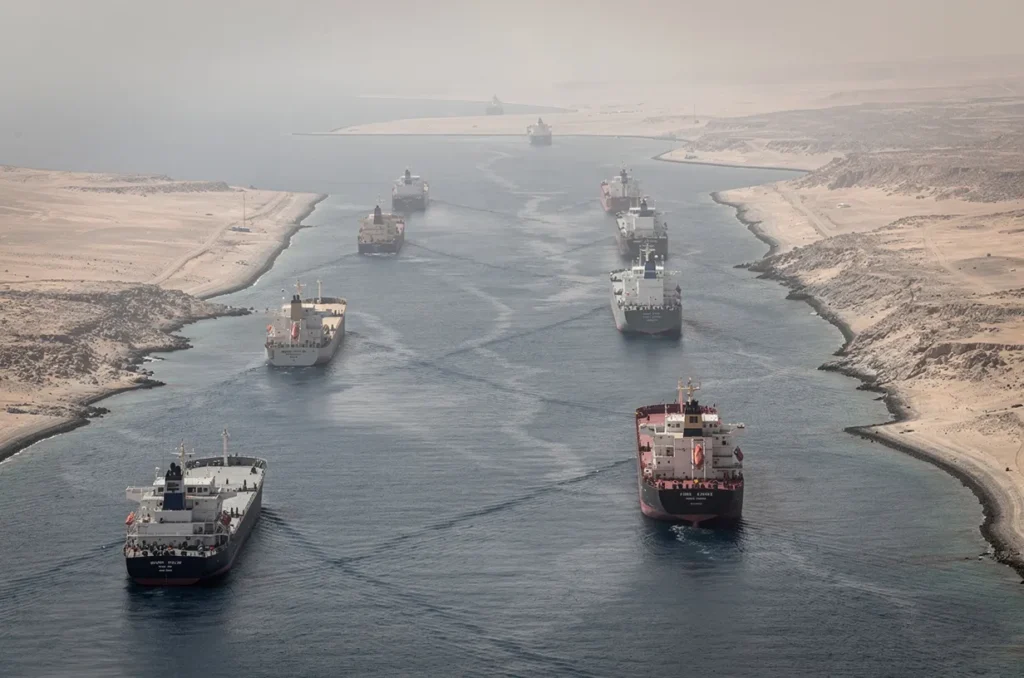
The source says traffic through the Strait of Hormuz is now running roughly 90% below prewar levels. After a relatively active stretch between Friday and Saturday, flows dried up sharply again by early Monday.
That matters because this is not just a fear trade anymore. The supply disruption is showing up in actual vessel movements.
The source describes:
- only two vessels exiting the strait after midnight Sunday
- only two vessels entering
- a near standstill in one of the world’s most critical energy corridors
That kind of disruption is exactly what makes oil so sensitive to every new development around the conflict.
Friday’s Relief Trade Unraveled Fast
One reason Monday’s reversal felt so violent is that Friday’s move had been so aggressive.
After the suggestion that Hormuz was open again, markets quickly priced in a more peaceful scenario. Both Brent and WTI dropped roughly 10%, while stocks surged on hopes that the war might be entering a more stable phase.
That kind of move only works if the market believes the reopening is real and durable.
Once that assumption broke down, traders had to put a large part of the risk premium right back in. That is what Monday’s oil move represented: a fast repricing of a peace scenario that suddenly looked much less secure.
The Conflict Is Now Threatening A Wider Energy Network
Another important part of the article is that the risk may no longer be limited to Hormuz alone.
The source says Iranian-linked messaging suggested that other major energy and shipping points had now “entered the conflict zone,” including:
- Bab-el-Mandeb
- the port of Yanbu
- the port of Fujairah
- Saudi Aramco infrastructure
That matters because if the conflict spreads beyond Hormuz, the oil market could be dealing with a much wider supply and logistics problem.
The article notes that these routes and facilities help handle millions of barrels per day moving through Saudi Arabia and the UAE. So even the threat of broader regional targeting can be enough to keep crude elevated.
Trump’s Tone Turned More Aggressive Again
The policy tone from President Trump also added to the pressure.
After earlier suggesting a possible diplomatic breakthrough, Trump reportedly returned over the weekend to threatening major strikes on Iranian infrastructure if Tehran does not meet U.S. demands. He also said the U.S. Navy blockade of the Strait of Hormuz would remain in place.
That matters because the market is now dealing with two conflicting realities at once:
- a ceasefire that still technically exists
- rhetoric and military action that make the ceasefire look extremely fragile
That is one reason traders are having such a hard time holding on to any clean peace narrative.
The Ceasefire Still Looks Unstable
The current 10-day ceasefire between the U.S. and Iran is set to expire at 8 p.m. ET on Tuesday, and neither side appears fully aligned on what comes next.
The source says both countries claim the other has already broken the ceasefire. It also says the U.S. is preparing for possible second-round talks in Pakistan, while Iran has not confirmed whether it will even send envoys.
That uncertainty matters because the market is no longer just looking for the next headline. It is trying to figure out whether there is any reliable diplomatic framework underneath the headlines at all.
Right now, the answer still looks murky.
This Is No Longer A Simple Headline Market
At this stage, the oil market is trading more than just political language.
It is trading:
- actual shipping disruption
- military escalation risk
- uncertainty around second-round talks
- the durability of the ceasefire
- and the possibility of further supply threats across the wider region
That is why prices can move so violently from one session to the next. This is not just a speculative geopolitical premium. It is a market trying to price an unstable physical supply chain in real time.
What Traders Are Watching Next
The near-term checklist is pretty clear:
- does the ceasefire hold through Tuesday
- do U.S.-Iran talks actually happen
- does the Hormuz blockade remain in place
- does vessel traffic recover at all
- and does the conflict widen to other regional export routes
If any one of those variables breaks the wrong way, the oil market could quickly ratchet higher again. If diplomacy somehow stabilizes the route, crude could reverse just as quickly.
That is the environment traders are in now.
WSA Take
Monday’s oil surge showed just how fragile the recent calm really was. Markets had briefly priced a reopening of Hormuz and a possible diplomatic off-ramp, but the weekend headlines and the collapse in actual vessel traffic forced that optimism to be unwound fast.
For investors, the key point is that Hormuz is still not a solved problem. As long as shipping remains heavily disrupted and the ceasefire looks shaky, oil will keep carrying a meaningful geopolitical premium — and that keeps pressure on inflation, transport-sensitive sectors, and the broader market outlook.
Explore More Stories in Commodities
Disclaimer
WallStAccess is a financial media platform providing market commentary and analysis for informational and educational purposes only. This content does not constitute investment advice, a recommendation, or an offer to buy or sell any securities. Readers should conduct their own research or consult a licensed financial professional before making investment decisions.