Tech lost momentum as rates and caution took over
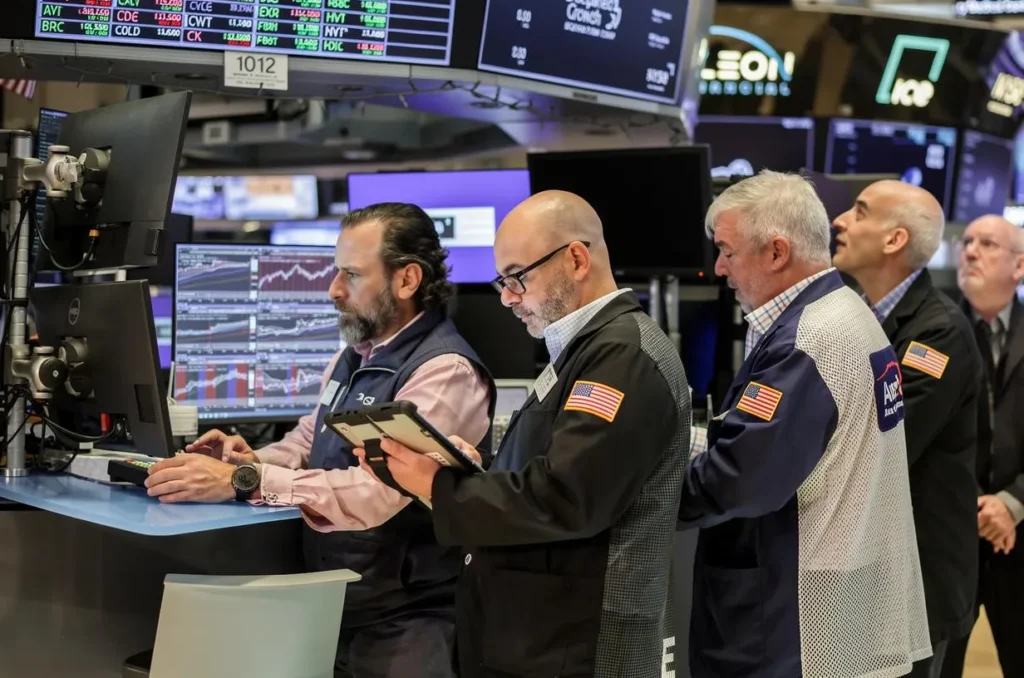
Tech stocks remained under pressure Tuesday as investors turned more defensive and trimmed exposure across the sector.
The weakness was broad. Semiconductors stayed soft, software lost traction later in the day, and the Magnificent Seven came under pressure as bond yields kept rising. That matters because tech had been doing most of the heavy lifting for the broader market. Once the leadership group starts fading, the whole sector feels heavier.
This was not just a one-stock move. It was a wider repricing of risk in a market that is becoming less comfortable with high valuations, rising yields, and inflation that is not cooling fast enough.
Nvidia is now the sector’s biggest near-term event
The biggest name on deck is Nvidia.
Its earnings report arrives Wednesday, and it is easily the most important number in tech this week. Investors are not just looking for another beat. They want proof that the AI buildout remains strong enough to justify the sector’s premium valuations and aggressive spending plans.
The China angle adds another layer. Jensen Huang joined President Trump’s trip to China, and the market had hoped the visit might unlock more chip access into the country. Instead, the read-through from Trump was that China remains focused on building its own AI processors.
That does not break the Nvidia story, but it does remind investors that China is still more of a long-term strategic problem than a near-term growth solution.
Samsung’s labor dispute could quickly turn into a chip supply story
Another major issue hanging over the sector is Samsung.
A potential 18-day strike could begin as soon as May 21 if labor talks fail. That is not a side story. Samsung is the world’s largest memory chip manufacturer, and any prolonged disruption would ripple through global supply chains very quickly.
This matters for two reasons.
First, memory remains a critical input across AI servers, data centers, smartphones, and broader computing infrastructure.
Second, the market is already dealing with an AI cycle that has created tight supply conditions in multiple parts of the hardware stack. A major strike at Samsung would not just be a Korean labor issue. It would become a global semiconductor issue.
That is why investors are watching the talks so closely.
The selloff spread beyond chips by the afternoon
The pressure was not limited to semiconductors.
By afternoon trading, software and broader tech names also turned lower, with both the software ETF and the Philadelphia Semiconductor Index falling. Even some of the large-cap names that had recently helped stabilize the market weakened, with Amazon and Tesla among the bigger laggards.
That broadening matters. When weakness starts in chips and then spreads outward, it usually signals a more general risk-off move rather than a simple sector rotation.
Musk’s OpenAI case is over, but the fallout still matters
One of the more headline-heavy stories in tech also reached a turning point.
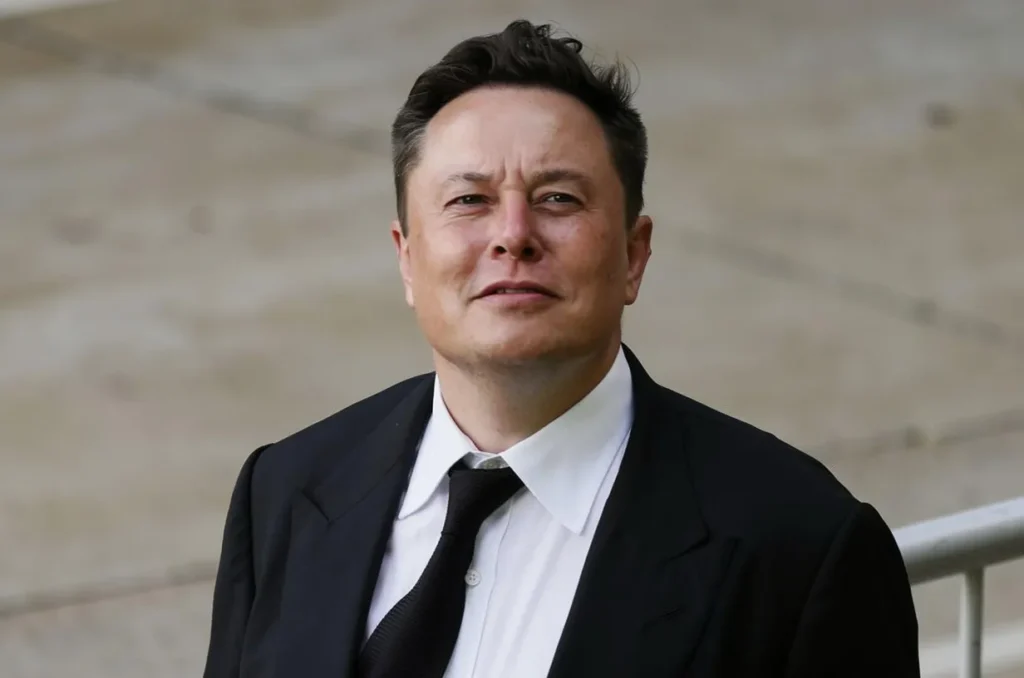
Jurors ruled against Elon Musk in his lawsuit against OpenAI, and a federal judge approved the verdict. The case is now effectively over, but it still mattered because it exposed more of the internal relationships and tensions around one of the world’s most important AI companies.
For markets, the verdict itself is not a major valuation driver. But the broader signal is still important: AI leadership battles are becoming more public, more political, and more personal. That tends to increase attention on governance, control, and competitive dynamics across the sector.
Anthropic just picked up one of the better-known AI names in the industry
There was also a meaningful talent move in the AI race.
Andrej Karpathy, one of OpenAI’s founding members and a prominent figure in the broader AI world, is joining Anthropic. That is notable not just because of his profile, but because it reinforces how competitive the talent war has become among frontier labs.
Anthropic also announced that KPMG will integrate its Claude platform broadly across operations, giving all employees access to the tool. That is the kind of enterprise adoption headline investors want to see from leading model companies. It suggests the AI race is not just about model rankings anymore. It is increasingly about distribution inside large organizations.
Google and Blackstone are making the AI infrastructure trade even more financialized
One of the most important developments in the article may actually be the Google-Blackstone joint venture.
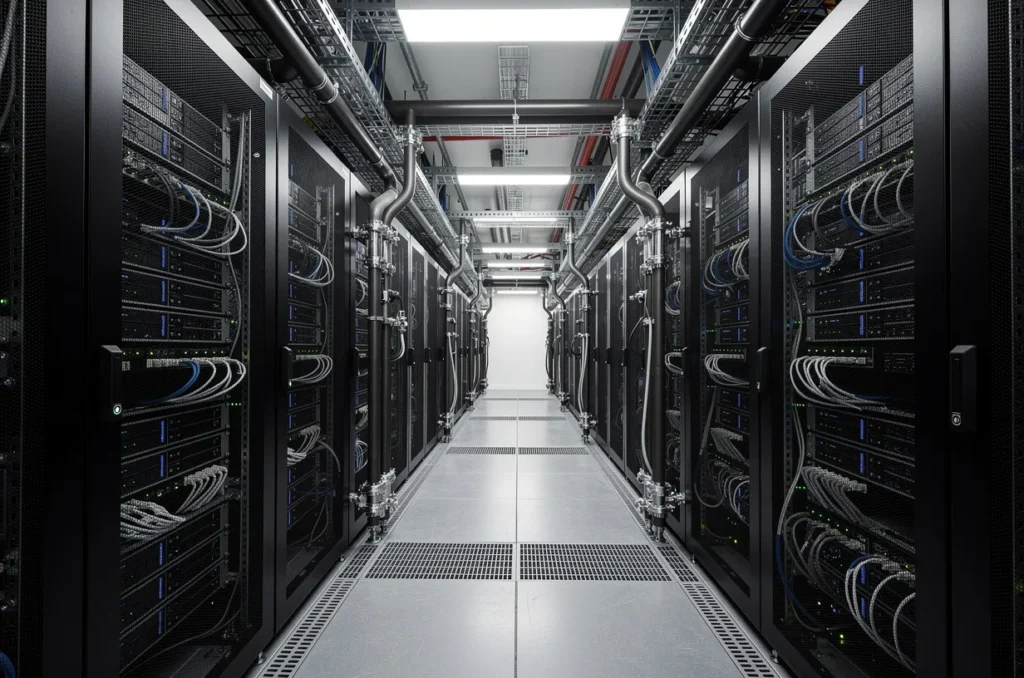
The two are launching an AI cloud company that will provide data center capacity, networking, operations, and access to Google’s TPUs as compute-as-a-service. Blackstone is expected to make an initial $5 billion equity investment, with the first 500 megawatts of power expected online by 2027.
That is a very important signal.
It shows that AI infrastructure is no longer just a technology capex story. It is becoming a full-scale Wall Street financing story. Private capital is moving deeper into the physical layer of AI, including power, land, data center buildouts, and compute access. That trend has been building for months, and this deal pushes it further into the open.
SpaceX is adding more heat to the broader tech tape
Another side story worth watching is SpaceX.
The company is reportedly moving ahead with a 5-for-1 stock split as its IPO timeline accelerates. That does not directly affect listed tech multiples today, but it does keep speculative interest high across adjacent innovation sectors.
In practical terms, it adds to the same broader backdrop: investors still want exposure to scaled frontier-technology stories, whether that is AI infrastructure, advanced semiconductors, or space-linked platforms.
WSA Take
Tech is under pressure right now because the market is being forced to balance two very different realities.
On one side, the AI buildout is still very real. Capital is pouring into data centers, cloud capacity, chips, and enterprise adoption. The Google-Blackstone venture, Anthropic’s enterprise push, and the continued focus on Nvidia all reinforce that.
On the other side, valuations are rich, yields are rising, and the sector is now facing more operational risk than it was a few months ago. A possible Samsung strike, China friction, and a weaker tone across semis all show that this is no longer a clean momentum tape.
That is why Nvidia matters so much this week. If the company delivers the kind of report bulls want, it could stabilize the sector quickly. If not, this pullback may have more room to run.
Disclaimer
WallStAccess is a financial media platform providing market commentary and analysis for informational and educational purposes only. This content does not constitute investment advice, a recommendation, or an offer to buy or sell any securities. Readers should conduct their own research or consult a licensed financial professional before making investment decisions.