Tesla just unveiled something nobody expected to see on four wheels
Nearly nine years after promising a next-generation Roadster, Tesla (NASDAQ: TSLA) finally delivered a demonstration that looked more like a science-fiction movie than an automotive launch.
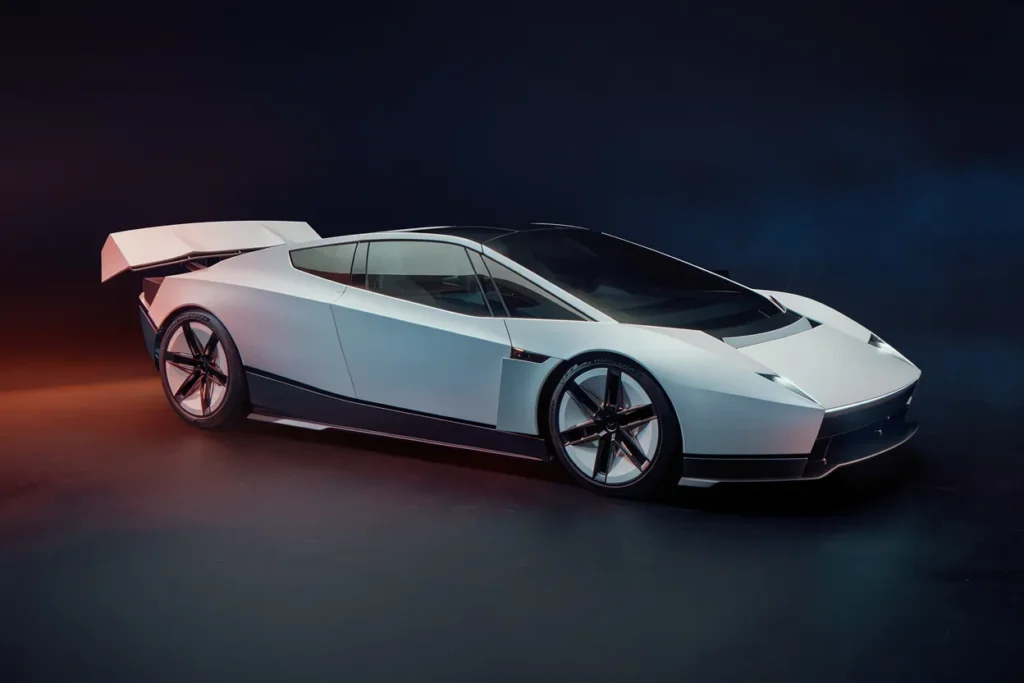
At SpaceX’s rocket testing facility in McGregor, Texas, Elon Musk unveiled a redesigned electric supercar equipped with propulsion technology developed alongside SpaceX engineers.
The white Roadster drove up a curved ramp, held itself upside down, launched into the air, completed a mid-air rotation and landed back on its wheels. Another demonstration showed the vehicle accelerating from 0 to 60 mph in just 0.81 seconds, according to Tesla’s own timing system.
Rather than using traditional rocket fuel, the vehicle relies on high-pressure gas thrusters and a powerful suction system. The demonstration featured technologies adapted from SpaceX, including specialized pressure vessels and propulsion controls.
Production is now targeted for 2028, a considerable delay from the original 2020 delivery promise. Tesla also confirmed multiple configurations, including an invitation-only Rocket version capable of brief flight, although that version is not approved for public roads.
Despite the impressive engineering, few analysts expect the Roadster to contribute meaningfully to Tesla’s financial performance. It will be an expensive, low-volume vehicle designed primarily to showcase what the company can build.
The much more interesting development is what the Roadster reveals about the relationship between Tesla and SpaceX.
A Tesla-SpaceX merger may be closer than expected
Two days before Thursday’s unveiling, Barclays analyst Dan Levy raised the possibility that Tesla and SpaceX (NASDAQ: SPCX) could announce a merger before December.
Levy believes SpaceX would likely acquire Tesla through an all-stock transaction, bringing Musk’s two largest publicly traded companies under one corporate structure.
His reasoning goes considerably further than sharing rocket technology with a sports car.
Tesla is increasingly positioning itself around physical AI, particularly autonomous vehicles, humanoid robots and the computing systems needed to operate them. SpaceX has been expanding beyond rockets into satellite communications, artificial intelligence and large-scale computing infrastructure.
Combining those businesses could allow Musk to coordinate development, infrastructure spending and research under a single organization.
One potential area of overlap is Terafab, Musk’s proposed semiconductor manufacturing initiative. Both companies have growing computing requirements, and managing major investments across separate boards and ownership structures can complicate funding decisions.
Barclays believes a merger could simplify that process while giving Musk greater voting control over the combined business. Under the firm’s proposed structure, Musk could hold approximately 37% economic ownership and 56% of the voting power.
The possibility of a merger before Tesla’s December shareholder meeting has attracted increasing attention, although neither company has announced an agreement.
Thursday’s Roadster demonstration gave investors something tangible to consider.
Tesla and SpaceX are no longer simply two companies controlled by the same person. Their technologies and long-term ambitions are becoming increasingly intertwined.
The merger could matter far more than the Roadster
A combination of Tesla and SpaceX would create an extraordinary technology conglomerate spanning electric vehicles, autonomous transportation, robotics, satellite communications, aerospace and artificial intelligence.
Still, a merger would raise important questions for shareholders.
Would Tesla investors receive an attractive valuation in a stock-for-stock transaction? How would ownership and voting rights change? Could combining the businesses actually improve profitability, or would it simply place several enormously expensive growth initiatives under one roof?
Those questions matter because both companies already command premium valuations, with much of their expected future growth reflected in their share prices.
Tesla also has more immediate business challenges. Vehicle manufacturing remains its primary revenue source, even as management increasingly emphasizes AI and robotics. In the third quarter, Tesla delivered 486,532 vehicles and deployed 13.7 GWh of energy storage.
Its October 21 earnings report will provide a more meaningful assessment of margins, cash flow and the cost of expanding its next-generation businesses.
Meanwhile, merger speculation introduces another potential catalyst before year-end. Barclays believes an announcement could arrive within weeks, although shareholder approvals, transaction terms and regulatory reviews would still need to be addressed.
The Roadster’s commercial future remains uncertain, but Thursday’s presentation succeeded in demonstrating what Tesla and SpaceX engineers can achieve when they combine their capabilities.
A flying sports car may be the most spectacular result of that collaboration so far. A merger between Tesla and SpaceX could be considerably more consequential for shareholders.
Disclaimer
Wall Street Access is an independent financial publisher. Wall Street Access is not a financial advisor. No company mentioned has compensated Wall Street Access for the preparation, publication or distribution of this article. This content is provided for informational and educational purposes only and is not investment advice or a recommendation to buy, sell or hold any security. Investing involves risk, including the possible loss of principal.
Prices, market capitalizations, financial figures and other market data are based on information available as of the date and time of publication and may change without notice. Information is drawn from public sources believed to be reliable but is not guaranteed to be complete or accurate. Opinions and expectations expressed are our own and may change as new information becomes available.
Readers should conduct their own due diligence and contact a licensed financial professional before making any investment decision. Past performance does not guarantee future results. Any material ownership interest or conflict of interest, where applicable, will be disclosed separately.