U.S. Government Steps Directly Into Rare Earth Supply Chain
Shares of USA Rare Earth surged after the company disclosed a landmark agreement with the U.S. government that includes a $1.6 billion investment in exchange for an equity position.
The agreement reflects a growing willingness by Washington to take direct ownership stakes in strategic mineral producers as part of a broader push to secure domestic supply chains.
Deal Structure and Federal Backing
USA Rare Earth said it signed a letter of intent with the U.S. Department of Commerce, which includes:
- $1.6 billion equity investment from the Department of Commerce
- $1.3 billion loan collaboration with the Department of Energy
- $277 million in additional federal funding
As part of the transaction, the company will issue:
- 16.1 million shares of common stock
- Approximately 17.6 million warrants
USA Rare Earth also announced a $1.5 billion capital raise, further strengthening its balance sheet.
Peer Stocks Rally Across the Sector
The announcement lifted the entire rare earth space, with notable gains across industry peers including:
- MP Materials
- Energy Fuels
- Trilogy Metals
The market response underscores investor confidence that government capital lowers project risk across the sector.
Accelerating Domestic Production
The new funding is expected to fast-track USA Rare Earth’s operations, including:
- Mining and processing development
- Metal-making capacity
- Construction of a magnet manufacturing facility in Stillwater, Oklahoma
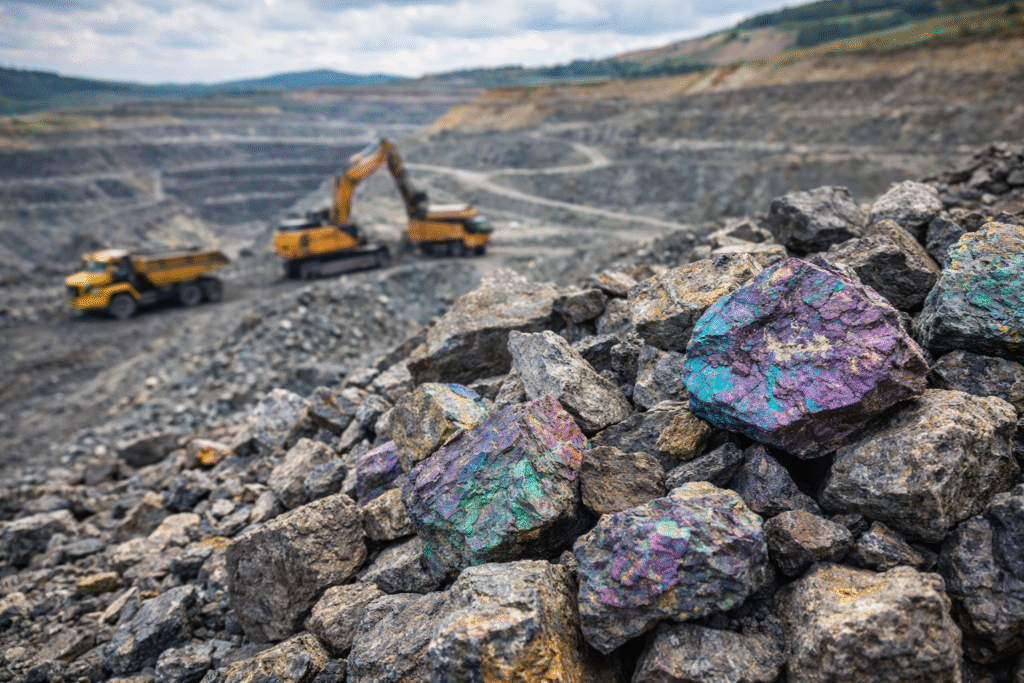
- Advancement of the Round Top deposit in West Texas, with commercial production targeted for 2028
These assets are central to building an end-to-end U.S. rare earth supply chain.
Strategic Push Against China’s Dominance
The government’s stake in USA Rare Earth fits into a broader policy effort to counter China’s control of rare earth metals, which are essential to:
- Artificial intelligence and data centers
- Defense systems
- Advanced manufacturing
- Energy and technology infrastructure
Last year, the Pentagon became the largest shareholder in MP Materials through a $400 million investment. The government also took stakes in Lithium Americas and Trilogy Metals.
Why This Matters for Investors
According to strategists at Sprott Asset Management, public-sector participation is reshaping the investment landscape for critical minerals.
They note that government involvement:
- Improves revenue visibility
- Reduces financing and execution risk
- Increases the probability that new capacity actually gets built
In short, rare earth miners are no longer relying solely on speculative capital.
Greenland Adds Another Strategic Layer
U.S. officials have also signaled that future frameworks with NATO involving Greenland could include access to rare earth mineral rights, highlighting how critical minerals are increasingly intertwined with geopolitics and national security.
WallStAccess Take
This is a structural shift, not a one-off deal.
Direct government equity stakes mark a new phase for the rare earth industry — one where strategic necessity overrides traditional market constraints. For investors, that translates into lower risk profiles, stronger funding visibility, and a powerful long-term tailwind for U.S.-based critical mineral producers.
Rare earths aren’t just commodities anymore — they’re policy assets.
Read our recent coverage on Microsoft Unveiling Maia 200 AI Chip.
Explore more market insights on the WallStreetAccess homepage.
Disclaimer
WallStAccess does not work with or receive compensation from any companies mentioned. This content is for informational and educational purposes only and should not be considered financial advice. Always conduct independent research before investing.