Energy Stocks React to Venezuela Policy Shift
Markets price in potential reopening of a major oil producer
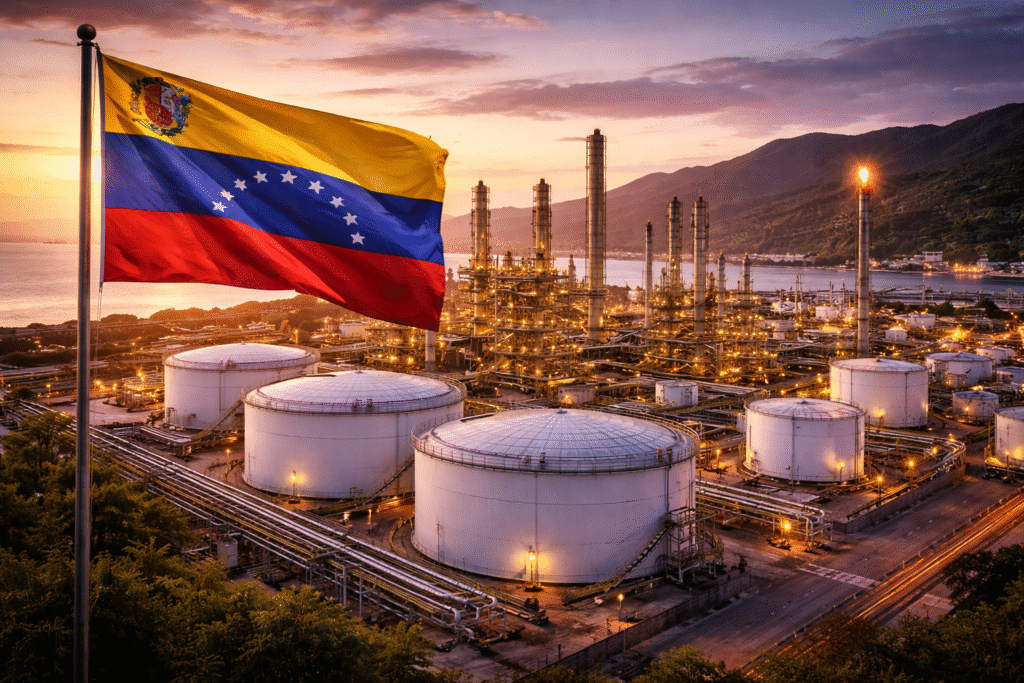
US oil stocks rallied Monday after Washington signaled an effort to revive Venezuela’s long-dormant energy sector, sparking optimism around increased access to the world’s largest crude reserves.
Shares of Chevron surged more than 6%, marking their strongest single-day gain since April. ConocoPhillips and Exxon Mobil also traded higher, while oil-services firms Halliburton, SLB, and Baker Hughes jumped more than 5% as investors anticipated a potential wave of energy infrastructure spending.
Why Chevron Stands Out
Positioned for first-mover advantage
Chevron is uniquely positioned among US oil majors. It is currently the only American producer operating in Venezuela under a sanctions waiver and already accounts for roughly 20% of the country’s oil output, shipping heavy crude to US Gulf Coast refineries.
That positioning gives Chevron a potential early advantage if restrictions ease further or investment activity accelerates.
Other US producers also have financial exposure:
- ConocoPhillips is owed more than $8 billion related to past asset seizures.
- Exxon Mobil is owed roughly $1 billion, according to arbitration rulings.
Infrastructure Reality Check
Revival won’t happen overnight
Despite the market’s enthusiasm, analysts caution that rebuilding Venezuela’s oil industry will be a long and expensive process.
Years of:
- Corruption and underinvestment
- Fires, theft, and equipment failures
- Isolation from global capital due to sanctions
have left the country’s energy infrastructure severely degraded.
Energy policy experts estimate that a full revival could take many years and require more than $100 billion in capital expenditures. Even today, Venezuela contributes less than 1% of global oil supply, despite holding the world’s largest proven reserves.
Global Market Ripples
Heavy crude dynamics shift
Venezuela produces heavy crude that directly competes with Canadian oil sands supply. As a result, shares of Canadian producers Canadian Natural Resources, Cenovus Energy, and Suncor Energy declined as investors weighed future competitive pressure.
Meanwhile, European energy companies with Venezuelan exposure, including Eni and Repsol, rose in early trading. French producer Maurel & Prom surged as much as 14%.
Corporate Caution Remains
Legal and political risks still loom
While stock prices moved quickly, oil companies themselves remain cautious.
- Chevron emphasized that operations continue uninterrupted and in full compliance with existing laws.
- ConocoPhillips said it is too early to speculate on future activity.
- Exxon has previously stated it would approach any opportunity carefully due to past expropriations.
Uncertainty remains around:
- Long-term legal protections
- Fiscal and regulatory frameworks
- Stability of a transitional government
WSA Take
Markets are trading the option value of Venezuela’s return to global oil markets — not the reality. Chevron’s rally reflects positioning, not production growth. A genuine supply impact would take years, massive capital, and legal clarity. For now, this is a sentiment-driven move tied to geopolitics, not barrels.
Read our recent coverage on Aluminum Breaking $3,000.
Explore more market insights on the WallStreetAccess homepage.
Disclaimer
WallStAccess does not work with or receive compensation from any companies mentioned. This content is for informational and educational purposes only and should not be considered financial advice. Always conduct independent research before investing.