Zoox Pushes Deeper Into the U.S. Robotaxi Map
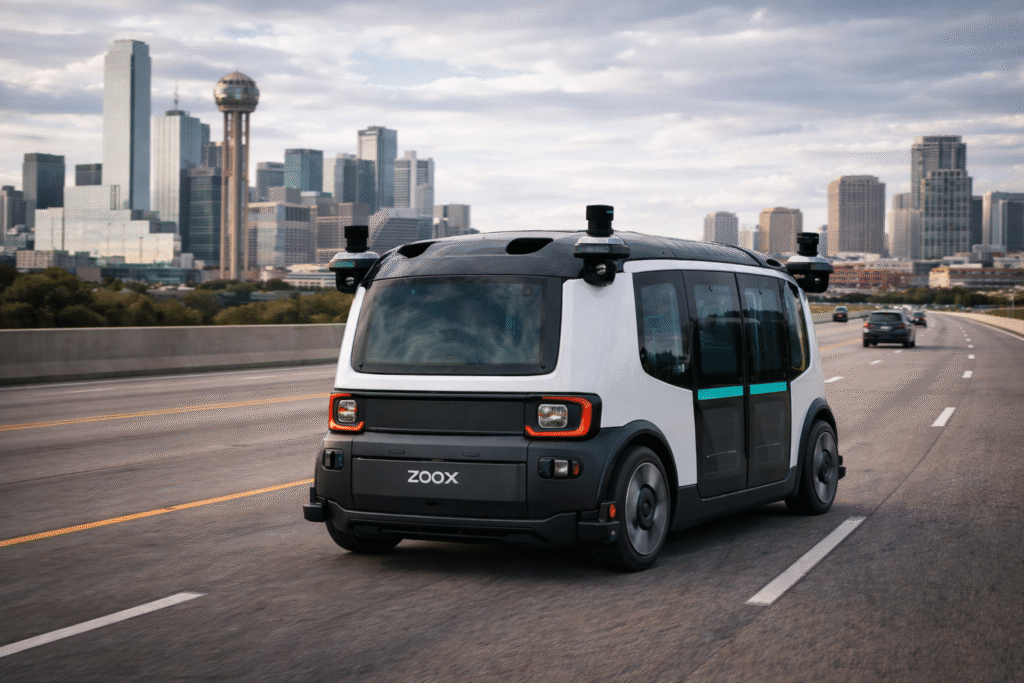
Amazon-owned Zoox is widening its robotaxi ambitions, announcing new testing programs in Dallas and Phoenix as it pushes into more U.S. cities.
The expansion lifts Zoox’s footprint to 10 domestic markets, making it one of the company’s broadest geographic moves since Amazon acquired the startup in 2020.
For now, Zoox will use retrofitted Toyota Highlander vehicles equipped with its full sensor stack and staffed by human safety drivers as it maps the cities and prepares for future autonomous operations.
The company says Dallas and Phoenix offer strong test environments because of their sprawling road networks and varied conditions — exactly the kind of real-world complexity robotaxi companies need to solve before scaling commercial service.
The U.S. Robotaxi Race Is Accelerating
The broader autonomous vehicle market is entering a more competitive phase.
Waymo remains the clear leader in the U.S., already operating across multiple cities and completing a large volume of paid rides each week. Its expansion pipeline is also broad, giving it an early-mover advantage in both deployment and consumer awareness.
Tesla, meanwhile, continues to pursue a different strategy centered on its vision-only system. That approach is seen as potentially cheaper and more scalable long term, but its rollout has moved more slowly and remains under heavier regulatory and safety scrutiny.
That leaves Zoox in an interesting position: not first, but still very much in the race — and backed by one of the deepest-pocketed companies in the world.
What Makes Zoox Different
Unlike traditional retrofitted autonomous cars, Zoox has also developed a purpose-built robotaxi designed specifically for ride-hailing.
Its vehicle has:
- No traditional driver’s seat
- No steering wheel in the conventional sense
- Cabin seating that faces inward, more like a shuttle than a car
That design makes Zoox one of the more ambitious players in the space. It is not just trying to automate a car — it is trying to redesign the passenger experience entirely around autonomy.
Regulatory progress has already helped the company move closer to that vision, including exemptions that clear the way for eventual public-road deployment of its purpose-built vehicle.
Why Amazon Matters
Zoox is not operating alone.
Amazon’s ownership gives the company advantages that many autonomous vehicle startups do not have:
- Significant capital support
- Manufacturing investment
- Cloud infrastructure through AWS
- Operational and logistics expertise
Zoox has already built a large manufacturing facility in the Bay Area and is targeting meaningful vehicle production capacity over time.
That matters because robotaxi success is not just about software — it is also about building, deploying, servicing, and scaling fleets in the real world.
Amazon understands scale better than almost anyone.
WSA Take
The robotaxi market is moving from concept to land grab.
Waymo leads. Tesla has the headline power. But Zoox is quietly positioning itself as a serious third force — especially with Amazon’s capital and infrastructure behind it.
Dallas and Phoenix are not just test cities. They are signals that Zoox wants national relevance, not a niche pilot story.
In autonomous mobility, scale will matter just as much as technology.
And Zoox is making it clear it intends to compete on both
Disclaimer
WallStAccess is a financial media platform providing market commentary and analysis for informational and educational purposes only. This content does not constitute investment advice, a recommendation, or an offer to buy or sell any securities. Readers should conduct their own research or consult a licensed financial professional before making investment decisions.