
What Happened in the Gulf
Daily oil exports from the Middle Eastern Gulf have dropped sharply in the week ending March 15, as the Strait of Hormuz remained effectively closed and producers faced disruptions and output cuts tied to the U.S.-Iran war. The Middle East Gulf is home to Saudi Arabia and other major exporters, making the hit to flows immediately market-moving.
The Strait of Hormuz is a critical chokepoint that normally handles about a fifth of global oil supply. With traffic reduced to a fraction of typical levels, exporters have been forced to cancel loadings and shut production at some oilfields.
- Exports of crude, condensate, and refined fuels from eight countries averaged about 9.71 million bpd in the week to March 15.
- That compares with about 25.13 million bpd in February, a decline of roughly 61%.
- An alternate shipping-based estimate puts last week’s exports at about 7.5 million bpd versus 26.1 million bpd in February, down roughly 71%.
Why the Export Drop Matters
Before the conflict, the same eight exporters accounted for about 36% of global seaborne oil exports, out of roughly 70.43 million bpd. A disruption of this scale quickly tightens physical balances and stresses refining systems that rely on steady Middle East supply.
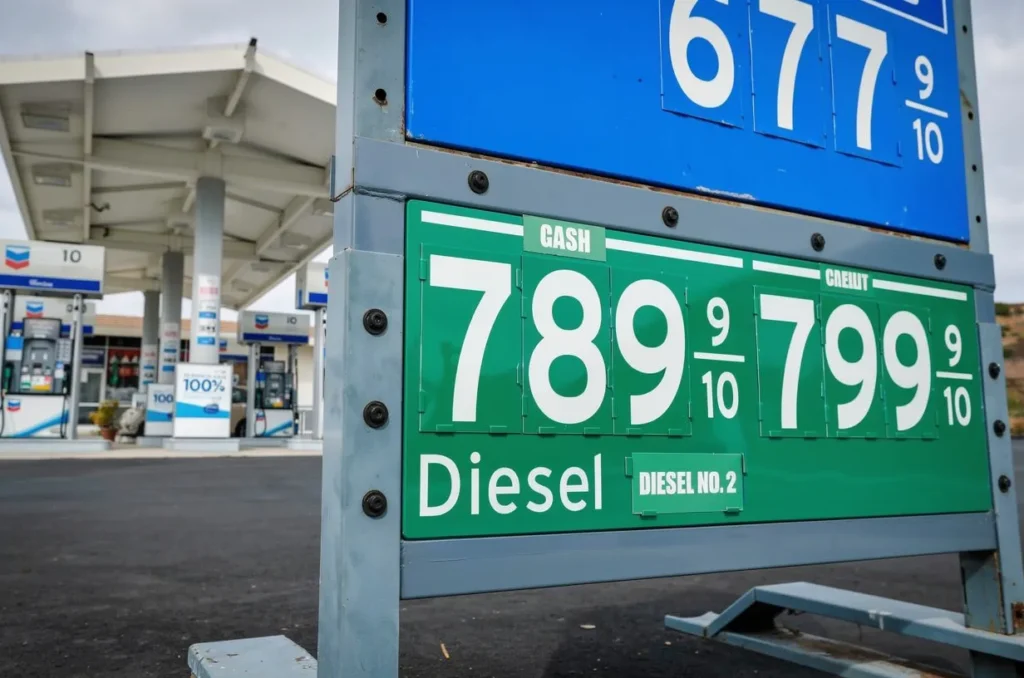
The market impact is already visible: crude oil prices have surged to the highest in four years, and some fuel prices have pushed to record highs. With the Strait still constrained, price formation is being driven less by incremental fundamentals and more by the immediate question of what barrels can physically move.
- Middle East export cuts are not only about reduced demand—many barrels cannot leave the Gulf reliably.
- Some volumes may be heading into floating storage rather than reaching end buyers.
- That dynamic can make headline export numbers look higher than true delivered supply.
Storage Is Filling as Producers Cut Output
With shipments disrupted and outlets constrained, storage has become a binding limit. Floating storage of Middle Eastern crude has surpassed 50 million barrels this week, up from around 10 million barrels before the war. Rising floating storage can act like a temporary buffer, but it also signals that producers are running out of places to put unsold crude.
Output cuts across the region have risen as storage fills and shipping remains constrained. The reductions are uneven by country, reflecting different export routes, domestic constraints, and the ability to shift barrels away from Hormuz.
- United Arab Emirates output, previously about 3.4 million bpd, is down by more than half.
- Saudi Arabia has cut production by about 20%.
- Iraq has cut production by roughly 70%.
- Total Middle East crude output cuts are estimated at about 7–10 million bpd.
What’s Still Flowing, and What Investors Will Watch Next
Not all routes are shut. Some flows continue, including exports from Saudi Arabia’s Red Sea port of Yanbu, Iran’s exports, Oman’s exports, and some UAE flows from Fujairah. Even so, loadings from Fujairah have faced disruptions in recent days following drone attacks, underscoring how quickly operational risks can change.
The next market hinge points are straightforward: whether Hormuz traffic meaningfully reopens, how quickly floating storage rises toward capacity, and whether producers deepen shut-ins as logistical constraints persist. For U.S. investors, the clearest read-through is continued volatility across energy, shipping, and fuel-sensitive sectors as physical supply remains the driver.
WSA Take
This is a physical supply shock with real constraints, not just a paper-market scare. When a chokepoint like the Strait of Hormuz stays largely closed, the market quickly shifts from “how much is produced” to “how much can actually be delivered.” Rising floating storage adds near-term cushion but also signals that producers are approaching hard logistical limits. Until transit normalizes, investors should expect price sensitivity to any sign of reopening, further disruptions, or deeper production shut-ins.
Explore More Stories in Commodities
Disclaimer
WallStAccess is a financial media platform providing market commentary and analysis for informational and educational purposes only. This content does not constitute investment advice, a recommendation, or an offer to buy or sell any securities. Readers should conduct their own research or consult a licensed financial professional before making investment decisions.