What Happened at CERAWeek
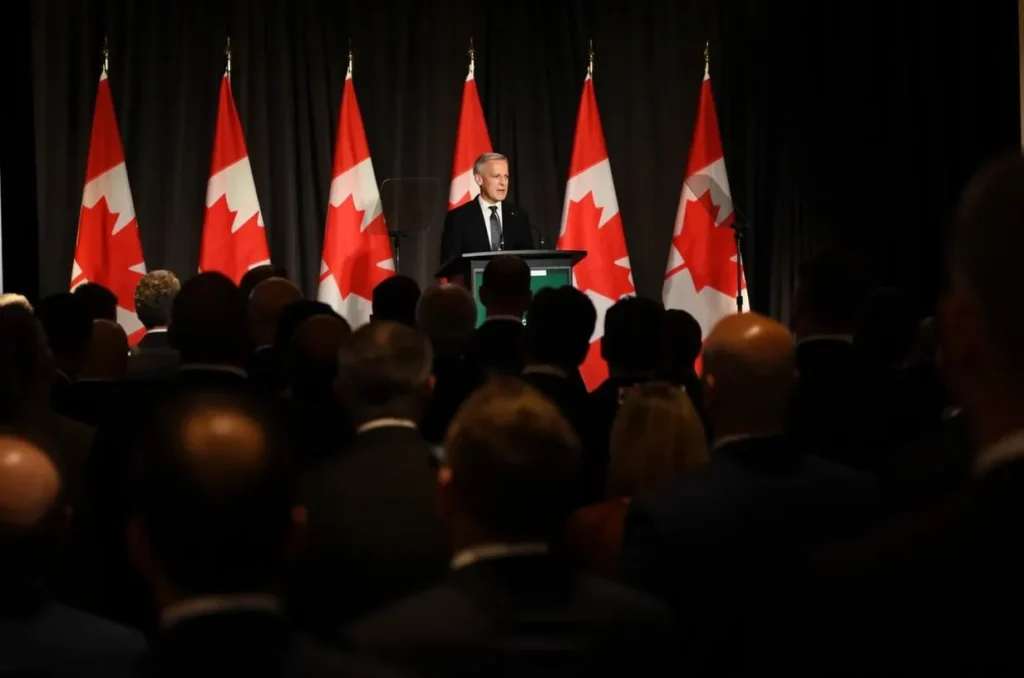
The United States and French energy major TotalEnergies (TTEF.PA) said they will redirect nearly $1 billion away from offshore wind leases and toward U.S. oil and natural gas production. The agreement was announced at the CERAWeek energy conference in Houston by TotalEnergies CEO Patrick Pouyanné and U.S. Secretary of the Interior Doug Burgum.
In a statement, the U.S. Department of the Interior laid out a structure where the government will reimburse Total for around $1 billion the company previously paid in offshore wind lease purchases, while TotalEnergies commits not to develop any new offshore wind projects in the country.
- The U.S. will reimburse Total around $1 billion tied to offshore wind lease purchases.
- TotalEnergies pledged not to develop any new offshore wind projects in the U.S.
- The agreement was announced at CERAWeek in Houston.
Where the Money Is Being Redirected
The Interior Department said TotalEnergies plans to invest $928 million in 2026 toward a slate of U.S. oil and gas initiatives, including LNG infrastructure and upstream development.
The planned 2026 spending includes development work tied to four trains at the Rio Grande LNG plant in Texas, as well as development of upstream conventional oil in the U.S. Gulf and shale gas production.
- $928 million in planned 2026 investment.
- Development of four trains at Rio Grande LNG in Texas.
- Upstream conventional oil development in the U.S. Gulf.
- Shale gas production development.
Lease Terminations and Reimbursements
Following those investments, the U.S. will terminate offshore wind leases in the Carolina Long Bay area and the New York Bight area. The Interior Department said both leases were executed in 2022, and the terminations are tied to the reimbursement plan for TotalEnergies.
This is a notable reversal for a segment that has been built around multi-year lease obligations, permitting timelines, and long-dated project finance structures. When leases are unwound, it can reshape the expected pipeline of future offshore wind buildouts and change how investors frame the durability of policy support.
- Lease areas named: Carolina Long Bay and New York Bight.
- Both leases were executed in 2022.
- The U.S. plans to terminate the leases after the outlined investments.
Why It Matters for Energy Markets
The agreement lands as the U.S. administration has moved to increase domestic fossil fuel production. It also adds pressure to an offshore wind industry that has faced repeated disruptions to large-scale projects.
TotalEnergies, for its part, pointed to economics. Pouyanné said offshore wind was not the most affordable way to produce electricity in the U.S., underscoring how cost, power pricing, and execution risk can drive capital allocation decisions even for diversified global energy companies.
For U.S. investors, the bigger takeaway is the direction of travel: capital is being re-anchored to LNG and upstream oil and gas, while offshore wind faces additional uncertainty.
Investors will watch how quickly the lease terminations are executed, and whether other developers seek similar exits or resets in offshore wind portfolios.
WSA Take
This agreement is a clear example of how fast capital can move when policy direction and project economics shift at the same time. TotalEnergies (TTEF.PA) is trading offshore wind optionality for a defined path into LNG and upstream U.S. production, with a reimbursement framework that reduces sunk-cost risk. The ripple effect matters beyond one company: lease terminations in Carolina Long Bay and New York Bight add another layer of uncertainty to offshore wind development timelines. In the near term, investors should focus on implementation—reimbursements, lease unwind mechanics, and the pace of follow-on investment into Rio Grande LNG and upstream assets.
Explore More Stories in Commodities
Disclaimer
WallStAccess is a financial media platform providing market commentary and analysis for informational and educational purposes only. This content does not constitute investment advice, a recommendation, or an offer to buy or sell any securities. Readers should conduct their own research or consult a licensed financial professional before making investment decisions.