What Happened
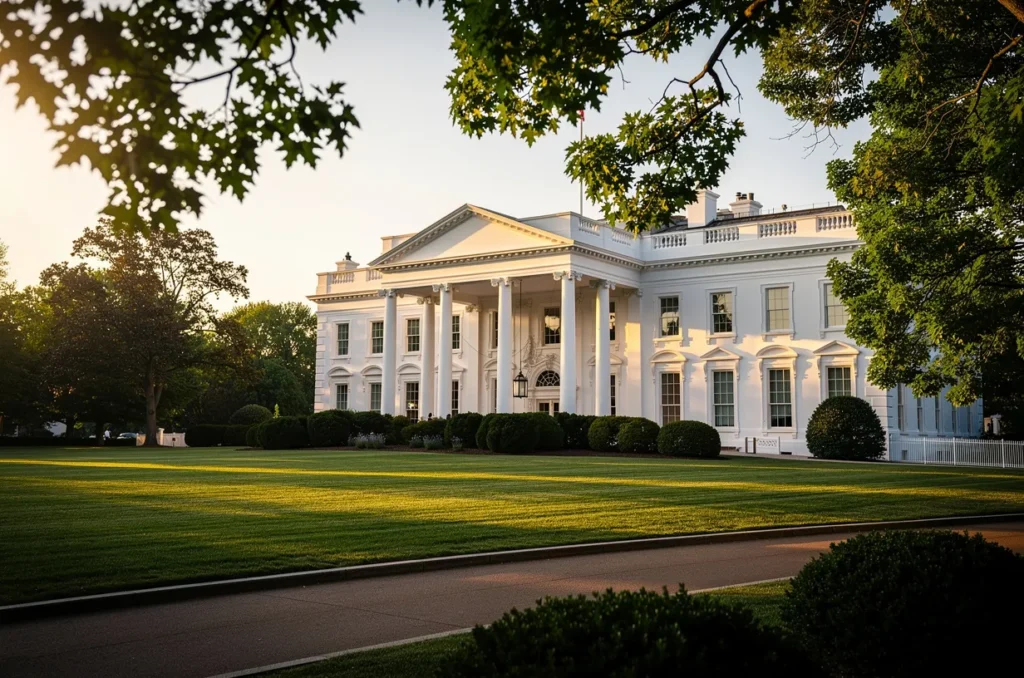
The White House appointed several high-profile technology executives to the President’s Council of Advisors on Science and Technology (PCAST), a panel that will weigh in on AI policy and other science-and-technology issues.
The new members include Meta Platforms (META) CEO Mark Zuckerberg, Oracle (ORCL) Executive Chairman Larry Ellison, and Nvidia (NVDA) CEO Jensen Huang. The initial batch of 13 industry members also includes Alphabet (GOOGL) co-founder Sergey Brin and Advanced Micro Devices (AMD) CEO Lisa Su.
The council will be co-chaired by White House AI and crypto czar David Sacks and technology adviser Michael Kratsios.
- Newly named members include leaders from Meta (META), Oracle (ORCL), and Nvidia (NVDA).
- The initial industry group also includes representatives tied to Alphabet (GOOGL) and AMD (AMD).
- PCAST is expected to advise on AI and broader science-and-technology priorities.
Why It Matters for AI Policy and Markets
The appointments highlight a tighter working relationship between the U.S. administration and major technology companies at a moment when artificial intelligence is reshaping capital spending plans across the sector.
U.S. officials have positioned leadership in AI as a strategic priority amid intensifying competition with China. Within days of taking office in January last year, the U.S. President directed federal agencies to prepare an AI Action Plan aimed at reducing regulatory barriers and accelerating private-sector innovation.
For investors, a formal advisory structure that includes many of the companies building and deploying AI systems can matter because policy choices can influence:
- Regulatory friction and compliance costs for model development and deployment
- Federal posture toward AI infrastructure buildouts and enterprise adoption
- Rules and standards that can shape demand for chips, cloud, and data-center capacity
- Government-wide priorities that may impact procurement and research directions
Who’s In, and How the Council Could Expand
The White House said the council could ultimately include up to 24 members, suggesting additional appointments are likely in the near future.
Beyond the major AI and computing names, the council also includes Bob Mumgaard, CEO and co-founder of Commonwealth Fusion Systems. The company characterized his addition as a signal of U.S. government support for the fusion industry.
- PCAST is expected to expand from the initial 13 industry members to as many as 24.
- The roster spans major AI platforms and semiconductor leadership, plus fusion representation.
- The council’s co-chairs are David Sacks and Michael Kratsios.
What Investors Will Watch Next
Two things will matter most from here: who fills the remaining seats, and whether the council’s early recommendations show up in the administration’s AI Action Plan and agency-level follow-through. Investors will also watch for how the White House balances speed-to-innovation goals with national security and competitive considerations.
WSA Take
Stacking PCAST with leaders from Meta (META), Oracle (ORCL), Nvidia (NVDA), Alphabet (GOOGL), and AMD (AMD) signals the White House wants industry voices close to the center of its AI agenda. That matters because the biggest swing factor for AI over the next few years may be the policy environment around deployment, infrastructure buildout, and the speed of commercial adoption. The market relevance isn’t a single decision on day one—it’s whether the council becomes a pipeline from corporate priorities into Washington’s practical rulemaking. For U.S. investors, the key is tracking concrete outcomes, not headlines: membership expansion, timelines for the AI plan, and the tone of early guidance.
Disclaimer
WallStAccess is a financial media platform providing market commentary and analysis for informational and educational purposes only. This content does not constitute investment advice, a recommendation, or an offer to buy or sell any securities. Readers should conduct their own research or consult a licensed financial professional before making investment decisions.